

Top 5 Bioprinting 3D Printers in Canada, 2026
Bioprinting 3D printers deposit living cells suspended in bioink to build tissue constructs for research. They are laboratory capital equipment, not retail products: pricing is by quote and runs from tens to hundreds of thousands of dollars, and units are sold direct by the manufacturer or through a distributor. Canada has a real stake in the field — Aspect Biosystems, maker of the microfluidic RX1, is based in Vancouver, BC. The printers below are used by researchers and healthcare institutions for tissue engineering, drug testing and implant scaffolds; printed transplantable organs remain experimental.
Inception's AI took the time to understand this market in Canada · · How we pickWe may earn a commission on purchases. It never affects our rankings.
Top Picks Summary
Cellink Bio X6
CELLINK BIO X6 stands out in the bioprinting industry with its advanced technology and versatility. This bioprinter allows for the use of multiple bioinks, enabling the creation of complex tissue structures with high precision. Its user-friendly interface and robust performance make it suitable for various applications in regenerative medicine and tissue engineering. Coupled with its reliable customer support, CELLINK BIO X6 is a top choice for research laboratories.

Estimated$130,000 – $150,000
Aspect Biosystems RX1
Aspect Biosystems RX1 is an innovative bioprinter known for its high-resolution printing capabilities and unique microfluidic technology. Its modular design allows researchers to customize the printer for specific applications, making it highly adaptable in the field of tissue engineering. With a focus on replicating the complex architecture of human tissues, the RX1 offers a significant advantage over traditional methods. Aspect's commitment to pushing the boundaries of bioprinting technology ensures its place as a market leader.

Estimated$80,000 – $100,000
Rokit Invivo
Rokit Invivo is a revolutionary bioprinter that merges cutting-edge technology with user-friendly features, making it accessible for a wide range of users. Its unique approach to 3D bioprinting allows for the printing of living cells alongside scaffolding materials, promoting better tissue integration. The Invivo printer is designed for precision and efficiency, setting it apart in the competitive bioprinting market. With robust research backing and innovative features, Rokit Invivo represents a significant advancement in bioprinting solutions.
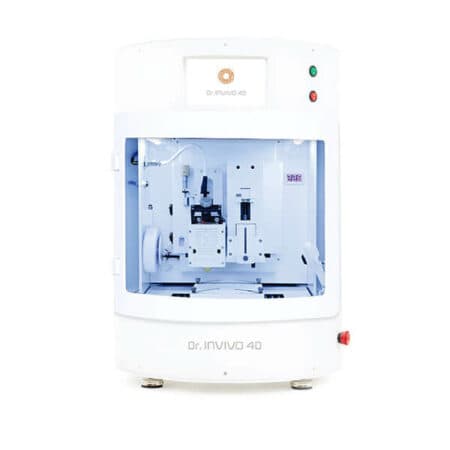
Estimated$50,000 – $70,000
EnvisionTEC 3D-Bioplotter Developer Series
EnvisionTEC 3D-Bioplotter Developer Series is known for its versatility in material applications and precise additive manufacturing processes. This bioprinter allows researchers to explore a wide range of biomaterials while ensuring high-quality tissue constructs. Its unique printing capabilities enable the development of complex geometries and customized structures, making it an essential tool for cutting-edge bioprinting research. EnvisionTEC's commitment to innovation ensures it remains a leader in this evolving field.
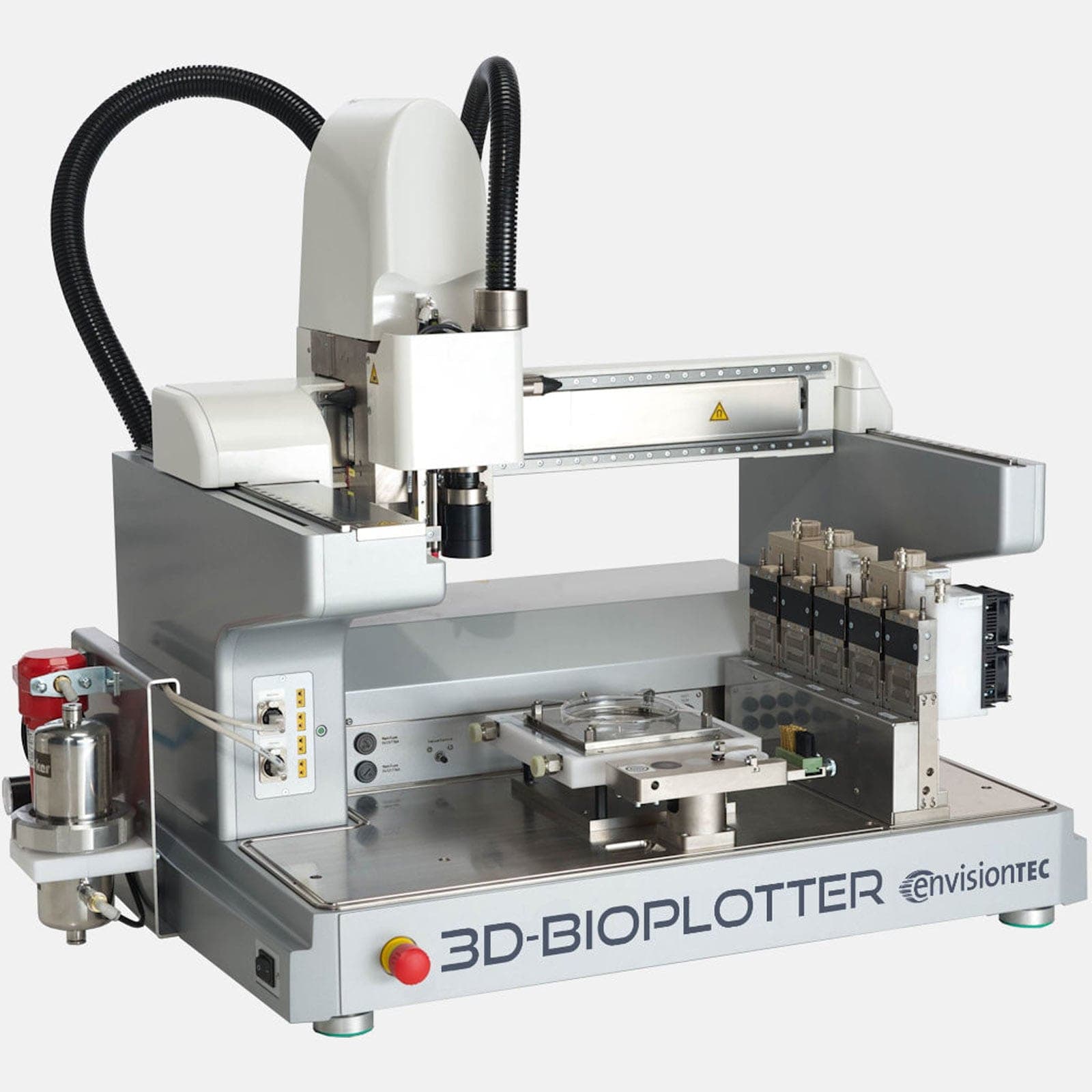
Estimated$150,000 – $200,000
Allevi 6
Allevi 6 is a versatile bioprinter that enables the creation of complex structures with high accuracy and is designed with a focus on ease of use. Its innovative technology supports a variety of biomaterials, catering to diverse research needs in tissue engineering and regenerative medicine. The intuitive interface and customizable settings allow users to personalize their bioprinting experience, making it a favorite among researchers. Allevi's commitment to advancing bioprinting technology positions Allevi 6 as a preferred choice in the market.

Estimated$110,000 – $130,000
The best bioprinting 3D printers offer innovative capabilities in tissue engineering, pushing the boundaries of healthcare and medical research.
Understanding Bioprinting 3D Printers
Bioprinting 3D printers layer bioink containing living cells to build tissue constructs. The realistic near-term uses are research tissue models, drug testing and scaffolds — not organs on demand.
Bioprinting involves layering bioink containing living cells, which allows for the creation of complex tissue structures that mimic natural tissues.
No bioprinted organ has been transplanted as standard clinical care. The near-term applications are research tissue models, drug and toxicity testing, and implant scaffolds.
Research indicates that these printers may be utilized to produce human tissues, which can be used in drug testing, reducing the need for animal testing.
The 3D-Bioplotter platform has been on the market since 2000 and is the most-cited bioprinter, with hundreds of published papers behind it — useful when you need protocols that already exist.
Vascularization remains the field's main unsolved problem: without a blood supply, cells more than a few hundred micrometres from a nutrient source struggle to stay alive, which is why thick tissues and whole organs are still out of reach.
Canadian work is concrete: a University of Toronto team developed a handheld skin bioprinter that deposits sheets of tissue directly onto wounds, demonstrated in preclinical wound models.
Frequently Asked Questions
Which printer should researchers pick for multi-bioink work?
For multi-bioink work, the CELLINK BIO X6 is the strongest pick: it carries six printheads and supports pneumatic, mechanical (droplet/syringe) and thermal extrusion, so a single run can combine several bioinks and cell types. It is rated 4.5 here.
What feature does Aspect Biosystems RX1 offer for precision?
The Aspect Biosystems RX1 uses microfluidic printheads (rather than a simple syringe) to mix and co-print multiple materials with high spatial resolution, which suits precision tissue-engineering work. Note that the RX1 is placed in academic labs through Aspect's programs rather than sold as a standard catalogue product, so contact Aspect directly for access. Aspect is a Vancouver, BC company, which can simplify support for Canadian labs.
How does Rokit Invivo value compare to lab options?
ROKIT Healthcare's Dr. INVIVO line is positioned as a more accessible, all-in-one platform: the current Dr. INVIVO 4D6 packs six rotary printheads, a built-in incubator/bioreactor with CO2 and humidity control, a plasma sterilizer, and an 80 x 80 x 80 mm build area. Pricing is by quote from ROKIT or its resellers, so request a quote for current Canadian figures. It is rated 4.4 here.
Is Rokit Invivo better for basic bioprinting beginners?
For labs starting out, the ROKIT Dr. INVIVO is a reasonable entry point thanks to its all-in-one design (printer plus incubator and sterilization), though it is still professional lab equipment rather than a hobbyist tool. It is rated 4.4; warranty terms are set by ROKIT and the reseller, so confirm coverage before purchase.
Conclusion
As we conclude our exploration of the top bioprinting 3D printers available in Canada for 2026, it's clear that these technologies are paving the way for revolutionary advancements in healthcare. We hope you found the information helpful in understanding the importance of bioprinting in the medical landscape. If you have further questions or are looking for more specific details, feel free to use our search bar to find what you need.