

Meilleurs flashes esclaves au Canada 2026 - top 5 d'unités d'éclairage hors appareil
Les flashes esclaves se synchronisent avec un flash maître ou sont déclenchés par l'obturateur de l'appareil pour améliorer les configurations d'éclairage. Ils sont parfaits pour le travail hors appareil et les montages d'éclairage créatifs, car ils permettent d'ajouter une lumière directionnelle et contrôlée sans transporter un studio complet. Au Canada, les photographes choisissent les flashes esclaves pour leur prix abordable, leur portabilité et leur polyvalence dans les usages locaux courants — mariages et événements, portraits et produits, voyages et éclairage de paysages, et même séances extérieures par temps froid. Les acheteurs canadiens privilégient aussi des modèles fiables en températures variables, avec des temps de recyclage rapides, la prise en charge du déclenchement optique et radio, et la compatibilité avec les montures d'appareils photo populaires et les options de service locales.
Inception's AI took the time to understand this market in Canada · · How we pickWe may earn a commission on purchases. It never affects our rankings.
Top Picks Summary
Godox TT600
Le Godox TT600 est un flash esclave manuel économique apprécié pour sa sortie constante et ses commandes simples, ce qui en fait un choix fiable pour monter une configuration multi-flash en esclave. Comparé au modèle haut de gamme Godox V860 III, il renonce au TTL et à la batterie rechargeable pour réduire les coûts, tout en égalant ou dépassant souvent des unités de prix similaire comme le Neewer TT560 en termes de fiabilité et de compatibilité de déclenchement optique et radio. Pour les photographes centrés sur les flashes esclaves manuels, le TT600 offre un excellent équilibre entre performances et rapport qualité-prix lorsqu'il est associé à des déclencheurs d'entrée de gamme.

Estimated$120 – $160
Yongnuo YN560 IV
Le Yongnuo YN560 IV est un favori des passionnés pour sa puissance élevée et son récepteur radio intégré, offrant un contrôle manuel simple et une grande portée pour le fonctionnement en esclave à distance. Sur le plan financier, il se situe entre les copies bon marché et les têtes TTL haut de gamme, offrant une meilleure puissance et une fonctionnalité sans fil intégrée que la plupart des modèles économiques comme le Neewer TT560, tout en restant bien moins cher que les options compatibles TTL comme le Godox V860 III. Sa combinaison de sortie percutante et de radio embarquée en fait un flash esclave de référence pour les configurations d'éclairage hors appareil photo à petit budget.

Estimated$140 – $180
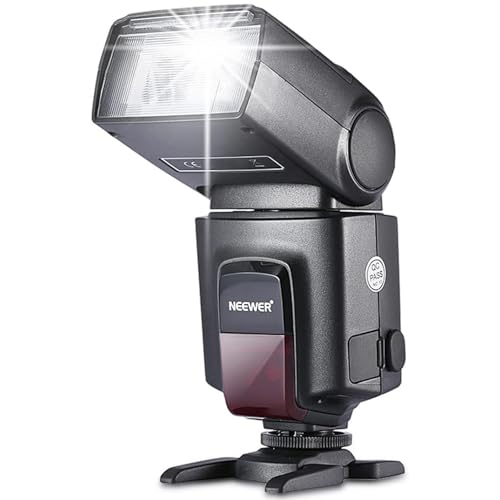
Neewer TT560
Le Neewer TT560 est l'option la plus économique de cette liste, destinée aux débutants qui veulent un flash esclave manuel fonctionnel sans un gros investissement initial. Bien qu'il n'ait pas la finition soignée ni les fonctions radio du Yongnuo YN560 IV, ni le système TTL/rechargeable avancé du Godox V860 III, il offre un nombre-guide acceptable et une fonctionnalité esclave basique pour expérimenter des configurations multi-flash. Pour les utilisateurs qui privilégient le prix pour des tâches simples en esclave, le TT560 représente le point d'entrée le moins coûteux.
Estimated$70 – $110
Godox V860 III
Le Godox V860 III se distingue comme le leader du marché grâce à sa batterie rechargeable lithium-ion, sa compatibilité TTL/HSS et son système radio 2,4 GHz intégré, qui ensemble offrent des temps de recyclage plus courts et des performances plus constantes dans les scénarios exigeants d'utilisation en esclave. Supérieur techniquement pour les workflows mixtes TTL et manuel, il justifie un prix supérieur par rapport aux options purement manuelles comme le TT600 et le YN560 IV en faisant gagner du temps sur les séances et en réduisant les coûts de piles sur le long terme. Pour les photographes qui recherchent des performances esclave fiables avec un contrôle sans fil moderne, le V860 III est le choix haut de gamme.

Estimated$350 – $450
Nissin Di700A
Le Nissin Di700A offre une alternative milieu de gamme solide avec des performances TTL fiables et des modes esclave optiques éprouvés, proposant une option axée sur la qualité entre les têtes manuelles bon marché et les modèles TTL riches en fonctionnalités comme ceux de Godox. Sur le plan financier, il rivalise souvent avec le Godox V860 III et peut convenir aux utilisateurs qui privilégient la qualité de fabrication et la constance du TTL de Nissin plutôt que le prix le plus bas, tout en offrant une meilleure intégration native du TTL et du déclenchement optique que les modèles très bon marché comme le Neewer TT560. Dans les configurations à flash esclave où un secours TTL fiable et le déclenchement optique comptent, le Di700A est un choix judicieux orienté vers les professionnels.

Estimated$250 – $350
Ce que la recherche et les principes techniques disent sur les flashes esclaves
Plusieurs principes issus de l'optique, des tests photographiques et des sciences de la vision expliquent pourquoi les flashes esclaves améliorent la qualité d'image et le contrôle créatif. Les tests techniques mesurent régulièrement la durée d'éclair, le temps de recyclage, la stabilité des couleurs et la cohérence de puissance. Des durées d'éclair plus courtes figent mieux le mouvement ; une température de couleur constante préserve les tons de peau et les couleurs des produits ; et l'utilisation de flashes hors appareil augmente le contrôle de la sculpture de la lumière et la plage dynamique. Les essais pratiques en laboratoire et les revues techniques publiées montrent que les unités esclaves modernes, en particulier celles avec déclenchement radio et alimentation Li-ion, offrent des temps de recyclage plus rapides et une puissance plus régulière que les anciens modèles, ce qui les rend très utiles en studio comme en extérieur.
Durée d'éclair et contrôle de la puissance : des durées plus courtes aident à figer le mouvement, comme le confirment les tests techniques en photographie.
Consistance des couleurs : une température de couleur stable réduit le post-traitement pour des tons de peau et des couleurs de produit fidèles.
Loi de l'inverse du carré : placer des flashes hors appareil permet de contrôler l'atténuation et la forme de la lumière pour créer de la profondeur.
Fiabilité des déclencheurs : les déclencheurs radio sont plus performants que les déclencheurs optiques en extérieur lumineux, confirmé par des comparatifs en laboratoire.
Technologie des batteries : les flashes alimentés par Li‑ion offrent plus de déclenchements par charge et des temps de recyclage plus rapides que les unités fonctionnant sur piles AA dans de nombreux tests.
Frequently Asked Questions
Which slave flash is best for beginners building a setup?
The Neewer TT560 is the ideal choice for beginners because it offers a functional, manual lighting solution at an ultra-budget price point.
Does the Godox TT600 have wireless triggering capabilities?
The Godox TT600 features integrated Godox 4.5 GHz wireless compatibility, allowing it to be triggered reliably as a slave unit.
How much does the Neewer TT560 cost for Canadian photographers?
The Neewer TT560 is priced at $59.99, providing an accessible entry point for those needing a basic, lightweight flash for off-camera use.
What is the average customer rating for the Godox TT600?
The Godox TT600 holds an average rating of 4.5, reflecting its reputation for consistent power output and reliable performance in multi-flash configurations.
Conclusion
Les flashes esclaves sont une solution pratique et économique pour élargir vos possibilités d'éclairage sans investir dans de gros systèmes de studio. Les cinq modèles mis en avant ici - Godox TT600, Yongnuo YN560 IV, Neewer TT560, Godox V860 III et Nissin Di700A - couvrent une gamme de budgets et de fonctionnalités. Pour la plupart des photographes canadiens à la recherche du meilleur compromis entre puissance, fiabilité et fonctions modernes, le Godox V860 III se distingue comme le choix principal grâce à son système de batterie performant et sa constance d'utilisation. Nous espérons que vous avez trouvé ce que vous cherchiez. Utilisez la recherche du site pour affiner selon le budget, la compatibilité de la monture ou le type de déclencheur si vous souhaitez restreindre ou élargir vos options.