

Top 5 Office Reception Robots in Canada, 2026
Office reception robots handle the first thirty seconds of a visit: greeting the person who walks in, checking who they are here to see, and either notifying that host or guiding the visitor to the right room. In Canadian offices they tend to earn their keep in large or multi-tenant lobbies, in buildings where reception is unstaffed part of the day, and in workplaces that want a bilingual greeting without staffing for it. One thing to understand before you shop: this is business equipment, not a consumer gadget. Most of the machines on this page are bought direct from the manufacturer or through an authorised integrator, often on a quote or a monthly robot-as-a-service lease, and the sticker price is rarely the whole cost — software subscriptions, visitor-management integration and support contracts are usually billed separately. Prices below are manufacturer or authorised-reseller list prices in US dollars unless noted; Canadian pricing varies with the exchange rate, duty and the reseller you go through.
Inception's AI took the time to understand this market in Canada · · How we pickWe may earn a commission on purchases. It never affects our rankings.
Top Picks Summary
SoftBank Robotics Pepper
Pepper is the humanoid greeter that made this whole category recognisable — a waist-high robot with a chest tablet, built by SoftBank Robotics and developed by its French subsidiary Aldebaran, designed to hold a face-to-face conversation, read basic emotional cues and hand off details on a screen. It is included here for context rather than as a current recommendation: SoftBank halted production in 2020 after roughly 27,000 units, cut the French engineering team that built it, and Aldebaran entered liquidation in 2025. Pepper still exists in the field and on the used and refurbished market, and resellers offer it with their own service contracts, but it is no longer manufactured and no longer a safe long-term platform choice for a new deployment.

Estimated$20,000 – $30,000
Robotemi Temi
Temi is a compact, self-driving personal robot that maps a space, navigates it without rails or markers, follows a person on command, and runs video calls from its screen — which is why the same unit works as a lobby greeter and as a telepresence robot. It is the most practical entry point on this page because it is actually orderable: the V3 has a published list price of roughly US$3,950 for the Wi-Fi model and US$4,450 for the 5G version through authorised resellers, and the 5G configuration carries a paid annual software subscription on top of the hardware. Robot-as-a-service leasing is also offered by some distributors for offices that would rather not buy outright.

Estimated$4,000 – $4,500
UBTECH Cruzr
Cruzr is a versatile service robot that is engineered for both customer engagement and operational efficiency in various industries. Its advanced voice and facial recognition systems enable it to interact intelligently with users, making it an invaluable asset in retail, hospitality, and healthcare. Cruzr’s robust AI platform allows for extensive customization, adapting to the specific needs of businesses. This flexibility and capability to perform complex tasks set Cruzr apart from its competitors in the service robotics market.

Estimated$10,000 – $20,000
Double 3 Telepresence Robot
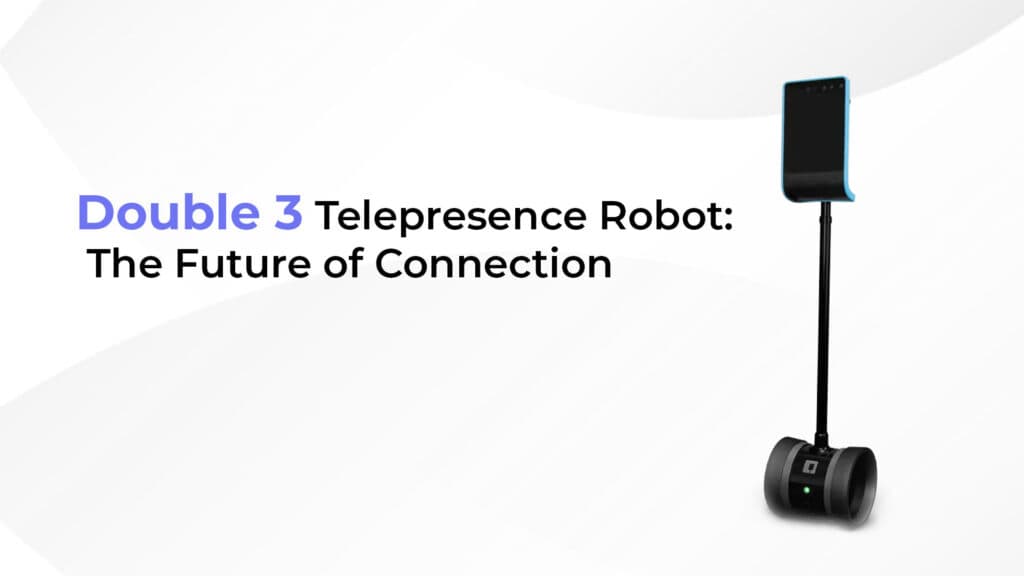
The Double 3 is a self-driving telepresence robot — a screen and camera head on a two-wheeled self-balancing base — that lets a remote person move themselves around an office rather than waiting to be carried. The head carries depth sensors and a mixed-reality driving interface, so the remote driver clicks where they want to go instead of steering continuously, and it is backward-compatible with the older Double 2 base. Double Robotics sells it direct and through a small number of specialist dealers at a list price of about US$3,999 for the robot and charging dock; availability has been intermittent, with the unit showing as sold out at times, so confirm stock before planning a deployment date.
Estimated$4,000 – $4,500
LG CLOi GuideBot
The LG CLOi GuideBot is a cutting-edge service robot designed for hospitality and retail environments. It features advanced navigation and interactive capabilities, allowing it to assist customers with directions and product information. With a sleek, aesthetically pleasing design, the GuideBot enhances the customer experience while providing operational efficiency for businesses. Its commitment to innovation in customer service solutions places LG at the forefront of the service robotics industry.

Estimated$3,000 – $6,000
The robots that actually work at a front desk share three things: reliable autonomous navigation in a busy lobby, integration with the visitor-management or calendar system you already run, and a clean escalation path to a human when the conversation goes off-script.
What to weigh before putting a robot on your front desk
Reception robots differ less in how they look than in how they are sold, what they integrate with, and how much of the greeting they can actually complete on their own.
Decide first whether you need a greeter or a telepresence unit. A greeter (Cruzr, CLOi GuideBot) runs its own script and wayfinding; a telepresence robot (Double 3, and Temi in conferencing mode) puts a remote human on screen and needs that human to be available.
Check how it is sold before you fall in love with a spec sheet. Temi and the Double 3 have published list prices and can be ordered from authorised resellers; UBTECH Cruzr and LG CLOi are quoted per deployment through business channels.
Budget for the recurring cost, not just the hardware. Temi's 5G configuration, for example, requires a paid annual software subscription on top of the purchase price, and enterprise units typically carry support contracts.
These robots are battery-powered and return to a charging dock, so "always on" means the robot covers the hours you schedule it for, not literally uninterrupted service.
Multilingual greeting is a real strength in Canadian lobbies, but confirm which languages are supported natively versus which need a custom integration — French support in particular should be verified with the vendor, not assumed.
Ask what the robot does when it cannot resolve a request. The useful ones escalate to a human, page a host, or fall back to a touchscreen; the frustrating ones loop.
Verify the product is still in production. This category has a short memory: SoftBank's Pepper, once its most recognisable face, has not been manufactured since 2020.
Frequently Asked Questions
Which office reception robot should I choose for greeting visitors?
It depends on lobby size and how you want to buy. For a small-to-mid office that wants a self-driving greeter it can order and deploy quickly, Temi is the practical choice — it has a published list price of about US$3,950 for the Wi-Fi V3 model and is available through authorised resellers. For a large or multi-tenant lobby where the robot needs to run a full greeting and wayfinding script, UBTECH Cruzr and the LG CLOi GuideBot are the lobby-scale options, but both are sold per deployment on a quote. If the goal is really to put a remote person in the lobby rather than automate the greeting, the Double 3 is the telepresence pick.
Is the SoftBank Pepper robot still available in 2026?
Not as a new product. SoftBank halted Pepper manufacturing in 2020 after roughly 27,000 units and cut its French robotics engineering team, and Aldebaran — the SoftBank subsidiary that developed Pepper — went into liquidation in 2025. Pepper is still findable on the used and refurbished market and through resellers who provide their own service contracts, and SoftBank has run a rental programme in Japan, but you cannot order a new one from the manufacturer. If you are considering a used unit, confirm who will support the software and spare parts before you buy — that, not the hardware, is the risk.
Does Robotemi Temi support autonomous navigation and video conferencing?
Yes. Temi maps a space and navigates it autonomously, follows a person on command, and runs video calls from its screen, which is why it gets used both as a greeter and as a telepresence unit. Pricing from authorised resellers runs about US$3,950 for the Wi-Fi V3 and about US$4,450 for the 5G version; note that the 5G configuration requires a paid annual software subscription on top of the hardware, so factor that into a multi-year budget.
How does UBTECH Cruzr compare on price and value?
Cruzr is at the enterprise end of this page. It is a full-size humanoid service robot with gesture and face recognition and a customisable interaction platform, and UBTECH sells it per deployment through business channels rather than at a published retail price — the figure shown here is an indicative range, and your actual quote will depend on configuration, software and support. That puts it well above the two units with public list prices, Temi (about US$3,950) and the Double 3 (about US$3,999), which is the real trade-off: Cruzr buys you presence and customisation in a big lobby, the cheaper units buy you something you can order today.
Conclusion
The honest summary for a Canadian office in 2026: if you want something you can actually order, price and deploy this quarter, Temi is the practical entry point at roughly US$3,950 for the Wi-Fi model, and the Double 3 covers the remote-presence case at about US$3,999 when it is in stock. UBTECH Cruzr and the LG CLOi GuideBot are the larger, lobby-scale greeters, and both are sold through business channels on a quote — expect a conversation with a sales team rather than a checkout page. SoftBank's Pepper is included here because it still defines what people picture when they hear "reception robot," but it has been out of production since 2020 and should only be considered on the used or rental market, with support arranged in advance. Confirm current pricing, availability and French-language support directly with the vendor before committing, and use the search bar if you want to narrow by lobby size or budget.