

Top 5 Calibrated Reference Microphones for Vehicle DSP Tuning in Canada — 2026
Calibrated reference microphones are precision Class 1 and Class 2 condenser microphones supplied with traceable calibration certificates to deliver accurate frequency response and sound pressure level (SPL) measurements for vehicle DSP tuning. In Canada in 2026, installers, audio engineers, and serious car audio enthusiasts prefer these microphones because they remove measurement uncertainty, help validate final system performance, and enable consistent cross-comparison of DSP settings between vehicles and sessions. With growing interest in EV cabin acoustics, factory DSP integration, and aftermarket audio customization, demand has increased for rugged, portable microphones that pair with common measurement suites and support long-term monitoring and final validation tasks.
Inception's AI took the time to understand this market in Canada · · How we pickWe may earn a commission on purchases. It never affects our rankings.
Top Picks Summary
Dayton Audio UMM-6 USB
The UMM-6 is a very affordable USB measurement microphone that delivers strong price-to-performance for vehicle DSP tuning, making it an attractive entry-level tool for installers and hobbyists. Its plug-and-play USB convenience and included calibration file let users get quick in-car measurements, although it trades the lab-grade linearity and traceable calibration of the GRAS and Earthworks models for lower cost. For budgets where ease-of-use and immediate results matter more than the last dB of accuracy, the UMM-6 is a practical choice.

Estimated$120 – $170
miniDSP UMIK-1
The UMIK-1 is the market leader among car-audio tuners thanks to its consistent individual calibration files, broad software compatibility (REW/miniDSP ecosystem), and a proven balance of accuracy and affordability tailored to vehicle DSP work. It typically offers better calibrated linearity and a stronger community and software integration than basic USB mics like the Dayton, while remaining far less costly than laboratory references such as the GRAS or Earthworks units. For installers who need reliable, repeatable measurements without the cost or operational complexity of lab hardware, the UMIK-1 is the go-to choice.

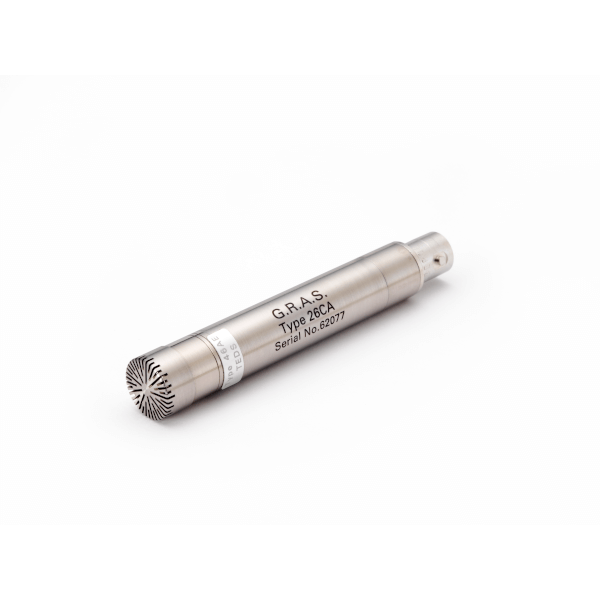
GRAS 46AE 1/2-inch CCP Free-field Microphone
The 46AE 1/2-inch CCP free-field microphone is a laboratory-class, IEC-compliant instrument widely used by OEMs and acoustic labs for vehicle NVH and DSP tuning due to its traceable calibration options and demonstrated free-field behavior. Compared with portable USB mics and even many studio-grade options, the GRAS requires CCP-compatible powering and higher-end instrumentation but delivers the standardized, verifiable measurements needed for regulatory and development workflows. For engineers who need certified, repeatable reference data in vehicle development programs, the 46AE is the professional benchmark.
Estimated$1,300 – $1,800
Beyerdynamic MM1 Measurement Microphone
The MM1 is a compact, well-built measurement microphone offering respectable linearity and portability for in-vehicle DSP tuning at a mid-range price point. It sits between entry-level USB options and the top-tier laboratory microphones — more refined than the cheapest mics but not as flat or as supported with traceable calibrations as GRAS or Earthworks models — making it a practical compromise for mobile installers who want better-than-basic accuracy without the cost and setup requirements of lab hardware. For fieldwork where size and durability matter, the MM1 provides good value.

Why calibrated reference microphones matter
Scientific standards and industry practice show that using a calibrated reference microphone reduces systematic error and improves repeatability in acoustic measurements. Calibration provides a documented traceable path to national metrology institutes, which is essential when you need reliable frequency response and SPL data for tuning vehicle DSP systems. Standards such as IEC 61094 for instrument microphones and IEC 61672 for sound level measurement, together with best practice guides from metrology institutes, underpin why Class 1 versus Class 2 distinctions and periodic revalidation matter for professional results.
Traceable calibration reduces measurement uncertainty by correcting microphone sensitivity and frequency response deviations.
Class 1 microphones offer tighter tolerances and broader usable frequency ranges than Class 2, which helps when tuning multi-band DSPs or verifying subwoofer and upper-frequency behavior.
Studies and industry white papers show improved subjective listening results when objective measurements are performed with calibrated equipment.
Environmental factors such as temperature and humidity affect readings; calibration certificates and recommended recheck intervals mitigate drift over time.
Matched or characterized microphones are important for stereo and multi-microphone measurements to avoid channel-to-channel bias.
Best practices include using a preamp with low self-noise, windscreen for vehicle airflow, and verifying calibration before critical final validation measurements.
Frequently Asked Questions
Which microphone should I buy for vehicle DSP tuning?
MiniDSP UMIK-1 USB Measurement Microphone is a strong pick for most car-audio tuners because it has individually calibrated downloadable calibration files and plug-and-play USB with wide compatibility for REW and other measurement tools.
Does the Earthworks M23R handle high SPL measurements?
Yes—Earthworks M23R Reference Microphone is engineered for high-SPL handling with extremely flat, wideband frequency response and very low distortion for reference-grade measurements, designed for precision OEM-level DSP tuning.
Is the Dayton Audio UMM-6 worth the price in Canada?
At CA$190.70, the Dayton Audio UMM-6 USB Measurement Microphone gives USB plug-and-play convenience with an included calibration file plus an omnidirectional capsule for smooth in-car frequency measurements.
What warranty length comes with the miniDSP UMIK-1?
The provided product details for the miniDSP UMIK-1 USB Measurement Microphone don’t list a warranty duration, so warranty length isn’t confirmed in the data here.
Conclusion
These calibrated reference microphones are the go-to tools in Canada for reliable vehicle DSP tuning, final validation, and long-term monitoring. We hope this guide helped you identify the right Class 1 or Class 2 instrument for your needs. Use the site search to refine by price, calibration interval, or compatibility, or expand your search to compare accessory bundles and preamps.