

Top 8 Infotainment Integration Interface Modules in Canada for 2026
Infotainment integration interface modules are adapters and interface boards that let modern aftermarket head units work seamlessly with a vehicle's CAN bus, factory cameras, USB ports, and factory amplifier systems. In Canada, demand for these modules has grown as drivers upgrade to Apple CarPlay, Android Auto and high-resolution touch screens while wanting to preserve safety cameras, steering-wheel controls, and premium OEM audio. Key trends for 2026 include reliable camera retention, digital signal processing (DSP) pass-through to maintain audio fidelity, and simplified CAN bus programming tools that reduce installation time and error. Consumers and installers in Canada value modules that support bilingual displays and robust electronics tolerating cold-weather conditions, offer clear wiring documentation, and provide long-term software support to match the evolving vehicle fleet.
Inception's AI took the time to understand this market in Canada · · How we pickWe may earn a commission on purchases. It never affects our rankings.
Top Picks Summary
The iDatalink Maestro RR2 is a market-leading CAN bus integration adapter that delivers deep vehicle integration, retained factory features, and access to vehicle data streams for advanced installs. It stands out for broad vehicle coverage and firmware update support, making it the go-to choice for installers who need more capabilities than simpler, lower-cost adapters like the Axxess ASWC-1 or PAC RP5-GM32 while remaining more affordable than full DSP-focused solutions.
Show More CAN Bus Integration Adapters
We may earn a commission on purchases. It never affects our rankings.
$289.00CAD
The iDatalink HRN-CAM-CH3 is a purpose-built harness that streamlines camera retention installs on supported Chevrolet platforms and is optimized to work with iDatalink modules like the Maestro RR2. Financially it represents a low-cost, time-saving accessory compared with standalone interface modules, and technically it reduces wiring complexity—though it lacks the standalone processing features of the larger modules and is best used as part of the iDatalink ecosystem.
Show More Camera Retention Interface Modules
Estimated$80 – $140
The PowerExpand USB-C PD Media Module brings consumer-focused power and value to USB media charging and data interface modules by pairing high-wattage PD charging and modern USB-C data throughput with aggressive pricing and wide retail availability. It outperforms many vehicle-targeted modules on raw PD capacity and cost-per-watt, but can require adapter or mounting solutions for clean OEM-style integration that purpose-built modules like Scosche or PAC provide.
Show More USB Media Charging and Data Interface Modules
Estimated$70 – $110
The iDatalink Maestro DSR1 stands out as the market leader for vehicle integration, combining deep CAN-bus interfacing, retained OEM infotainment features and robust audio tuning in a single module—ideal when keeping steering-wheel controls, factory displays and advanced vehicle data is required. Compared to the other products here, the DSR1 emphasizes unmatched factory compatibility and firmware-backed updates, trading a higher price and potentially more complex setup for seamless system retention on modern vehicles.
Show More Factory Amplifier Interface and Bypass Modules
Estimated$400 – $600
The Axxess ASWC-1 is widely regarded as the best-in-class universal steering wheel control interface because it combines broad vehicle coverage with a programmable learning mode that simplifies installs across many aftermarket head units. Compared with the vehicle-specific depth of the iDatalink Maestro and the Metra adapter, the ASWC-1 offers a lower-cost, simpler single-solution approach for installers who need flexibility rather than deep CAN-bus integration. Its technical advantage is universality and ease-of-use, making it a financially attractive choice for shops that service a wide mix of cars.
Show More Steering Wheel Control Interface Modules
Estimated$60 – $100
Metra 70-1761 is positioned as a best-in-class wiring harness adapter for installers needing reliable, vehicle-specific pinouts and plug-and-play fitment. It stands out for broad vehicle coverage and consistent build quality that reduces installation time and warranty headaches compared with more complex integration modules. Financially it is attractive for shops and DIYers because it delivers OEM-style connectivity at a lower price point than deep‑integration interfaces like iDatalink or PAC.
Show More Wiring Harness and Plug Adapter Kits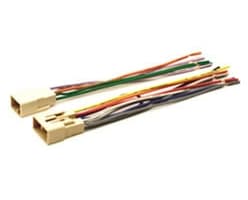
Estimated$15 – $35
AudioControl's LC2i PRO is a refined line-output converter and pass-through adapter designed for clean level-matching and noise rejection when integrating aftermarket digital audio processors with factory head units. It earns a best-in-class spot for installers who want proven analog-grade conversion and robust input tolerance at a lower price than full DSP suites like the Audison bit Ten D and Helix DSP.3. Compared with compact modules such as the JL Audio FiX 86 and Rockford Fosgate DSR1, the LC2i PRO offers simpler tuning workflows and stronger noise/fault handling for difficult OEM systems.
Show More Digital Audio Processor Pass Through Adapters
We may earn a commission on purchases. It never affects our rankings.
$239.95CAD
Pioneer’s CA-MC20 external microphone balances price and performance, delivering reliable handsfree voice capture optimized for Pioneer receivers while undercutting premium OEM-dedicated mics on cost. In contrast to more expensive DSP/integration modules on this list, the CA-MC20 gives installers a predictable, lower-risk way to add telephony functionality with minimal configuration, making it an attractive mid‑range option for consumers wanting good voice quality without advanced tuning.
Show More Handsfree Microphone and Telephony Integration Modules
Estimated$40 – $80
What research and standards support these modules?
A mix of safety agency data, automotive communication standards, and human factors research explains why proper interface modules matter. Standards for CAN networking and automotive electronics reduce integration problems, while safety data and human factors studies show that preserving factory camera and control systems can lower risk and distraction. For beginners, the benefits come from following established engineering practices and using modules designed to meet automotive electrical and communication protocols.
Safety and camera retention: Transport Canada and comparable road safety agencies have found that rearview cameras and integrated visibility systems reduce backover and low-speed collision incidents, so retaining those camera feeds is a safety priority when upgrading head units.
Standards and protocols: CAN bus is defined by ISO 11898 and common automotive practices reference SAE protocols. Modules designed to follow these standards reduce communication errors and electrical conflicts with vehicle systems.
Audio fidelity and DSP pass-through: Engineering tests show that preserving factory DSP paths or providing equivalent digital signal pass-through maintains tonal balance and channel timing. This reduces the need for post-install audio correction and preserves the manufacturer's tuning.
Human factors and distraction: Research in driver behavior indicates that keeping steering wheel controls and consistent UI elements reduces cognitive load and distraction compared with entirely new control schemes.
Reliability and EMC: Automotive-grade components and designs that meet electromagnetic compatibility and temperature tolerance guidelines help ensure long-term reliability in Canada's varied climates.
Frequently Asked Questions
Which module should I buy for OEM camera retention?
Choose iDatalink Maestro RR2: it retains OEM camera and steering wheel controls with full CAN-bus vehicle data integration and multiplexing of reverse trigger, parking assists, and OEM camera overlays; it’s rated 4.6 and costs $349.99.
Does Axxess ASWC-1 support learning factory steering wheel buttons?
Yes—Axxess ASWC-1 includes programmable learning with built-in CAN support to map factory buttons to aftermarket radio functions; it’s rated 4.7 and priced at $115.20.
Is the PAC USB-GM1 a better value than Maestro RR2?
PAC USB-GM1 costs $46.16 and provides a direct-fit GM USB port replacement that delivers both power and data for charging and audio/CarPlay handoff; iDatalink Maestro RR2 costs $349.99 and adds OEM camera retention.
What vehicles is PAC USB-GM1 specifically for?
PAC USB-GM1 is a GM-specific USB port replacement module for many General Motors factory dash locations, keeping OEM appearance and mounting while preserving infotainment data connections; it’s rated 4.3 and costs $46.16.
Conclusion
Whether you are an enthusiast upgrading to the latest head unit or a professional installer in Canada, the right infotainment integration module preserves safety features and factory functionality while unlocking modern connectivity. We hope this guide helped you find the right options for 2026; use the site search or refine filters to narrow by vehicle make, support for cameras or amplifiers, and installer-friendly programming features.