

Canada's Top 5 Commercial and Fleet Receivers for 2026
Ruggedized, remotely manageable receivers designed for commercial vehicles and fleet use are becoming essential for Canadian fleets in 2026. These units combine GPS tracking integration, simplified user interfaces, and remote firmware control to deliver centralized management, improved uptime, and stronger security. Canadian buyers favor receivers that withstand extreme weather and vibration, support long-range and cross-border operations, and comply with privacy and data regulations like PIPEDA. Fleet managers also prioritize solutions that reduce operational costs through fuel and route optimization, offer bilingual support where needed, and integrate with existing telematics, dispatch, and maintenance systems. The result is hardware built for reliability in remote and urban conditions, paired with cloud services that simplify administration and scale with a growing fleet.
Inception's AI took the time to understand this market in Canada · · How we pickWe may earn a commission on purchases. It never affects our rankings.
Top Picks Summary
Garmin Fleet 790
The Garmin Fleet 790 pairs Garmin's trusted driver-focused navigation with fleet-oriented features, making it a strong choice for commercial fleets that prioritize in-cab guidance and quick driver adoption. For Commercial And Fleet Receivers use cases it offers a lower ongoing cost profile through one-time hardware purchase compared with cloud-first subscriptions, though it provides less deep remote diagnostics and telematics breadth than devices like Geotab GO9 or Samsara VG54.

Estimated$700 – $900
Webfleet PRO 8475
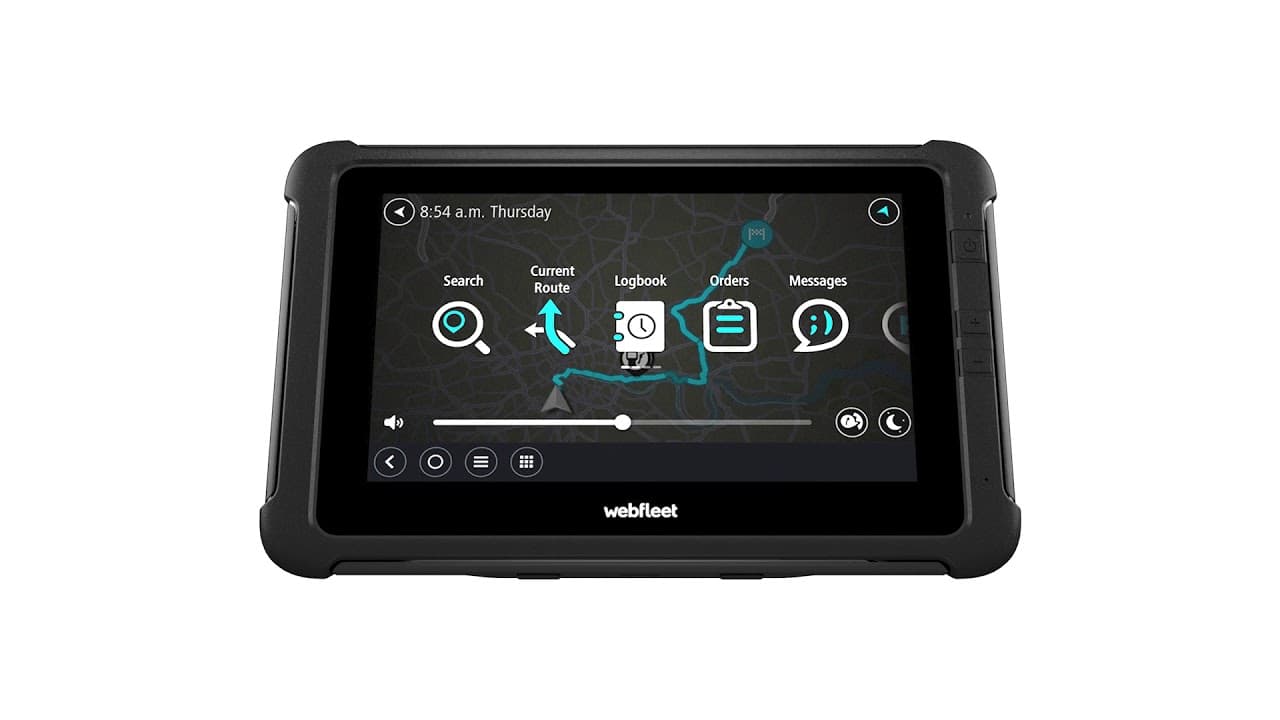
The Webfleet PRO 8475 is a purpose-built telematics terminal tightly integrated with the WEBFLEET platform and TomTom mapping, excelling in precision routing and enterprise fleet workflows—particularly across Europe. Its technical advantage is platform-grade routing and fleet optimization that can reduce fuel and route costs relative to general-purpose receivers like Garmin or CalAmp, while full value typically depends on WEBFLEET subscription services.
Estimated$900 – $1,200
Samsara VG54
The Samsara VG54 is a modern vehicle gateway with built-in video capabilities, extensive CAN-bus telemetry and real-time cloud reporting, positioning it as best-in-class for fleets that require safety-focused, low-latency monitoring and incident review. Fleets often offset Samsara's subscription fees through lower accident and compliance costs, and technically it outperforms navigation-centric hardware in video telematics while offering comparable cloud functionality to Geotab's ecosystem.

Estimated$450 – $650
Geotab GO9
The Geotab GO9 is a market-leading telematics receiver known for deep diagnostics, a mature SDK and a large marketplace of analytics add-ons, making it ideal for large commercial fleets focused on data-driven optimization. It delivers scalable per-vehicle pricing and measurable operational ROI from analytics, and technically rivals Samsara on data depth while offering broader third-party integrations than navigation-first devices like the Garmin Fleet 790.

Estimated$200 – $300
CalAmp LMU-5530
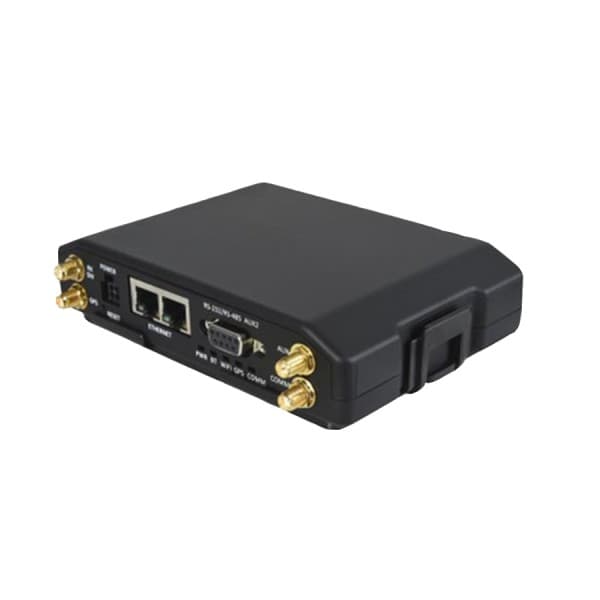
The CalAmp LMU-5530 is a rugged, configurable LTE modem engineered for vehicle and asset tracking where flexible I/O and low hardware cost are priorities, making it well-suited for mixed fleets and custom installations. Compared with all-in-one platforms such as Samsara or Geotab, the LMU-5530 minimizes upfront hardware expense and offers versatile connectivity, though it typically requires pairing with a telematics platform or subscription to unlock full fleet management capabilities.
Estimated$150 – $250
What Research Says About Fleet Receivers and Telematics
A growing body of industry research and government guidance shows that modern telematics receivers and fleet management platforms deliver measurable benefits in safety, fuel efficiency, maintenance, and operational productivity. Studies and industry reports explain how real-time location, driver behavior monitoring, and remote diagnostics contribute to lower costs and better compliance. For beginners, the core idea is simple: reliable hardware plus connected software turns vehicle data into actionable decisions that save money and time.
Fuel and route efficiency: Multiple industry analyses report fuel savings typically in the single digits to low double digits (commonly 5 to 15 percent) after deploying GPS tracking and route optimization, depending on fleet type and program scope.
Safety and accident reduction: Programs that include driver coaching and monitoring often see reductions in risky behavior and incident rates. Improvements vary by implementation but are widely reported across fleets.
Maintenance and uptime: Remote diagnostics and over-the-air firmware updates reduce unnecessary shop visits and can cut unplanned downtime by enabling predictive maintenance.
Return on investment: Many fleets recover the cost of telematics hardware and subscription services within 12 to 24 months through combined savings on fuel, labor, and maintenance.
Data privacy and compliance: Research and best practices emphasize secure data handling and local regulatory compliance, including principles consistent with Canadian privacy frameworks like PIPEDA.
Frequently Asked Questions
Which receiver should a Canadian fleet choose for quick adoption?
Choose the Garmin Fleet 790 for driver-friendly in-cab guidance, using its 7-inch truck-specific navigation plus fleet integration and remote updates to keep maps and routes current (rating 4.3).
Does the Webfleet PRO 8475 support truck routing restrictions?
Yes—the Webfleet PRO 8475 includes commercial-grade routing optimized for trucks with vehicle-profile and restriction awareness, with full WEBFLEET platform connectivity for route planning, logs, and real-time location (rating 4.4).
Is the Samsara VG54 better value than Garmin Fleet 790?
The provided data doesn’t list any prices for Garmin Fleet 790 or Samsara VG54, so a value comparison isn’t possible from the available specs (Garmin rating 4.7, Samsara rating 4.7).
Which receiver offers over-the-air firmware updates for fleets?
Samsara VG54 supports over-the-air provisioning and firmware updates for rapid fleet-wide deployment, combining multi-CAN/FMS support with high-accuracy GNSS tracking and native cloud telematics/video reporting (rating 4.7).
Conclusion
In Canada, rugged and remotely managed receivers such as the Garmin Fleet 790, Webfleet PRO 8475, Samsara VG54, Geotab GO9, and CalAmp LMU-5530 address the unique demands of long distances, harsh weather, and regulatory requirements. Each unit delivers strengths: Garmin Fleet 790 for navigation-focused fleets, Webfleet PRO 8475 for established fleet management workflows, Samsara VG54 for a modern, integrated platform, Geotab GO9 for scalable analytics, and CalAmp LMU-5530 for versatile OEM-friendly deployments. For most Canadian businesses looking for a balanced mix of remote management, integration, and reliability, the Samsara VG54 stands out as the best overall choice. We hope you found what you were looking for; use the search to refine by feature, price, or compatibility to expand or narrow your options.