

Top 5 Lighting and Energy Management Systems for Multilevel Garages in Canada - 2026
Lighting and energy management systems for multilevel garages combine LED fixtures, occupancy sensors, daylight harvesting, and centralized controls to cut energy use, improve visibility, and increase safety. In Canada, decision makers prioritize cold-climate reliability, long-life performance, compliance with provincial and national energy codes, and access to rebates and utility programs. For 2026 the most appealing options merge high-efficiency LED luminaires with networked sensors and open-protocol controls (for example BACnet or Modbus), while offering EV-aware logic and the ability to integrate onsite renewables and battery storage for peak shaving and cost optimization. Consumers and facility managers prefer solutions that reduce operating costs through automated dimming and scheduling, minimize maintenance with long-life LEDs and remote diagnostics, and improve security with zoned lighting for pedestrians, ramps, and vehicle lanes. The top five system approaches recommended for Canadian multilevel garages in 2026 are: 1) integrated LED fixtures with centralized EMS and BACnet integration; 2) networked luminaire-level controls with occupancy sensing and daylight dimming; 3) wireless mesh sensor and control platforms for simple retrofit installs; 4) energy management platforms that coordinate EV charging, onsite solar, and storage for demand management; and 5) cloud-managed analytics platforms offering predictive maintenance, fault detection, and demand response enrollment.
Inception's AI took the time to understand this market in Canada · · How we pickWe may earn a commission on purchases. It never affects our rankings.
Top Picks Summary
Cree Lighting CPY250 LED Canopy Light
The Cree CPY250 LED Canopy Light is a high-efficacy, canopy-optimized fixture built for the thermal and optical demands of multilevel garages, reducing energy use and maintenance compared with legacy HID lighting. Its strong lumen output and canopy optics make it a cost-effective fixture choice that pairs well with control platforms like Lutron Vive or enterprise systems like Schneider EcoStruxure, offering a fixture-focused value proposition versus the broader system capabilities of the other products on this list.

Estimated$250 – $400
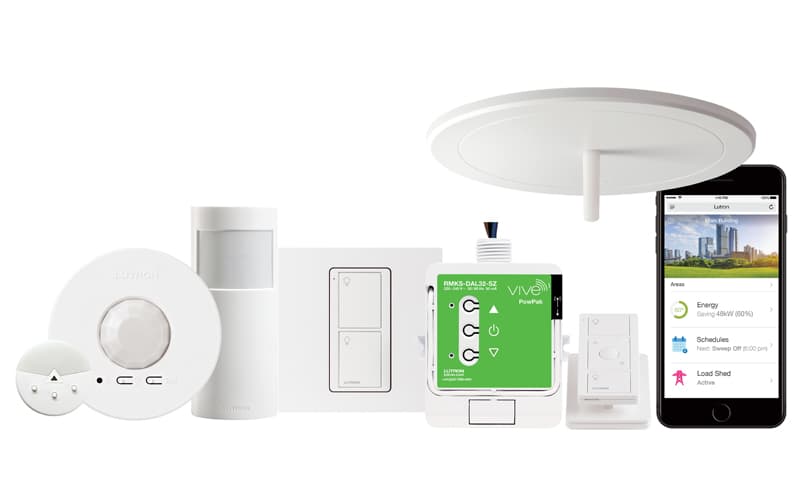
Lutron Vive Wireless Lighting Control System
The Lutron Vive Wireless Lighting Control System is a scalable, retrofit-friendly wireless control platform that minimizes installation disruption and labor costs in multilevel garages. It delivers zone-based dimming, scheduling, and occupancy control at a lower upfront systems cost than full BMS offerings, and complements fixtures (Cree, Signify) and sensors (Leviton OSC20) to achieve significant operational savings without the capital intensity of Schneider EcoStruxure.
We may earn a commission on purchases. It never affects our rankings.
Estimated$800 – $5,000
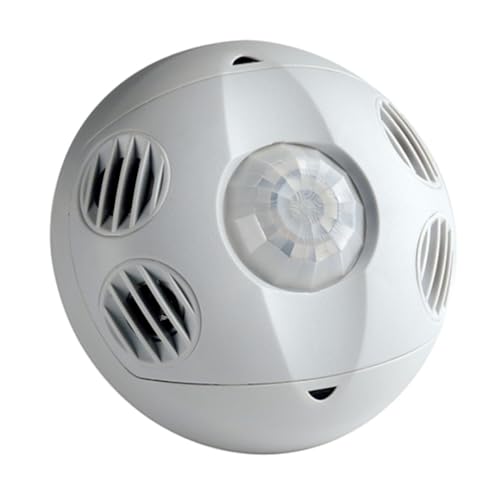
Leviton OSC20-M0W Ceiling Mount Occupancy Sensor
The Leviton Smart Sensor OSC20 provides robust occupancy and ambient light sensing designed for demanding parking-structure environments, enabling reliable motion-based switching and daylight harvesting to reduce run-time and energy consumption. Its compact, cost-effective design makes it ideal for pairing with Cree or Signify fixtures and for integration with Lutron Vive controls, offering a lower-cost path to measurable savings compared with deploying full BMS sensor suites.
Schneider Electric EcoStruxure Building Operation
Schneider Electric EcoStruxure Building Operation is an enterprise-grade building management platform that centralizes lighting, power, and analytics to drive deep energy optimization and utility-grade reporting for multilevel garages. While more capital-intensive than wireless retrofit platforms like Lutron Vive or standalone sensors, EcoStruxure’s strength is in converging fixtures (Cree, Signify), sensors (Leviton), and facility systems into a single architecture to lower lifecycle costs and enable advanced energy management strategies.

Estimated$15,000 – $150,000
Signify Philips CoreLine LED Waterproof
The Signify Philips CoreLine LED Waterproof line delivers IP-rated, long-life LED fixtures designed to replace HID canopy and strip lights in wet or damp garage environments, offering predictable lumen maintenance and lifecycle cost savings. It competes with the Cree CPY250 on durability and efficiency while leveraging Signify’s global support and warranty footprint, and integrates well with controls like Lutron Vive or Schneider EcoStruxure plus sensors such as the Leviton OSC20 for balanced upfront cost and integrated energy management.

We may earn a commission on purchases. It never affects our rankings.
Estimated$80 – $250
What the Research Says About LEDs, Sensors and Integrated Energy Management
Multiple peer-reviewed studies and government guidance show that combining LED lighting with occupancy sensors, daylight harvesting, and centralized energy management delivers reliable energy savings, improves safety metrics, and lowers lifecycle costs. Evidence supports meaningful reductions in consumption and demand when lighting controls are tuned to actual circulation and daylight conditions, and when lighting strategies are coordinated with EV loads and on-site generation.
LED upgrades: Field evaluations from government and industry programs report typical energy reductions of 40 to 70 percent when replacing legacy HID or fluorescent garage lighting with modern LEDs, depending on baseline conditions and lumen targets.
Occupancy sensors: Trials in parking structures show vacancy-based controls can reduce lighting run-hours by 30 to 60 percent in low-traffic periods, while maintaining safety and perceived security through zoned or partial-on strategies.
Daylight harvesting: Where daylight reaches ramp perimeters or skylights, daylight-responsive dimming can yield an extra 10 to 30 percent reduction in lighting energy use by lowering electric output during daylight hours.
Integrated EMS and EV coordination: Energy management that coordinates lighting with EV charging and building loads enables peak shaving and demand cost reductions; practical pilots report peak demand savings in the range of 10 to 30 percent depending on charging patterns and control sophistication.
Operational benefits: Remote monitoring, analytics, and predictive maintenance reduce downtime and service calls; long-life LEDs (L70 ratings 50,000 hours or more) and warranty-backed systems lower total cost of ownership.
Standards and guidance: Canadian and international guidance from Natural Resources Canada, ASHRAE, and industry bodies recommend combining efficient luminaires with controls and open integration standards to maximize savings and future-proof installations.
Frequently Asked Questions
Which option should I choose for multilevel garage lighting?
Choose the Cree Lighting CPY250 LED Canopy Light for multilevel garages because it’s wet-location and corrosion-resistant with high lumen output/efficacy optimized for canopy and ceiling-mounted fixtures, rated 4.6.
Does the Cree CPY250 work in wet, corrosive garage areas?
Yes—the Cree Lighting CPY250 LED Canopy Light has wet-location and corrosion-resistant housing designed for multilevel garage environments, with an average rating of 4.6 and listing price of CAD 85.99.
How does Leviton OSC20 pricing compare for smart sensing?
The Leviton Smart Sensor OSC20 costs CAD 141.14 and is rated 4.3, offering dual-technology occupancy sensing plus adjustable timeout, vacancy modes, and daylight harvesting compatibility.
Is the Lutron Vive system better for retrofits than wiring?
The Lutron Vive Wireless Lighting Control System is retrofit-friendly because it’s a scalable wireless control platform, delivering zone-based dimming and occupancy control with centralized management, rated 4.4.
Conclusion
In Canada, multilevel garage operators benefit from pairing LEDs with smart controls and integrated energy management to cut costs, improve safety, and enable EV and renewable integration. We hope this overview helped you identify the right approach for 2026; use the site search to refine by province, rebate eligibility, or installation type, or expand your search to compare specific vendors and system features.