

Canada's Top 6 Punching and Stamping Systems for 2026
Published on Saturday, January 24, 2026
Punching and stamping systems are the backbone of sheet metal production in Canada, powering operations from precision holemaking and blanking to complex forming for automotive, aerospace, HVAC, and appliance parts. In 2026 the market is dominated by turret punches, progressive stamping presses, and servo-driven presses that deliver high-speed throughput with consistent part quality. Buyers increasingly prioritize quick die change systems, flexible tooling, and line automation to support mixed-model production runs and reduce downtime. Canadian manufacturers favor systems with strong local support networks, predictable total cost of ownership, and energy-efficient operation because these attributes address workforce constraints, nearshoring demands, and increasing regulatory and sustainability expectations. The result is a shift toward integrated, Industry 4.0-ready solutions that combine servo motion control, modular tooling, and smart sensors for predictive maintenance and tighter process control.
Top Picks Summary
The TRUMPF TruPunch 5000 leads as a high-throughput, highly automated turret punch platform prized for its speed, precision and Industry 4.0 connectivity; its robust tool changer and integrated automation lower the long‑term cost per part compared with lower‑automation turret presses. Against competitors like Amada and Salvagnini it commands a higher upfront price but often delivers superior total cost of ownership for high-volume industrial fabrication runs due to uptime and software-driven nesting efficiency.
Show More Turret Punch Machines for Industrial Fabrication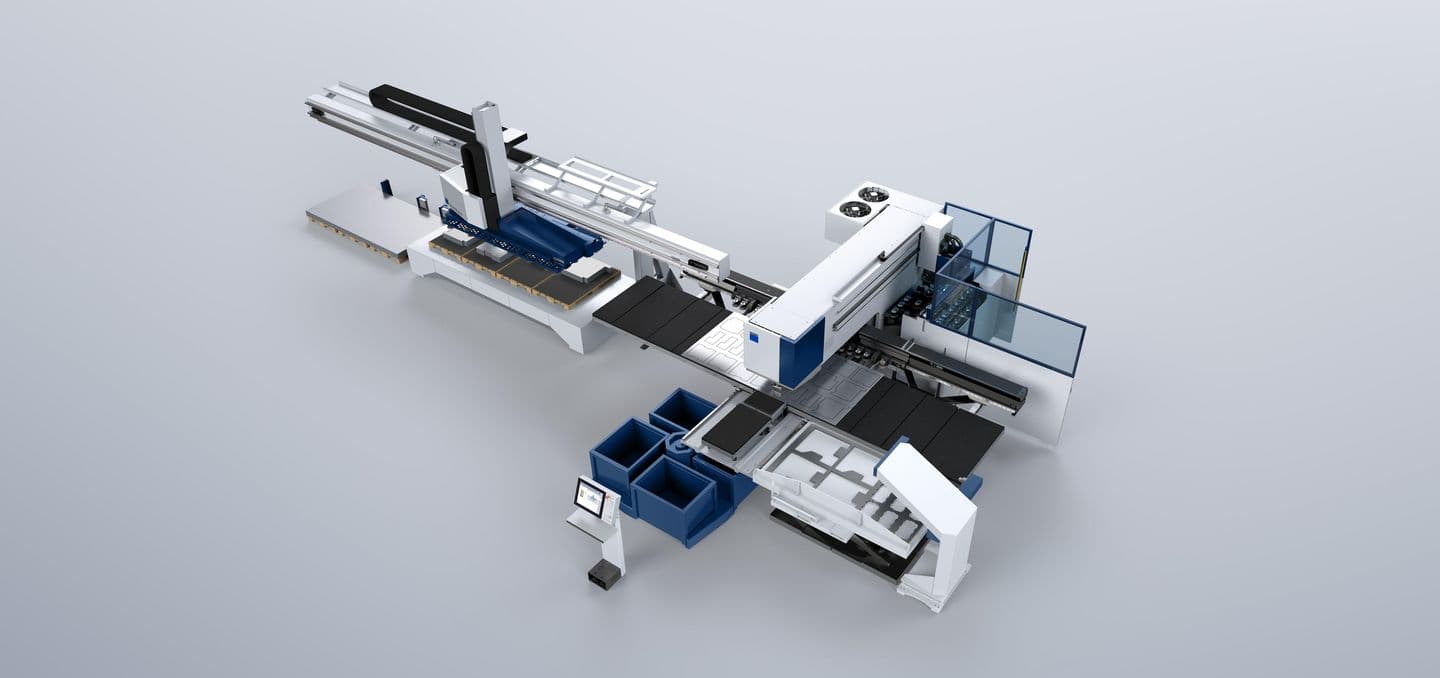
Where to buy TRUMPF TruPunch 5000 in Canada: the trusted retailers we track in this market, with the best price we have observed at each. Prices are checked regularly and can change, and the retailer confirms the final price at checkout.
We may earn a commission on purchases. It never affects our rankings.
$450,000 – $900,000
Nidec Minster P2H Series High Speed Press
The Nidec Minster P2H is a globally proven high-speed press offering exceptional durability and tight indexing for progressive stamping of thin automotive body panels, translating into high uptime and predictable maintenance costs. Compared to other high-speed brands, Minster’s extensive service network and component robustness often convert into lower lifecycle expenses and fewer unplanned stoppages, making it a dependable choice when program stability and volume economics matter most.
Show More Progressive Stamping Presses for Automotive and Industrial Production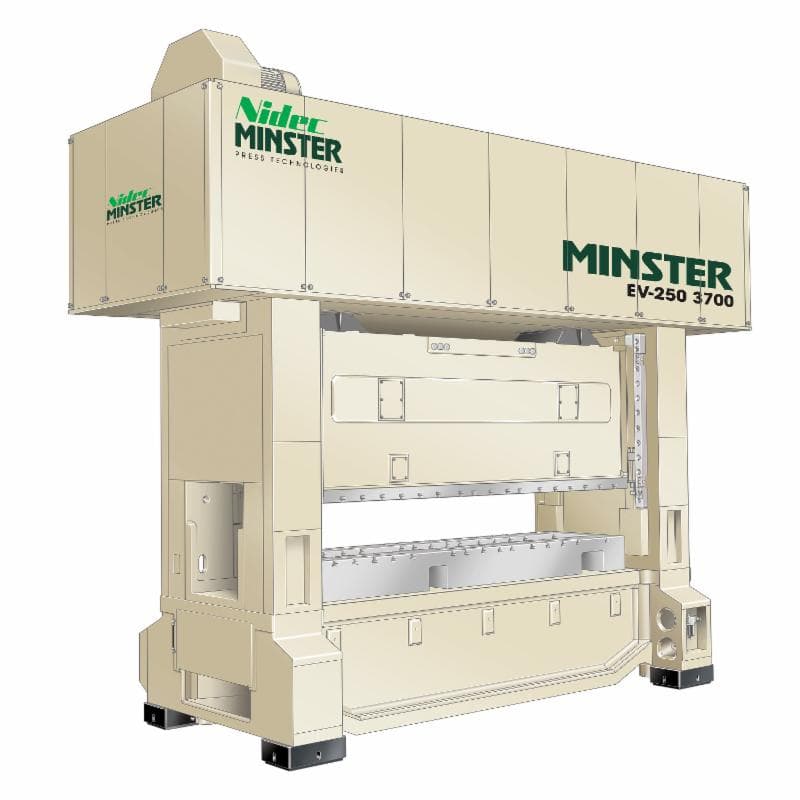
Where to buy Nidec Minster P2H Series High Speed Press in Canada: the trusted retailers we track in this market, with the best price we have observed at each. Prices are checked regularly and can change, and the retailer confirms the final price at checkout.
We may earn a commission on purchases. It never affects our rankings.
$600,000 – $2,500,000
Komatsu H1F Gap Frame Press
The Komatsu H1F gap frame press is a workhorse for sheet metal production, prized for its rugged construction, compact footprint and competitive purchase price that make it attractive for small-to-medium tonnage jobs. Compared with servo-driven or ultra-high-speed models on this list, the H1F delivers lower-capital entry and simpler maintenance while still providing consistent stamping accuracy, making it a cost-efficient choice when outright cycle speed or advanced electronic motion control are not primary requirements.
Show More Servo Driven Presses for Sheet Metal Stamping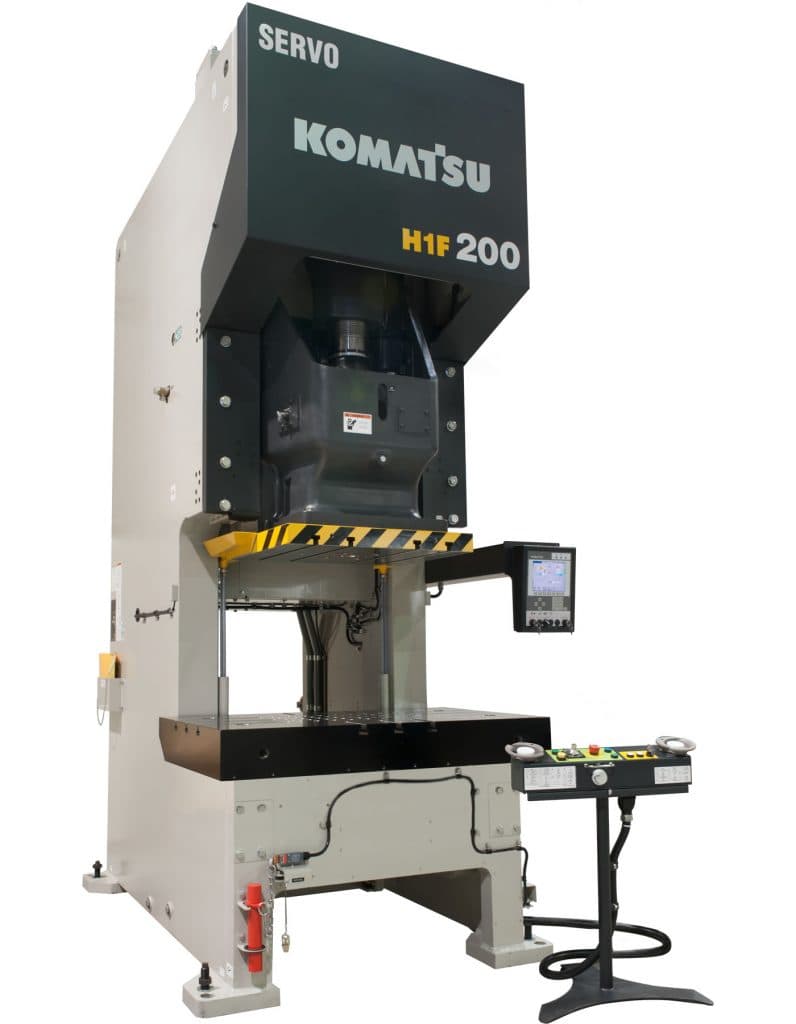
Where to buy Komatsu H1F Gap Frame Press in Canada: the trusted retailers we track in this market, with the best price we have observed at each. Prices are checked regularly and can change, and the retailer confirms the final price at checkout.
We may earn a commission on purchases. It never affects our rankings.
$60,000 – $180,000
Dake's Dura-Press provides a rugged, dependable hydraulic press platform engineered for long service life and minimal downtime, delivering a low total cost of ownership for heavy-gauge stamping. Compared with premium hydroforming systems and high-precision straight-side presses, Dake emphasizes reliability and parts availability — a financial and operational advantage for shops prioritizing uptime over specialized forming capabilities.
Show More Mechanical Stamping Presses for Sheet Metal Production
Kosmek Quick Die Change Clamping System
Kosmek's quick die change clamping systems are recognized for compact, high-quality mechanical designs that integrate smoothly with automated material-handling and press controls in high-volume stamping lines. They are a market leader where footprint, cycle-time consistency and long-term reliability matter, offering stronger space-efficiency than many Roemheld installations and typically greater engineering refinement than lower-cost Pascal or Sandsun options, albeit sometimes at a premium price.
Show More Hydraulic Stamping Presses for Heavy Gauge Forming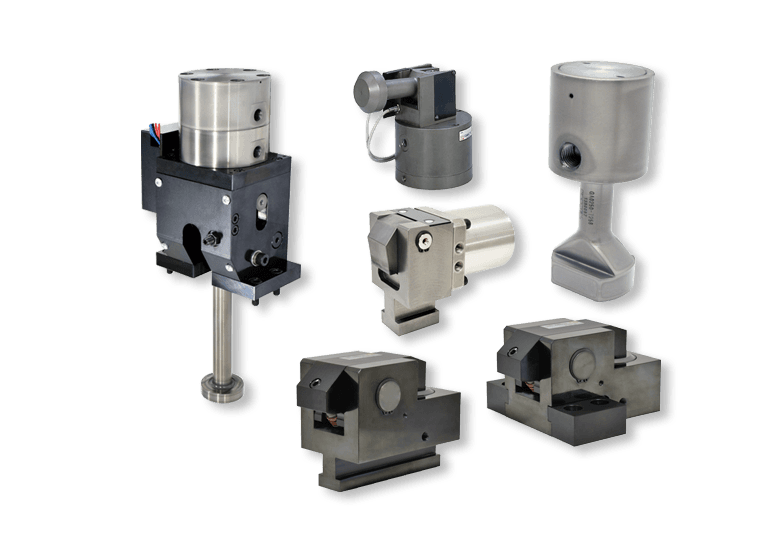
The Schuler Compact Coil Line is a fully integrated coil-to-press solution that combines decoiler, straightener and feeder into a compact engineered system, making it a market leader for turnkey high-volume stamping lines. Though its upfront capital cost is higher than standalone servo feeders (Coe, AIDA, Dallas, Sankyo), the integrated approach lowers per-part operating cost and footprint, reducing long-term production and logistics expenses. Technically, Schuler’s end-to-end integration minimizes setup complexity and yields the best overall line efficiency for greenfield installations or full-line upgrades.
Show More Die Tooling and Quick Die Change Systems for Stamping Lines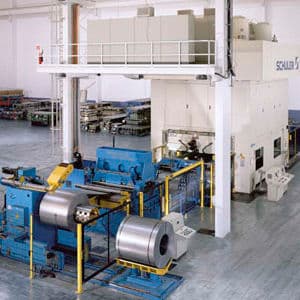
What research and industry evidence show
Research and industry reports highlight several consistent benefits from modern punching and stamping technologies: faster cycle times, improved repeatability, reduced scrap, and lower operating cost when automation and servo technology are employed. Academic studies, industry surveys, and manufacturing case studies demonstrate how quick die change and flexible tooling shorten changeover times and enable profitable small-batch production. Energy and lifecycle analyses also show that electric and servo-driven systems can cut energy use and hydraulic oil handling compared with older hydraulic presses, while digital monitoring reduces unplanned downtime through predictive maintenance.
Productivity gains: Industry case studies and manufacturing surveys show that automation and servo drives increase throughput and reduce cycle variation, enabling higher yields on the same floor space.
Changeover and flexibility: Research into flexible tooling and quick die change systems documents large reductions in setup time, making mixed-model production more economical and responsive to customer needs.
Quality and scrap reduction: Controlled servo motion and electronic monitoring deliver better repeatability and lower scrap rates than legacy mechanical setups, as shown in comparative shop-floor studies.
Energy and sustainability: Life-cycle and energy-efficiency reports indicate that electric and servo-driven presses typically use less energy and reduce hydraulic fluid handling, supporting sustainability goals and lower operating cost.
Maintenance and uptime: Studies on Industry 4.0 adoption report that sensor-based predictive maintenance lowers unplanned downtime and maintenance cost, improving overall equipment effectiveness.
Frequently Asked Questions
Which press should I buy for thin automotive panels?
Choose the Nidec Minster P2H Series High Speed Press for progressive stamping of thin automotive body panels, since it has a precision anti-deflection slide and tight repeatability for predictable maintenance and high uptime.
What exact capability does the Minster P2H have?
The Nidec Minster P2H Series High Speed Press includes a precision anti-deflection slide with tight repeatability, supporting high-capacity, high-speed progressive stamping of thin stamped parts.
How does the Dake Dura-Press price compare here?
The provided data doesn’t list a price for either the Nidec Minster P2H or the Dake Dura-Press Hydraulic Press, so no Canada price/value comparison can be made from this page.
Which press is better for heavy-gauge stamping and forming?
The Dake Dura-Press Hydraulic Press is the better pick for heavy-gauge stamping and forming, with a robust fabricated frame engineered for continuous shop use; the provided data does not state warranty duration.
Conclusion
In Canada, modern punching and stamping systems combine speed, flexibility, and smart automation to meet diverse industry needs from automotive parts to precision components. We hope this overview helped you find the right options for 2026; use the site search to refine by application, press type, or automation level, or expand your search to compare tooling, service, and financing options.