

Top 5 Robotic Fabrication Cells and Automation Solutions in Canada - 2026
Published on Saturday, January 24, 2026
Robotic fabrication cells combine welding, cutting, material handling, and inspection with vision systems and PLC integration to automate repetitive and hazardous tasks. In Canada, adoption is driven by manufacturers seeking higher throughput, consistent quality, improved workplace safety, and flexible production for smaller batch sizes. Buyers prefer modular cells that support quick reconfiguration, collaborative robots that lower integration cost and risk, and solutions that communicate seamlessly with MES and enterprise systems. Support networks, Canadian service partners, safety certifications, and proven on-site performance are primary decision factors for companies across automotive, heavy fabrication, energy, and advanced manufacturing sectors.
Top Picks Summary
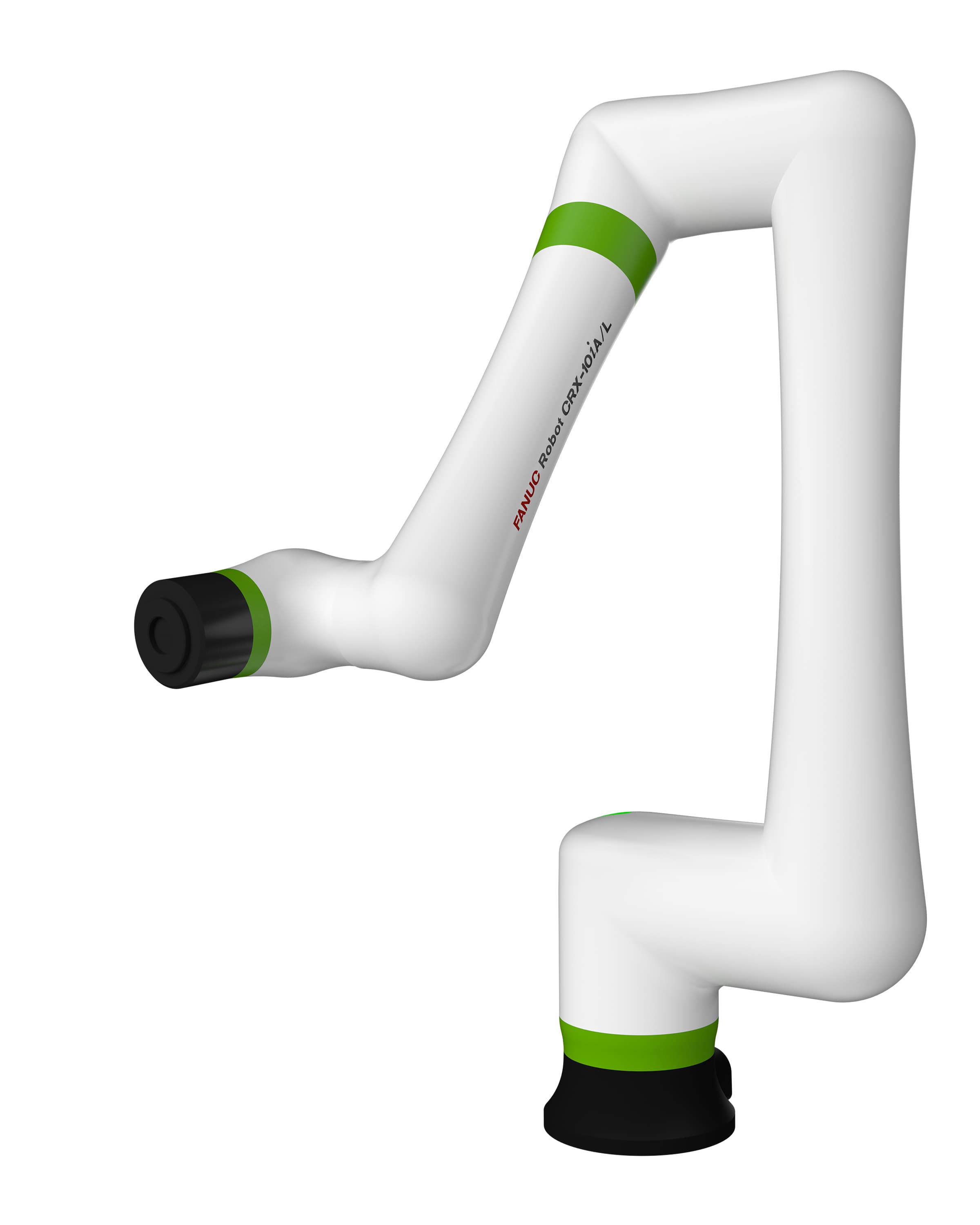
FANUC CRX-10iA Collaborative Robot
The FANUC CRX-10iA is positioned as a best-in-class collaborative arm for robotic fabrication cells because it combines FANUC's field-proven reliability and uptime with a compact, safety-rated cobot form factor suited to mixed human/robot workstations. Compared with lighter cobots and general-purpose robots in this list it offers a strong service network and predictable lower lifetime maintenance costs for high-utilization fabrication tasks, making it attractive where continuous production and minimal downtime are priorities.
Universal Robots UR10e
The UR10e is a market-leading collaborative robot in fabrication automation thanks to its exceptionally easy programming, broad tooling ecosystem, and low integration time that reduce overall deployment cost. Against more traditional industrial cells like ABB and KUKA or heavier cobots such as Yaskawa's HC series, the UR10e shines for rapid reconfiguration and low total cost of ownership on mid-volume, flexible fabrication lines.

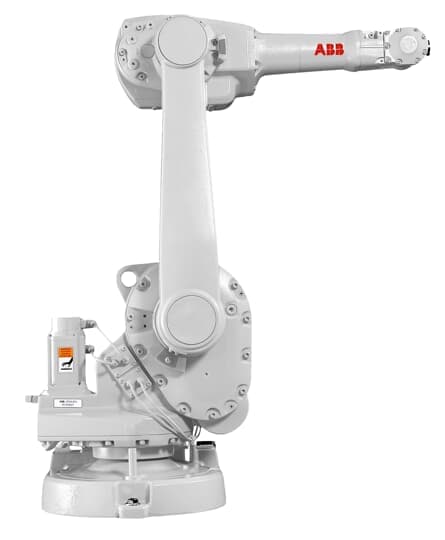
ABB IRB 1600 Welding Cell
The ABB IRB 1600 welding cell is a market-leading specialized solution for automated welding and fabrication, offering high cycle rates, integrated welding controllers, and application-specific tooling that deliver superior throughput and weld consistency. While collaborative cobots on this list excel at flexible, human-adjacent tasks, the IRB 1600 outperforms them on pure production efficiency and per-part cost in high-volume welded fabrication, albeit with higher initial cell capital expenditure.
KUKA KR CYBERTECH
The KUKA KR CYBERTECH series is recognized as a best-in-class compact industrial robot family for precise fabrication tasks, providing high repeatability, fast motion profiles, and easy integration into larger KUKA-controlled cells. Compared to ABB's welding-focused cell and collaborative units from FANUC, UR, and Yaskawa, KUKA offers a balance of industrial-grade speed and flexible cell architecture that reduces cycle times for automated assembly and spot-welding applications while enabling scalable capital investments across production lines.

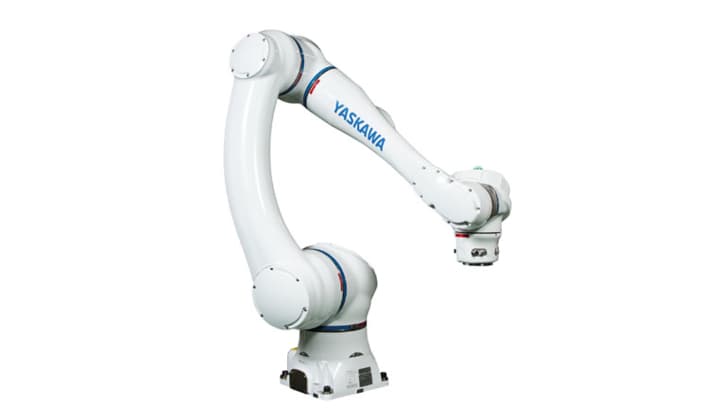
Yaskawa Motoman HC20DT
The Motoman HC20DT targets heavier-duty collaborative fabrication tasks by combining higher payload and industrial motion performance with collaborative safety features, making it a strong choice where cobot convenience must meet near-industrial throughput. Relative to lighter cobots like the UR10e and FANUC CRX series, the HC20DT lets integrators consolidate workstations and reduce part transfer operations, lowering floor-space and amortized equipment costs in medium-volume fabrication cells.
Research and Evidence Behind Robotic Fabrication Cells
Academic research, government reports, and industry case studies consistently show that automated fabrication cells deliver measurable gains in throughput, repeatability, and operator safety when deployed with proper process design and integration. Studies and reviews from Canadian research bodies and global robotics labs emphasize the importance of vision-guided control, PLC-MES integration, and safety-rated collaborative designs for reducing defects and enabling flexible, high-mix production.
Throughput and consistency: Industry reports and case studies commonly show meaningful reductions in cycle time and variation when manual operations are replaced or augmented by automated cells.
Worker safety and ergonomics: Research and occupational health reviews document reduced exposure to welding fumes, heat, repetitive strain, and other hazards when robots handle high-risk tasks.
Quality and inspection: Vision systems integrated with PLCs and process control can detect defects earlier, improving first-pass yield and lowering rework rates.
Flexibility and modularity: Studies on modular cell design demonstrate faster changeovers and lower lifecycle costs for manufacturers moving to mixed-model production.
Support and standards: Evidence highlights that adherence to safety and interoperability standards (for example, internationally recognized robot safety frameworks and local electrical and machine codes) lowers integration risk and speeds commissioning.
Canadian context: Government programs and research initiatives from institutions such as the National Research Council of Canada and university robotics labs often support pilot projects and provide validation for automation investments.
Frequently Asked Questions
Which robot should I pick for mixed human workstations?
Choose the FANUC CRX-10iA Collaborative Robot if you need a compact safety-rated cobot for mixed human/robot fabrication cells, with an average rating of 4.5 and a 10 kg payload with long reach.
What payload and sensing features does the UR10e have?
The Universal Robots UR10e includes a payload designed for fabrication material handling and machining support, plus precision force/torque sensing and UR+ ecosystem compatibility; it has an average rating of 4.8.
Is ABB IRB 1600 Welding Cell worth the price versus cobots?
The provided details don’t list any prices for the ABB IRB 1600 Welding Cell or the other options, so I can’t compare value by cost; it does have an average rating of 4.4 and an offline programming welding-cell approach.
Does the ABB IRB 1600 include safety enclosures and welding package?
Yes—the ABB IRB 1600 Welding Cell is described as a complete welding cell approach including the robot, welding package, and safety enclosures; it has an average rating of 4.4.
Conclusion
Robotic fabrication cells are a practical and strategic investment for Canadian manufacturers looking to automate welding, cutting, handling, and inspection with integrated vision and PLC control. The five solutions highlighted here cover a range of use cases: FANUC CRX-10iA Collaborative Robot for safe human-robot collaboration, Universal Robots UR10e for flexible, easy-to-deploy collaborative automation, ABB IRB 1600 Welding Cell for high-speed welding performance, KUKA KR CYBERTECH for precise fabrication and reach, and Yaskawa Motoman HC20DT for heavy-duty collaborative tasks. For most small to mid-size shops seeking the best combination of flexibility, ecosystem support, and ease of integration, the Universal Robots UR10e is often the best choice. We hope you found what you were looking for; refine or expand your search using the site search to compare specs, partners, and local integrators.