

Top 5 Linear Position Sensors for Industrial Motors and Drives in Canada — 2026
Linear position sensors (optical, magnetic, inductive and capacitive) provide precise direct measurement of travel or stage position for gantries, actuators and linear motors. In Canadian industrial settings, from packaging lines and machine tools to heavy equipment and automation cells, these sensors are in demand for their accuracy, repeatability and ruggedness. Many modern models integrate diagnostics and fieldbus outputs to support Industry 4.0 monitoring and predictive maintenance, enabling condition-based servicing, reduced downtime and better process control. Canadian buyers tend to prioritize reliability in cold and wet conditions, local support and availability, compliance with regional electrical and safety standards, long service life, and connectivity to common industrial networks such as EtherCAT, Profinet and Ethernet/IP. Cost of ownership, ease of integration, and vendor support for calibration and firmware updates also strongly influence purchasing decisions across manufacturing, mining, and energy sectors.
Inception's AI took the time to understand this market in Canada · · How we pickWe may earn a commission on purchases. It never affects our rankings.
Top Picks Summary
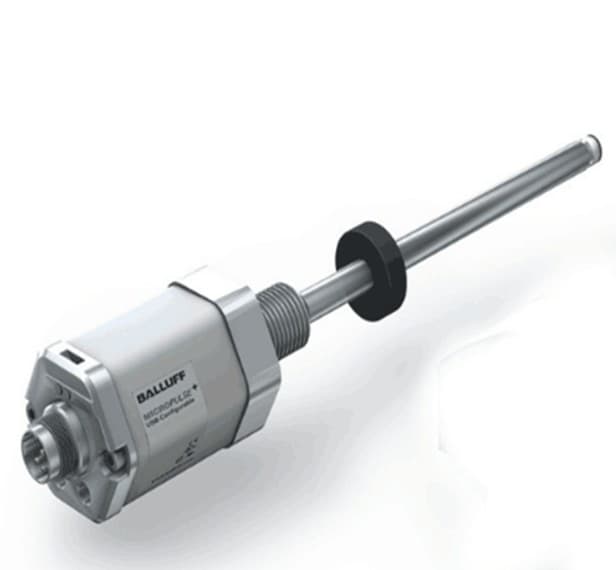
Balluff BTL7 Micropulse Linear Transducer
The Balluff BTL7 Micropulse stands out for its combination of high repeatability, long stroke options and a wide choice of industrial outputs, making it a best-in-class choice for closed-loop control of industrial motors and drives. Compared with other devices on this list it balances performance and total cost of ownership by offering fieldbus and analog interfaces that simplify integration and reduce system wiring and commissioning time. Its rugged construction and proven accuracy make it an economical alternative to premium magnetostrictive units when flexible connectivity is a priority.
Estimated$800 – $1,600
SICK TTK70 Linear Encoder
The SICK TTK70 is positioned as a market leader for high-resolution linear encoding, delivering precise absolute position feedback well suited to demanding servo and drive applications. Versus the magnetostrictive and inductive sensors listed here, the TTK70 emphasizes very fine resolution and fast update rates, which can justify higher upfront cost when tight dynamic control and position repeatability are required. Its modular mounting and diagnostic features also make it attractive for plants that prioritize quick fault detection and minimal downtime.
Estimated$400 – $1,200
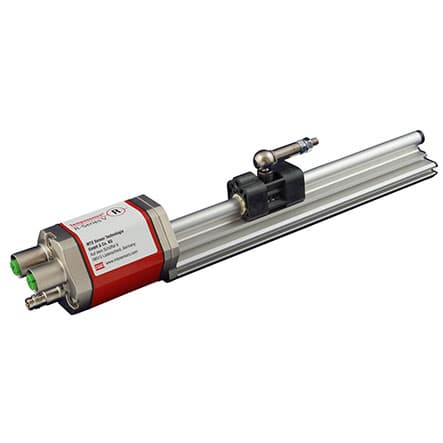
MTS Temposonics R-Series V Linear Position Sensor
The Temposonics R-Series V is a premium magnetostrictive sensor renowned for best-in-class absolute accuracy, long stroke capability and exceptional durability under heavy-duty industrial motor and drive loads. Compared with the Balluff and SICK units it typically commands a higher price but delivers superior long-term stability and tolerance to shock, vibration and harsh hydraulic or mechanical environments—making it the choice when absolute positional certainty and longevity justify the investment. Its wide range of digital and analog outputs also eases integration into high-performance motion control systems.
Estimated$1,800 – $4,500
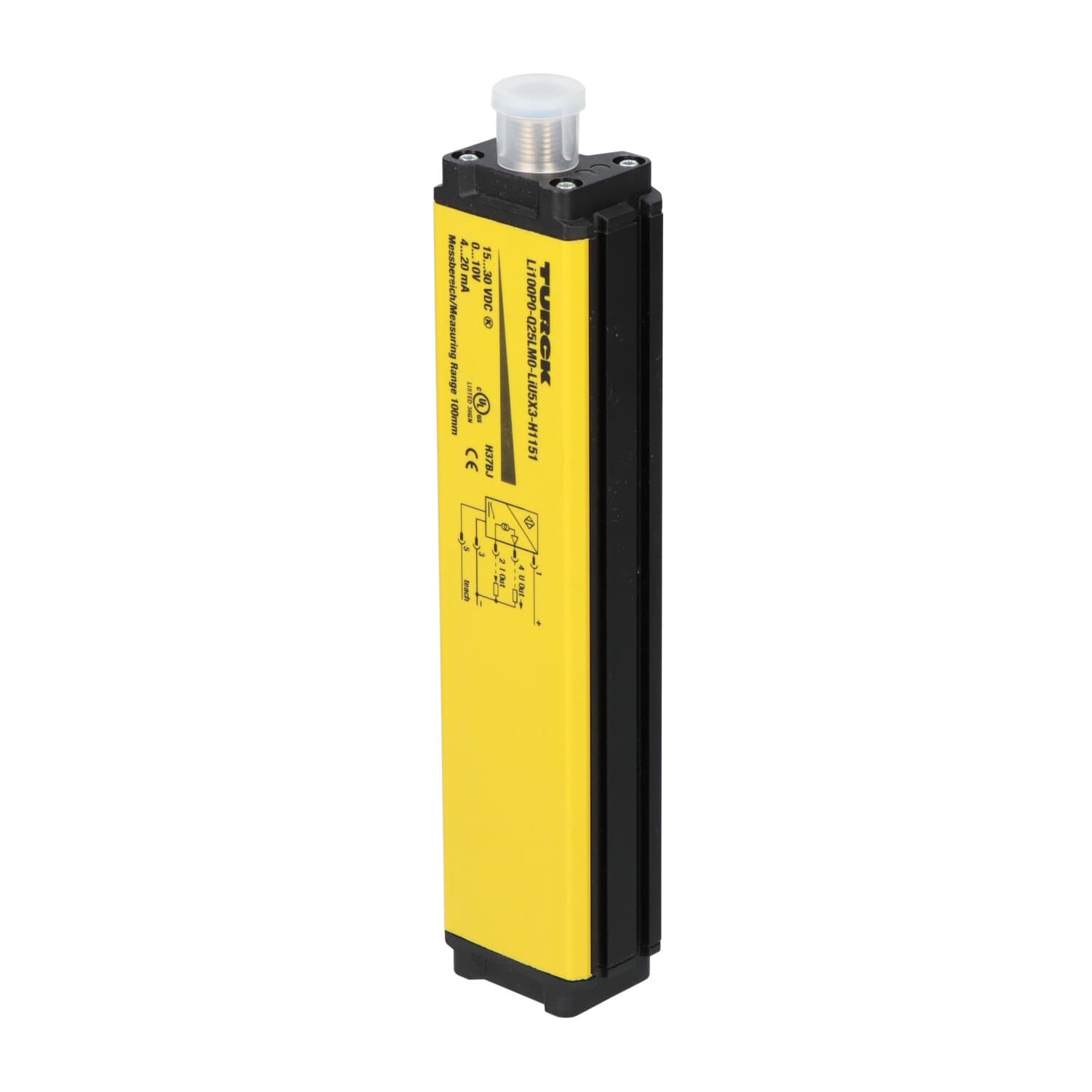
Turck LI-Q25 Inductive Linear Position Sensor
The Turck LI-Q25 offers a compact, contactless inductive approach that is highly resistant to dirt, coolant and electromagnetic interference, giving it a cost-effective edge for industrial motors operating in contaminated environments. While it may not match the extreme stroke lengths or absolute precision of magnetostrictive leaders like Temposonics, it provides excellent immunity and low lifecycle cost for shorter to mid-range strokes compared with optical encoders. Its simplicity and robustness make it an economical choice where reliability and reduced maintenance are more important than the highest resolution.
Estimated$300 – $800
IFM LI5141 Linear Position Sensor
The IFM LI5141 blends compactness, straightforward installation and modern connectivity (including IO-Link/analog options) to serve as a practical mid-range sensor for motor and drive position sensing. Compared with higher-end magnetostrictive sensors it typically offers lower capital cost and faster deployment, while delivering adequate accuracy and diagnostics for many automated drive systems; compared with simple inductive units it often provides better configurability and integration into IO-Link based plant architectures. This combination makes it an attractive option for facilities aiming to modernize feedback systems without the premium expense of top-tier models.
Research and Practical Evidence Behind Linear Position Sensors
A range of peer-reviewed studies, industry white papers and field case studies support the performance and business benefits of modern linear position sensing. Research and industrial reports show that high-resolution sensors improve process accuracy, integrated diagnostics enable earlier fault detection, and fieldbus-capable devices speed integration into automated control systems. Standards bodies and research organizations such as IEEE, ISO and industry automation groups provide testing protocols and accuracy classifications that guide selection. For newcomers, the core scientific principles are straightforward: optical encoders translate light interruption or interferometric signals into position; magnetic sensors detect field changes via Hall effect or magnetoresistive elements; inductive sensors measure changes in electromagnetic coupling or eddy currents; capacitive sensors detect changes in capacitance with movement. Together, these technologies deliver the precision and robustness required for modern drives and motors while supporting predictive maintenance strategies.
Accuracy gains: High-resolution encoders and magnetostrictive transducers can reduce positioning error to micrometer-level tolerances, improving product quality and repeatability.
Downtime reduction: Case studies in manufacturing show condition monitoring with integrated diagnostics can reduce unplanned downtime by significant percentages by enabling planned maintenance.
Lifecycle benefits: Sensors with built-in diagnostics and remote-accessible outputs reduce mean time to repair and lower lifecycle costs compared with nonconnected devices.
Environmental robustness: Research and field tests demonstrate magnetostrictive and inductive sensors maintain accuracy in dirty, wet and cold environments common in Canadian industries.
Standards and interoperability: Compliance with industrial communication standards such as EtherCAT, Profinet and Ethernet/IP streamlines integration into modern drive and PLC architectures.
Frequently Asked Questions
Which sensor should I choose for closed-loop drives?
Choose the Balluff BTL7 Micropulse Linear Transducer if you want micron-level repeatability and absolute position feedback with multiple interfaces (analog, incremental/SSI, CANopen, IO-Link) for closed-loop motor and drive control; rating 4.6.
Does the SICK TTK70 have an IP rating and outputs?
Yes—the SICK TTK70 Linear Encoder uses a durable metal housing rated IP67 and provides fast response with incremental/absolute feedback; rating 4.4.
What do I get for the price of Temposonics?
No price is provided for the Temposonics R-Series V Linear Position Sensor in the supplied data, but it is rated 4.7 and features magnetostrictive absolute sensing with long-stroke capability and wide interfaces (analog, SSI, PROFIBUS/Profinet, CANopen).
Is the Balluff BTL7 contactless and how long is warranty?
The Balluff BTL7 Micropulse is non-contact magnetostrictive (Micropulse) sensing for micron-level repeatability, but the warranty duration isn’t listed in the provided data; rating 4.6.
Conclusion
In summary, linear position sensors are essential for precise control and predictive maintenance of industrial motors and drives across Canadian industries. The five highlighted products — Balluff BTL7 Micropulse Linear Transducer, SICK TTK70 Linear Encoder, Temposonics R-Series V Linear Position Sensor, Turck LI-Q25 Inductive Linear Position Sensor, and IFM LI5141 Linear Position Sensor — cover a range of needs from high-accuracy encoders to rugged magnetostrictive and inductive options. For most heavy industrial drive and harsh environment applications in Canada, the Temposonics R-Series V stands out as the best overall choice because of its combination of precision, durability and integrated diagnostic capability. We hope you found what you were looking for; you can refine or expand your search using the site search to filter by range, resolution, communication protocol or environmental rating.