

Canada's Top 7 Industrial Induction Motors for 2026
Three-phase and single-phase industrial induction motors remain the backbone of heavy industry across Canada in 2026. Designed for pumps, fans, compressors and general-purpose drives, these motors prioritize reliability, long service life and energy efficiency. Buyers in Canadian markets increasingly favor motors with IE3 and IE4 efficiency ratings, robust enclosures for harsh climates, compatibility with variable frequency drives, and local service networks that minimize downtime. Key decision factors include total lifecycle cost, energy savings, regulatory compliance with Canadian standards, and access to provincial or federal incentive programs for efficient equipment upgrades.
Inception's AI took the time to understand this market in Canada · · How we pickWe may earn a commission on purchases. It never affects our rankings.
Top Picks Summary
The WEG W22 Premium Efficiency Three Phase Motor is positioned as a best-in-class choice for rotating equipment where energy efficiency and low life-cycle cost are priorities; its high IE efficiency ratings and robust cooling design deliver measurable savings versus lower-efficiency units. Compared with ABB and Siemens, WEG often offers a stronger price-to-performance ratio for new installations and retrofits, and versus severe-duty specialists like Baldor-Reliance it provides similar day-to-day efficiency with lighter weight and lower upfront cost. For users balancing capital expenditure and operational savings, the W22 is a technically mature, cost-conscious option.
Show More Induction Motors for Rotating Equipment
Estimated$900 – $6,000
Nidec U.S. Motors' vertical hollow/hollo‑shaft products are notable for extensive aftermarket support and retrofittability, making them an attractive option for plants updating legacy vertical induction equipment. Technically competitive with peers, Nidec emphasizes compatibility and replacement flexibility—this lowers refurbishment and downtime costs compared with some premium new-build solutions while still offering modern efficiency improvements.
Show More Vertical Induction Motors
Baldor-Reliance Super-E TEFC motors are known for delivering high-efficiency performance and strong starting torque with competitive pricing and North American-focused support, making them a practical choice for contractors and OEMs seeking value. In comparison to the other motors listed, Super-E often offers a lower initial capital outlay than some European premium models while still providing solid efficiency and easy local service for TEFC-duty replacements and upgrades.
Show More Totally Enclosed Induction Motors
The ABB M3BP is positioned as a best-in-class low voltage induction motor thanks to its balanced combination of high efficiency, modular construction and a global service network that reduces lifecycle cost and spare-part complexity. Compared with competitors on this list it offers strong standardization and ease of integration for industrial systems, yielding lower inventory and maintenance expense than niche corrosion- or retrofit-focused alternatives while matching or exceeding efficiency and reliability of other premium models.
Show More Low Voltage Induction Motors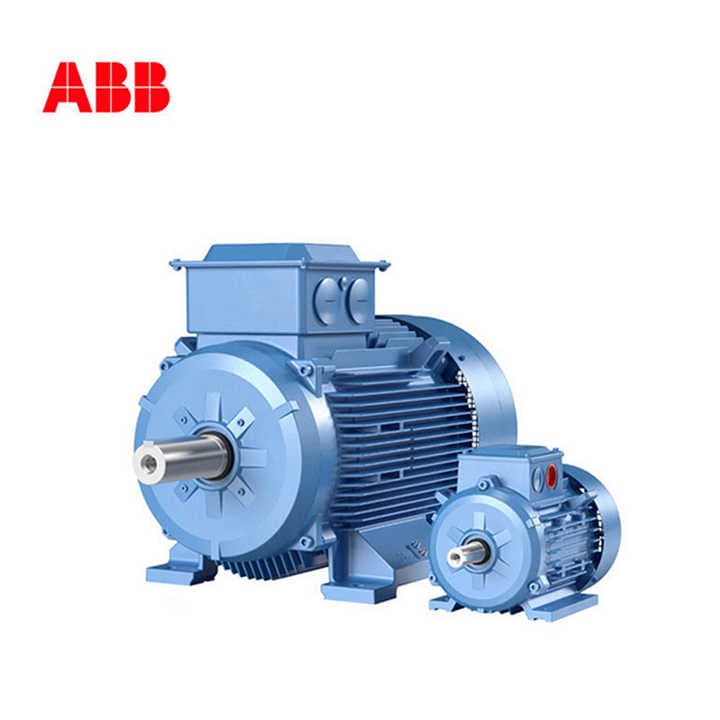
We may earn a commission on purchases. It never affects our rankings.
Estimated$400 – $5,000
The Siemens SIMOTICS HV M Series leads on digital readiness and drive integration for medium-voltage induction motor applications, offering built-in monitoring and strong automation compatibility that speed commissioning and enable predictive maintenance. Versus ABB and WEG, SIMOTICS prioritizes system-level optimization and premium aftermarket support—often at a higher upfront price but with measurable uptime and engineering efficiency advantages over the project lifetime.
Show More Medium Voltage Induction Motors
Estimated$40,000 – $240,000
Siemens SIMOTICS GP Brake Motor
Siemens SIMOTICS GP brake motors are valued for their wide power range and high energy efficiency, and they integrate well with Siemens drive and automation systems for simplified commissioning and diagnostics. Their strength is systems-level compatibility and efficiency advantages in large installations, making them more attractive than simpler, lower-cost WEG or Nord options for automation-heavy plants, while SEW and ABB remain stronger on mechanical modularity and ruggedness in some niche applications.
Show More Induction Motors with Integral Brake
Estimated$900 – $5,500
Why induction motors are a smart choice: basics and research
Induction motors are widely used because they combine simple, rugged construction with predictable performance and low maintenance. Research and industry analyses show that replacing older, lower-efficiency motors with modern IE3 or IE4 units can substantially reduce electricity consumption, especially for continuous-duty applications. When paired with variable frequency drives and modern monitoring, induction motor systems deliver improved process control, lower wear, and earlier fault detection. Canadian energy and industrial programs encourage efficiency upgrades because savings on energy bills and reduced greenhouse gas emissions typically outweigh higher upfront costs over the motor life.
Efficiency gains: Upgrading from IE1 or IE2 to IE3 or IE4 can reduce motor losses and electricity use by roughly 10 to 30 percent depending on motor size, load profile and operating hours.
Payback and lifecycle: For continuous or heavy-duty applications, typical payback windows for higher-efficiency motors are often 1 to 3 years when energy costs and incentive programs are considered.
VFD synergy: Using a variable frequency drive with an induction motor improves process control and can significantly increase energy savings for variable-load applications such as pumps and fans.
Reliability and maintenance: Induction motors have fewer wearable parts than many alternatives; with modern sealing, bearing systems and condition monitoring, mean time between failures improves and unplanned downtime drops.
Standards and incentives: Compliance with CSA and IEC standards plus eligibility for provincial or federal industrial efficiency incentives increases both marketability and total cost savings.
Frequently Asked Questions
Which motor should I buy for pump retrofits?
For legacy vertical pump work, choose the Nidec U.S. Motors Vertical Holloshaft Motor, since it has direct-fit hollowshaft variants for common pump OEM replacements and retrofits, and it’s rated 4.4.
What enclosure rating does the Baldor-Reliance Super-E use?
The Baldor-Reliance Super-E TEFC Motor uses a TEFC enclosure, and it’s rated 4.6; it also includes inverter-capable insulation systems and supports multiple mounting configurations.
How does the Nidec price compare to Baldor-Reliance?
The Nidec U.S. Motors Vertical Holloshaft Motor is $485.00 CADwhile the Baldor-Reliance Super-E TEFC Motor is $1,000.95 CAD; you pay more for TEFC plus inverter-capable insulation.
Do these motors have insulation options for different setups?
Yes—Nidec lists multiple insulation classes and mounting arrangements to match legacy systems, and it’s rated 4.4; the Baldor-Reliance Super-E TEFC also has inverter-capable insulation systems.
Conclusion
Whether you are retrofitting an existing line or specifying motors for a new installation in Canada, the right industrial induction motor balances efficiency, reliability and serviceability. We hope this guide to the top 7 options for 2026 helped you find what you need. Use the search or filters to refine by horsepower, enclosure type, IE efficiency class, or service availability to narrow your choices further.