

Top 9 Industrial Variable Frequency Drives in Canada for 2026
Industrial variable frequency drives (VFDs) control AC motor speed and torque to match process demands, delivering energy savings, smoother starts, and advanced motor protection. In Canada, VFD adoption is driven by industrial sectors such as manufacturing, mining, oil and gas, water and wastewater, and commercial HVAC that prioritize efficiency, reliability, and compliance with local standards. Canadian buyers favor drives with proven energy-saving performance, robust thermal and overload protection, built-in harmonic mitigation or compatibility with filters, and modern connectivity for Ethernet and PLC integration. Trends for 2026 emphasize vector and sensorless control for precise torque, regenerative and active-front-end options for energy recovery, and cybersecurity features for safe Industry 4.0 integration. Local technical support, compliance with CSA/IEEE guidelines, and utility rebate eligibility are also top decision factors for Canadian purchasers.
Inception's AI took the time to understand this market in Canada · · How we pickWe may earn a commission on purchases. It never affects our rankings.
Top Picks Summary
The Altivar 320 is a compact, cost-conscious drive for general-purpose motors that emphasizes ease of use, built-in EMC and motor-protection features, and quick commissioning to reduce engineering hours and overall project cost. Compared with the PowerFlex 525 it typically presents a lower entry price and simpler integration for mixed-vendor systems, while competing well with ABB and Siemens on small-to-medium motor applications where footprint and simplicity matter most.
Show More Low Voltage Industrial AC Drives
Estimated$600 – $3,200
The SINAMICS GM150 from Siemens is a highly modular medium-voltage drive designed for tight integration with industrial automation platforms, offering advanced diagnostics and digitalization features that reduce unplanned downtime and speed commissioning. Technically it competes by providing seamless integration with SIMATIC ecosystems and strong harmonic and safety management, which can justify a higher upfront investment through faster engineering and operational savings compared with more basic MV drives. For plants prioritizing digital monitoring and lifecycle analytics, the GM150 often delivers superior long-term value versus more cost-competitive options.
Show More Medium Voltage Industrial AC Drives
Estimated$70,000 – $220,000
The ACS880 cabinet-built drive is recognized for its modular, high-performance design that prioritizes energy efficiency and precise torque control, making it a best-in-class choice for demanding industrial cabinet applications. It stands out against the other drives by offering extensive scalability and retrofit-friendly architectures that reduce installation and maintenance costs over the drive lifecycle. Compared with competitors like Siemens and Rockwell, ABB often delivers lower lifecycle cost through optimized energy usage and integrated safety options for large power ranges.
Show More Cabinet Enclosed Industrial Drives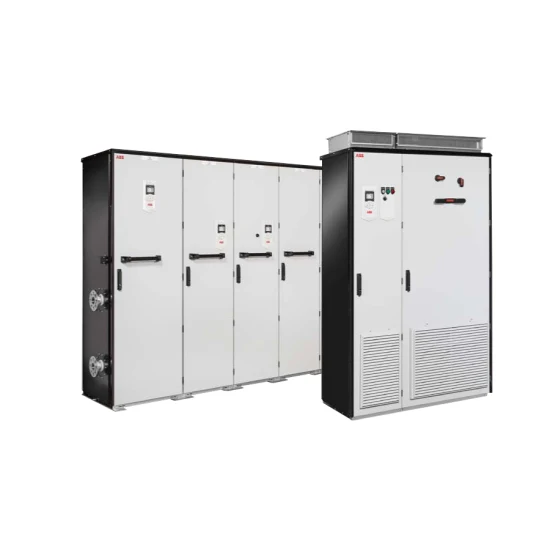
Estimated$8,000 – $60,000
The Allen-Bradley PowerFlex 525 is targeted at machine builders and control systems that rely on Rockwell Automation platforms, delivering tight Logix integration and native EtherNet/IP connectivity for panel-mounted applications. While it is often priced above basic drives like the ACS180 or Danfoss FC 51, its integration reduces commissioning and control-engineering time compared with non-Rockwell alternatives, representing a financial advantage in projects standardized on Rockwell controls. Technically it excels where deterministic network behavior and integrated safety/diagnostics within the Rockwell ecosystem are priorities.
Show More Panel Mounted Industrial Drives
Estimated$700 – $2,000
Danfoss VLT AutomationDrive FC 302
The Danfoss VLT AutomationDrive FC 302 emphasizes robust energy-efficient vector control in a compact package, aimed at OEMs and machines where footprint and quick commissioning matter. Compared with the larger, more modular ABB and Siemens offerings, the FC 302 delivers a lower initial capital cost and simplified setup while still offering advanced motor control and integrated application macros that reduce engineering hours. It is particularly cost-attractive for small-to-medium installations where energy savings and short time-to-production are priorities.
Show More Vector Control Industrial Drives
The ACS880 is a market-leading, heavy‑duty VFD family known for wide power ranges, mature drive-based control and strong interoperability with industrial TSN networks, making it a go-to choice for large-plant and continuous-process installations. Its proven reliability and energy-optimisation features typically lower lifecycle operating costs relative to smaller or motion-specialised drives, even if initial hardware costs are higher. Compared with the other entries, ACS880 appeals where robustness, longevity and established field history are prioritized over ultra-low-latency motion performance.
Show More Ethernet Enabled Industrial Drives
Estimated$3,000 – $20,000
WEG CFW900 Variable Frequency Drive offers a cost-competitive, rugged option for industrial pump and fan drives, favored in OEM and emerging-market deployments for its straightforward commissioning and durable design. Compared to the other market leaders here it typically provides lower initial purchase cost and strong overload performance, making it an attractive choice when budget and environmental robustness are primary considerations rather than the deepest software ecosystems.
Show More Industrial Pump And Fan Drives
Estimated$2,500 – $12,000
Rockwell Automation PowerFlex 525
PowerFlex 525 from Rockwell Automation offers tight integration with Allen‑Bradley control systems, easy configuration through Connected Components Workbench, and built-in safety functions that make it well suited for conveyor and hoist applications in Rockwell-centric plants. Its financial advantage is lower system engineering and integration cost within Logix environments, although the upfront device cost can be higher than simpler drives; technically it balances compactness and safety features compared to several European counterparts. For OEMs and end users standardized on Rockwell, the PowerFlex 525 reduces total integration time and project risk on conveyors and hoists.
Show More Industrial Conveyor And Hoist Drives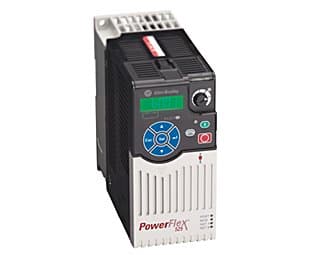
Estimated$1,000 – $7,000
Why VFDs Work: Research and Practical Evidence
The performance benefits of VFDs are backed by engineering principles, industry testing, and energy-efficiency reports. By varying motor frequency and voltage to match load requirements, drives avoid wasted energy from constant-speed operation. Soft starting significantly reduces inrush current and mechanical stress on drivetrains, extending equipment life. Advanced control methods such as vector control improve torque accuracy and efficiency across wide speed ranges, while modern connectivity enables condition monitoring and predictive maintenance that reduces unplanned downtime. Standards and guidelines, including harmonics limits and industrial cybersecurity practices, inform proper selection and installation to realize these benefits safely and reliably.
Energy savings: Industry and utility reports show that VFDs can reduce energy consumption substantially on variable torque loads (pumps, fans) — commonly in the range of 20% to 50% depending on duty cycle and system configuration.
Motor life and maintenance: Research and field studies indicate that soft starts and controlled ramping reduce mechanical wear and electrical stress, extending motor and gearbox life and lowering maintenance costs.
Harmonics and power quality: Standards such as IEEE 519 and Canadian utility guides document the need for harmonic mitigation when installing VFDs; mitigations include passive filters, active front ends, or multi-pulse rectifiers.
System-level benefits: Reports from Natural Resources Canada and other energy agencies highlight that VFDs paired with proper system optimization deliver measurable reductions in operating costs and greenhouse gas emissions in industrial facilities.
Connectivity and uptime: Case studies demonstrate that drives with built-in Ethernet, OPC UA, or Modbus support enable predictive maintenance and faster troubleshooting, improving overall equipment effectiveness.
Frequently Asked Questions
Which VFD should I choose for small-medium motors, Siemens G120C?
Choose Siemens SINAMICS G120C if you want a compact modular drive for small to medium motors, since it supports V/f and sensorless vector control and has an average rating of 4.4 at CA$432.01.
What control and safety features does Schneider Altivar ATV320 include?
Schneider Electric Altivar Machine ATV320 includes Embedded Safe Torque Off (STO) plus fieldbus options like EtherNet/IP, Modbus, and CANopen, and it has an average rating of 4.6.
Is Siemens SINAMICS G120C cheaper than Altivar ATV320 for Canada?
Yes—Siemens SINAMICS G120C is CA$432.01 while Schneider Altivar Machine ATV320 is CA$650.66; the ATV320 adds embedded STO and multiple fieldbus options (EtherNet/IP, Modbus, CANopen) with a 4.6 rating.
Does Siemens SINAMICS G120 offer PROFINET or EtherCAT connectivity?
Siemens SINAMICS G120 offers rich connectivity including PROFINET, EtherCAT, and Modbus, and it includes optional safety and STO functions; its average rating is 4.5, but warranty duration isn’t listed.
Conclusion
VFDs are a central component of modern, efficient industrial operations in Canada, delivering energy savings, improved process control, and better motor protection. We hope this guide helped you understand the category and what matters for 2026 purchases. If you did not find exactly what you need, refine or expand your search by application (for example, pumps, conveyors, HVAC), power range, or connectivity requirements using the site search.