

Canada 2026: Top 5 Industrial Regenerative Drives and Braking Units
Drives and braking modules that recover kinetic energy during deceleration and return it to the grid or reuse it onsite, improving system efficiency. Includes active front ends, regenerative converters and dynamic braking resistors for heavy-duty applications. In Canada, these systems are increasingly adopted across mining, pulp and paper, material handling, crane and elevator markets because they reduce energy consumption, lower peak demand charges, extend mechanical brake life, and help facilities meet corporate decarbonization targets and utility incentive programs. Buyers in these markets prefer units with proven reliability, strong local technical support, simple integration with existing automation, compliance with grid and harmonic standards, and demonstrable lifecycle cost savings. Long-term maintenance costs, compatibility with energy management systems, and ability to support bidirectional energy flow are key selection drivers for Canadian operations working to reduce operating costs and carbon intensity.
Inception's AI took the time to understand this market in Canada · · How we pickWe may earn a commission on purchases. It never affects our rankings.
Top Picks Summary
Siemens SINAMICS S120 Active Line Module
The SINAMICS S120 Active Line Module is best-in-class for high-performance multi-axis and servo-integrated applications, providing low harmonic distortion, high regenerative efficiency and a compact modular architecture that returns energy to the grid. Compared with the other drives on this list, it stands out for deep integration with Siemens motion and PLC ecosystems and superior control precision, which can reduce cycle times and installation overhead in complex automated plants.

Estimated$6,000 – $25,000
ABB ACS880 Regenerative Drive
The ACS880 is a market leader for heavy-duty process and marine applications due to its robust DC-link regenerative topology and proven reliability under continuous duty cycles. It offers straightforward scalability and predictable life-cycle costs, making it an economical option when uptime and simplified maintenance are priorities compared with lighter-weight or retrofit-focused competitors.

We may earn a commission on purchases. It never affects our rankings.
Estimated$10,000 – $40,000
Danfoss VLT AutomationDrive FC 302
The VLT AutomationDrive FC 302 is positioned as a cost-effective, space-efficient solution optimized for quick commissioning and retrofit projects, with integrated energy-optimization features and flexible braking module options. Versus the other drives listed, it emphasizes lower upfront capital and simplified engineering for constrained or phased installations while still enabling regenerative strategies through modular braking units.

Yaskawa A1000 Regenerative Converter
The Yaskawa A1000 regenerative converter excels where ultra-fast torque response and dynamic braking of high-inertia loads are required, delivering high conversion efficiency and tight motor control. Compared to the other products, its technical advantage is exceptional dynamic performance and a compact regen module design, which can materially lower energy costs in frequent start/stop applications that demand precision braking.

Rockwell Automation PowerFlex 755T
The PowerFlex 755T is a market-leading regenerative drive in North American industrial automation thanks to its seamless integration with Rockwell control platforms and scalable regenerative options for medium- and high-power systems. It offers attractive total cost of ownership for companies already invested in the Rockwell ecosystem, and its modular regenerative architecture simplifies capacity upgrades compared with bespoke third-party converters.
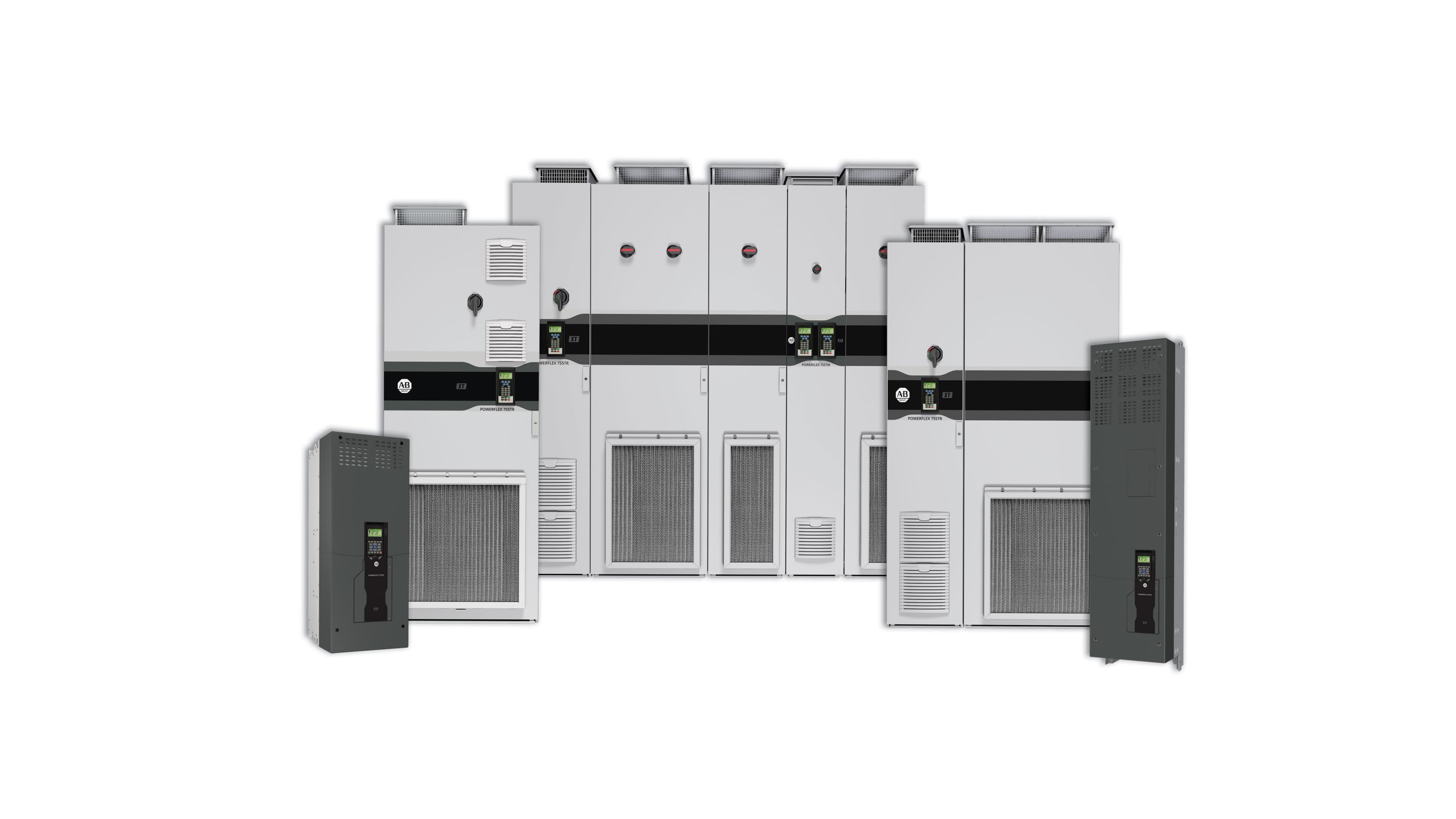
Estimated$8,000 – $30,000
Research and Evidence Behind Regenerative Drives
Scientific studies, industry white papers, and government energy analyses show that regenerative drives and braking systems deliver measurable energy and cost benefits in cyclic and decelerating applications. Research covers energy recovery potential, impacts on power quality, and whole-life cost comparisons versus traditional dynamic braking resistor systems. Key technical findings emphasize the benefits of active front ends and regenerative converters for reducing harmonic distortion and returning usable power to the distribution network or onsite loads. For facility managers new to the technology, the evidence supports that properly sized regenerative systems can reduce net energy use and peak demand exposure while improving equipment longevity when applied to suitable processes.
Energy recovery potential: field and case studies commonly report meaningful energy recovery in high-cycling applications (typical ranges vary by site; many installations report double-digit percent reductions in net energy use for driven loads).
Power quality benefits: active front end and regenerative converters reduce total harmonic distortion compared with passive rectifiers and dynamic braking resistor solutions, supporting compliance with IEEE 519 and local utility requirements.
Lifecycle economics: analyses that include energy savings, reduced brake wear, and lower maintenance often show payback periods measured in months to a few years depending on duty cycle and electricity costs.
Grid and demand benefits: returning energy to the local distribution or using it onsite can reduce peak demand charges and support demand response or microgrid strategies, aligning with Canadian utility programs and incentive schemes.
Independent sources: results are documented in peer-reviewed engineering literature, manufacturer performance studies, Natural Resources Canada guidance on industrial energy efficiency, and utility case studies across North America.
Frequently Asked Questions
Which regenerative drive fits multi-axis servo systems best?
Choose the Siemens SINAMICS S120 Active Line Module for multi-axis and servo-integrated applications because it provides bidirectional energy flow to return regenerative energy to the grid, with an average rating of 4.5.
What does the ABB ACS880 regenerate during braking?
The ABB ACS880 Regenerative Drive integrates regenerative capability that recovers braking energy and feeds it back to the supply, and it has an average rating of 4.6.
Is the Danfoss VLT AutomationDrive FC 302 better value?
The Danfoss VLT AutomationDrive FC 302 is described as cost-effective and space-efficient for retrofit projects, offering optional regenerative modules for energy recovery, with an average rating of 4.5; no price was provided.
Do these drives include grid energy return capability?
Yes: the Siemens SINAMICS S120 Active Line Module returns regenerative energy to the grid via bidirectional energy flow (average rating 4.5), and the ABB ACS880 also feeds recovered braking energy back to the supply (average rating 4.5); warranty duration wasn’t provided.
Conclusion
This overview highlights the most relevant regenerative drives and braking units for Canadian industry in 2026: Siemens SINAMICS S120 Active Line Module, ABB ACS880 Regenerative Drive, Danfoss VLT AutomationDrive FC 302, Yaskawa A1000 Regenerative Converter, and Rockwell Automation PowerFlex 755T. For many heavy-duty industrial applications that need high performance, modularity, and strong grid-friendly active front end capability, the Siemens SINAMICS S120 Active Line Module is the recommended overall choice. We hope you found the comparison helpful. If you want to narrow results by industry, power range, or integration preferences, or expand the search to accessories and service options, use the site search to refine or broaden your results.