

The Top 5 Industrial Arc Welding Systems in Canada for 2026
Industrial arc welding systems represent the backbone of heavy fabrication, automotive manufacturing, and structural steelwork across Canada. These high-power manual and semi-automatic machines encompass MIG, MAG, TIG, and MMA processes, specifically engineered to handle the rigorous demands of industrial environments. In 2026, Canadian metalworkers and facility managers are prioritizing advanced inverter-based controls, pulsed welding modes, and digital interfaces that offer precise process diagnostics. The appeal lies in their remarkable energy efficiency and the ability to maintain consistent arc stability even in extreme cold weather conditions typical of northern job sites. By integrating smart technology with rugged durability, these systems reduce downtime, lower operational costs, and ensure high-quality welds that meet strict Canadian safety and structural standards.
Inception's AI took the time to understand this market in Canada · · How we pickWe may earn a commission on purchases. It never affects our rankings.
Top Picks Summary
The Hobart Handler 210MVP is the value-oriented MIG/MAG choice for hobbyists and small shops, offering simple controls, dependable weld quality, and wide availability of consumables at a low purchase price. While it lacks the advanced digital controls, multi-process breadth, and duty cycles of the Miller, Lincoln, or Fronius systems, its simplicity and affordability make it the most economical entry point on this list.
Show More MIG MAG Welding Systems
Estimated$900 – $1,500
The Lincoln Electric Square Wave TIG 200 is a market-leading value-oriented AC/DC TIG unit that balances strong aluminum and steel performance with approachable controls and good duty cycle for its class. It provides many of the core TIG features of higher-end machines such as the Dynasty 210 but at a lower acquisition cost, making it the go-to for users who want near-professional TIG capability without the highest price. Compared with versatile multi-process machines like the ESAB Rebel EMP 215ic, the Square Wave 200 focuses on delivering excellent TIG performance rather than process flexibility.
Show More TIG Welding Systems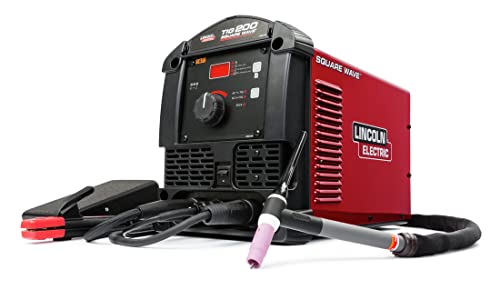
We may earn a commission on purchases. It never affects our rankings.
$4,184.00CAD
The Thunderbolt 210 remains a market-leader for customers who prioritize rugged, serviceable transformer-style stick welding with straightforward controls and high reliability in extreme jobsite conditions. While it lacks the inverter efficiency and lighter weight of Lincoln or Fronius units, its lower parts complexity and proven longevity translate into predictable lifecycle costs and simpler maintenance for heavy daily use.
Show More MMA Stick Welding Systems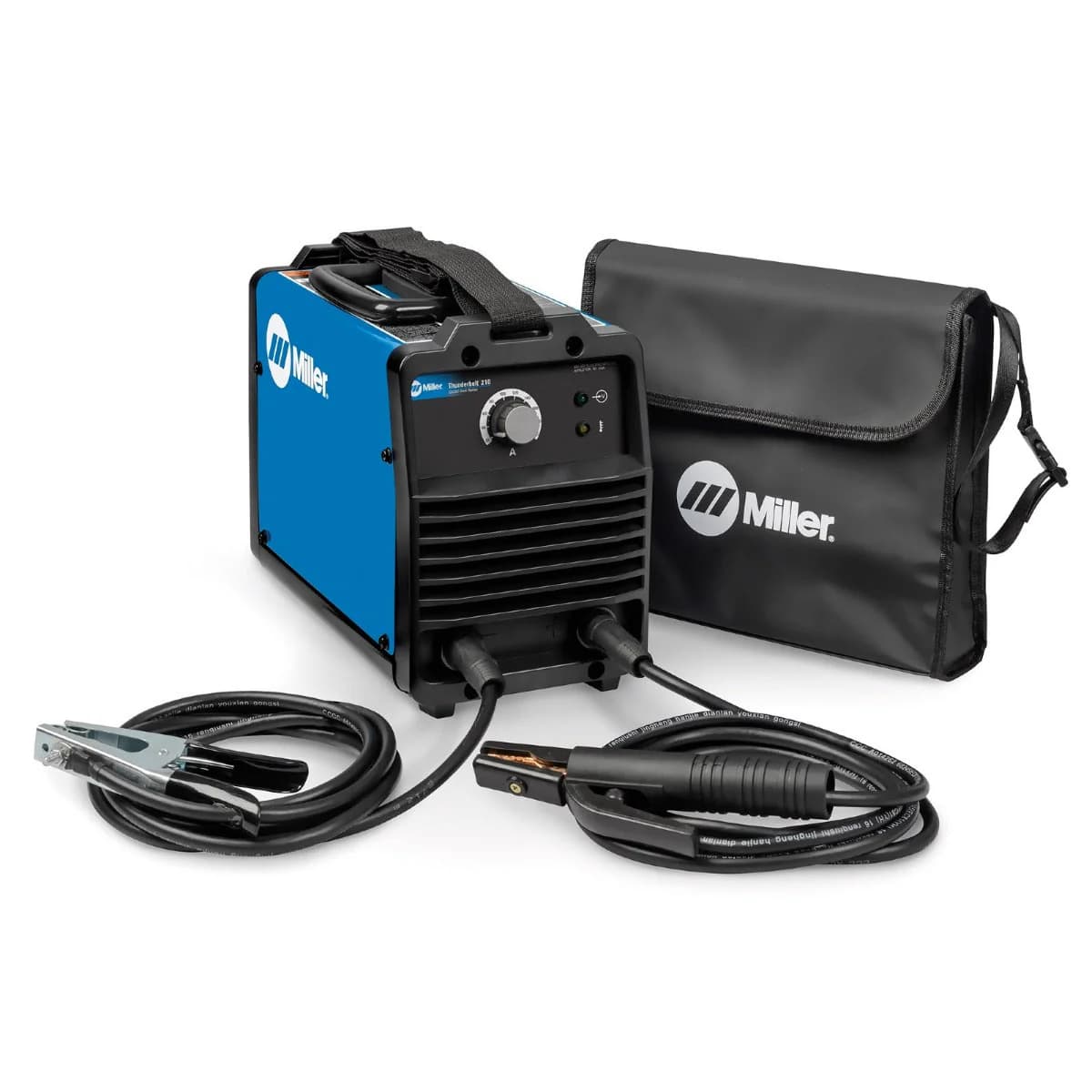
Estimated$850 – $1,400
The Power Feed 25M is a best-in-class heavy‑duty submerged arc wire feeder known for rugged torque, wide wire-size capacity, and long duty cycles that make it ideal for high-deposition industrial SAW applications. It holds its position by combining mechanical simplicity with proven reliability, offering a lower total cost of ownership on continuous production lines compared with more electronics‑intensive feeders like the Fronius TPS/i and Miller SubArc Digital. Compared with smaller or more modular options such as the Lincoln NA‑5 and ESAB A6, the 25M excels where maximum feed force and uptime are primary requirements.
Show More Submerged Arc Welding Systems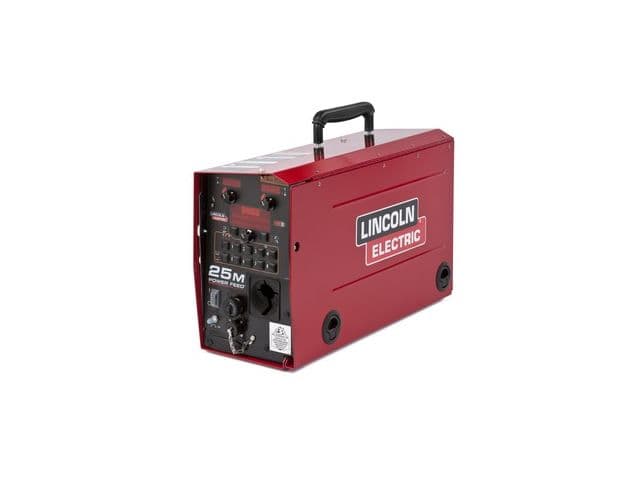
Nelson's Nelweld 6000 is a flagship drawn-arc stud welding system built for heavy industrial throughput, offering high duty cycle and precise, repeatable weld control that suits large-scale manufacturing. Compared with smaller CD and compact units in this list, the Nelweld 6000 provides superior consistency and a wider service network in the United States, which can lower total lifecycle costs for large fleets despite a higher upfront investment.
Show More Flux Cored Arc Welding Systems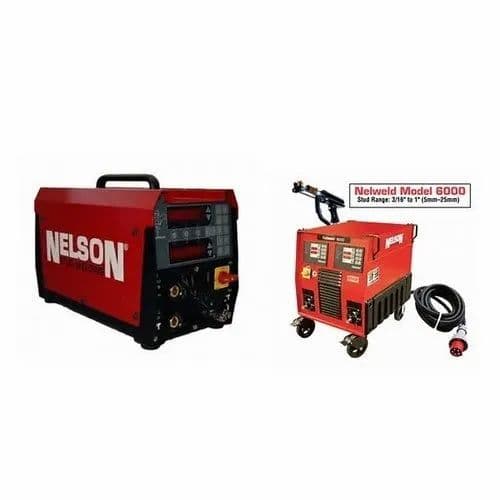
Estimated$15,000 – $25,000
How to Choose the Right Industrial Arc Welder
Separating a mediocre welder from a top-tier industrial system comes down to duty cycle reliability and digital process control. High-end models maintain their rated output without overheating during continuous heavy fabrication, while advanced digital interfaces allow for precise parameter adjustments and real-time diagnostics.
Look for a 100 percent duty cycle at your most common operating amperage rather than just checking the maximum peak output, which is often a marketing gimmick for lower-tier machines.
Prioritize inverter-based systems with multi-process capabilities like MIG, TIG, and Stick if your shop handles diverse materials, as this saves floor space and reduces equipment redundancy.
Check for advanced pulsed welding modes, which significantly reduce spatter and heat input, making them essential for working with thin materials or specialized alloys like aluminum.
Ensure the system features robust environmental protection, such as conformal coated PC boards, to withstand the metallic dust and moisture common in Canadian fabrication shops.
Frequently Asked Questions
Which welding system is best for heavy shop fabrication work?
The Miller Millermatic 255 is the ideal choice for shop fabrication because it provides up to 255 A output for thick-section MIG welding and features a high duty cycle designed for continuous industrial use.
What is the maximum amperage output of the Miller Maxstar 161 STL?
The Miller Maxstar 161 STL delivers a maximum output of 160 A, providing a smooth arc for steel and stainless steel welding in a compact, portable inverter design.
How much does the Miller Maxstar 161 STL cost in Canada?
The Miller Maxstar 161 STL is priced at $3916.61, which includes its lightweight inverter design, Auto-line 120/240 V capability, and compatibility with both foot and hand remote controls.
Is the Lincoln Electric Invertec V155-S suitable for field use?
The Lincoln Electric Invertec V155-S is specifically designed for portable field use, featuring a compact, lightweight inverter-based construction that offers professional-duty performance for MMA stick welding.
Conclusion
Whether you are outfitting a massive automotive plant in Ontario or a structural steel shop in Alberta, investing in the right industrial arc welding system is crucial for your productivity and bottom line. We hope this guide has helped you identify the perfect high-power welding solution to meet your specific fabrication needs. If you need to explore different power capacities, specific welding processes, or other industrial equipment, please use our search feature to refine or expand your results.