

Canada's Top 5 Aluminum and Nonferrous Filler Metals for Industrial Welding — 2026
Aluminum and nonferrous filler metals support welding of lightweight and corrosion-resistant components across transportation and marine industries, including alloys for castings and wrought products. In Canada these filler metals are prized for their ability to meet demanding corrosion and strength requirements in coastal, automotive, and rail applications, while also enabling efficient mechanized welding on production lines. Recent developments for 2026 emphasize improved oxide management, increased feedability for mechanized systems, and specialized chemistries for dissimilar metal joining, all of which reduce rework and increase throughput. Buyers in Canadian markets tend to prioritize consistent spool quality, supplier availability, compliance with AWS and ISO standards, and formulations that handle local conditions such as salt exposure and thermal cycling. The combination of proven alloy performance and modern feedability enhancements makes this category essential for fabricators seeking reliable, production-ready nonferrous filler metals.
Inception's AI took the time to understand this market in Canada · · How we pickWe may earn a commission on purchases. It never affects our rankings.
Top Picks Summary
Lincoln Electric SuperGlaze 4043 Aluminum MIG Wire
Lincoln Electric SuperGlaze 4043 is positioned as a best-in-class aluminum MIG filler for industrial welding equipment thanks to its excellent feedability, smooth weld appearance and broad compatibility with 6xxx and cast aluminum alloys. Compared with the higher-strength 5356 and the silicon-rich 4047 in this list, SuperGlaze 4043 offers a balanced compromise of low cracking tendency and cost-effective deposition, making it a reliable choice where consistent production throughput and minimal rework matter most.

Estimated$250 – $450
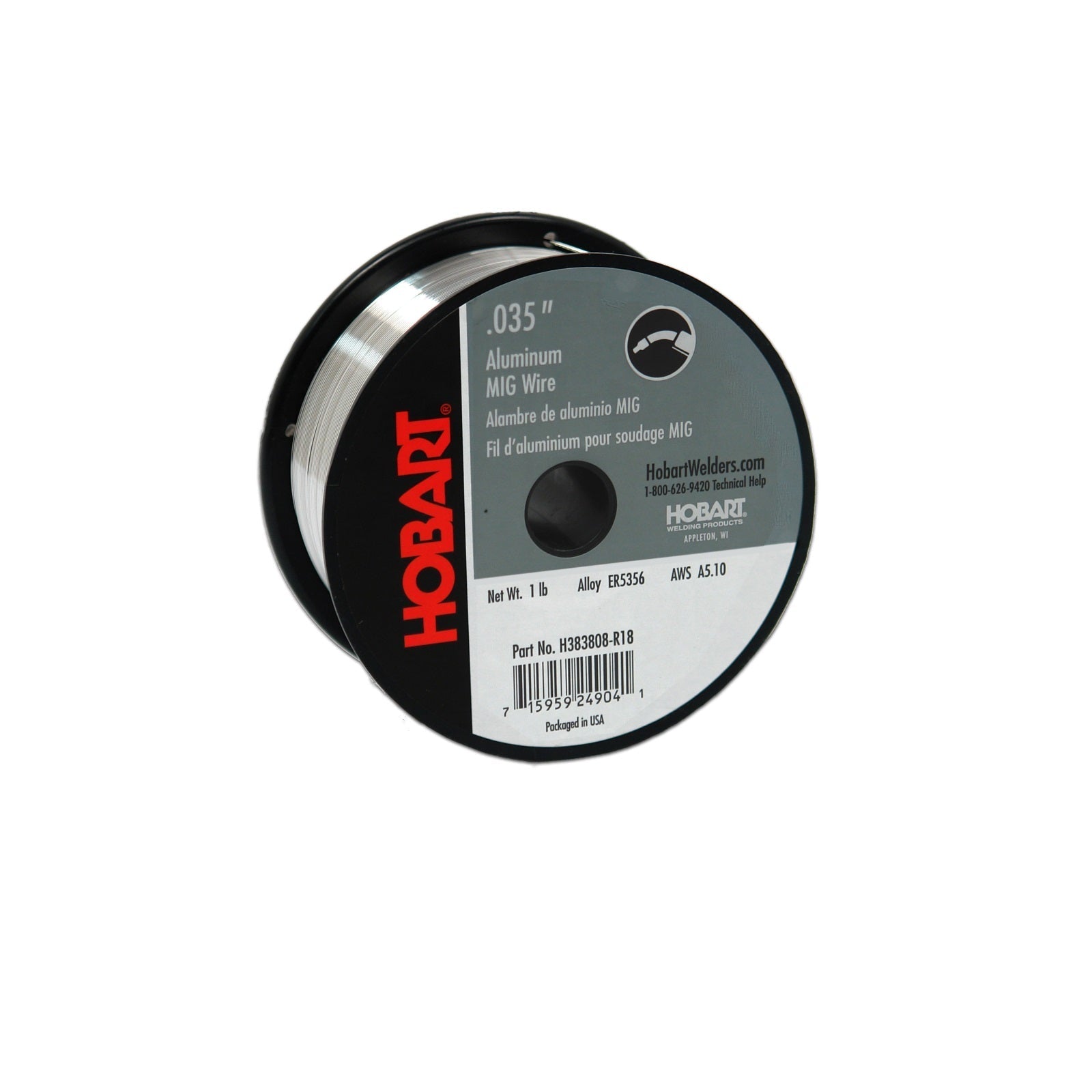
Hobart Maxal 5356 Aluminum Welding Wire
Hobart Maxal 5356 leads for applications demanding higher tensile strength and superior weld ductility, standing out for marine, pressure-vessel and structural aluminum work in industrial welding setups. Compared to the 4043/4047 wires listed, 5356 delivers stronger weld metal and better performance on 5xxx series substrates at a modest premium, offering a technical advantage when load-bearing properties and fatigue resistance outweigh raw material cost.
Estimated$220 – $380
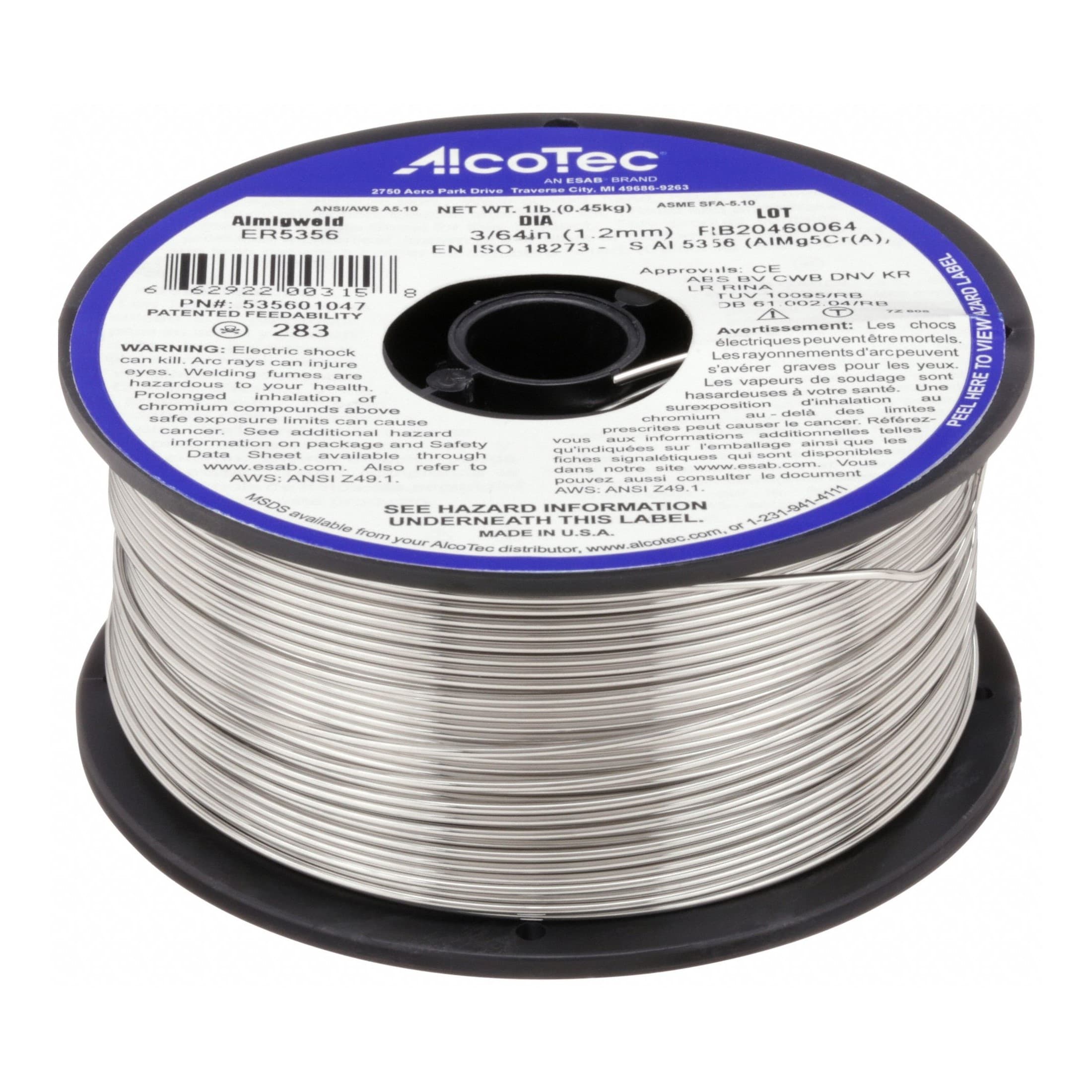
ESAB AlcoTec 4047 Aluminum Filler Metal
ESAB AlcoTec 4047 is a market leader for silicon-rich aluminum filler applications where fluidity, low melting range and reduced porosity are critical, such as thin-section extrusions and cast-to-wrought joints in industrial production. Versus 4043 and 5356, the 4047 chemistry gives superior flow and crack relief for difficult joints, which can lower scrap and rework costs in automated welding cells despite its slightly different mechanical profile.
Harris Silicon Bronze Filler Metal
Harris Silicon Bronze filler metal fills the nonferrous niche for copper-base joining and brazing tasks that aluminum wires cannot address, offering excellent corrosion resistance and strong, conductive joints for heat exchangers, plumbing and marine repairs. In contrast to the aluminum fillers on this list, silicon bronze provides a different technical and economic value by enabling durable repairs on copper and brass components, reducing part replacement and downtime in mixed-metal industrial fleets.

Estimated$70 – $160
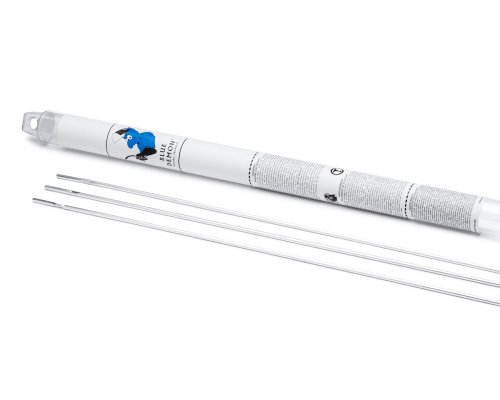
Blue Demon ER4043 Aluminum TIG Welding Rod
Blue Demon ER4043 TIG rod is a market-leading choice for precise TIG welding of aluminum in shop and production environments, prized for consistent chemistry, easy arc control and attractive weld profiles on 6xxx-series and general-purpose aluminum work. Compared with the Lincoln SuperGlaze MIG wire, Blue Demon ER4043 serves the TIG niche where operator control and finish quality are priorities, often providing a lower-cost route to high-quality welds in manual or semi-automated TIG operations.
We may earn a commission on purchases. It never affects our rankings.
$24.00CAD
Research and Evidence Behind Nonferrous Filler Metals
Scientific and industry research supports the benefits of modern aluminum and nonferrous filler metals. Studies from welding institutes, materials labs, and manufacturer test programs show that optimized chemistries and flux designs reduce oxide-related defects, improve wetting, and raise deposited metal tensile and fatigue performance. Research also highlights the improvements in wire feed systems and alloy formulation that deliver more reliable mechanized deposition and better joint integrity when joining dissimilar metals or working with cast aluminum components. These findings are summarized in beginner-friendly language here so fabricators can match product choice to performance needs.
Corrosion resistance: Laboratory corrosion testing and field studies demonstrate that Al-Si fillers (for example ER4043/4047) reduce galvanic sensitivity in many joint designs and improve durability in marine environments.
Mechanical performance: Tensile and bend tests commonly show that Mg-bearing filler metals (for example 5356) provide higher strength for structural welds, useful in transportation and heavy equipment.
Oxide management: Research into fluxing agents and silicon content shows improved oxide disruption and better weld wetting, reducing porosity and incomplete fusion in aluminum welding.
Feedability and mechanization: Studies of wire handling and feed geometry report fewer feed jams and more consistent deposition for wires formulated for mechanized MIG systems and robotic welding.
Dissimilar joining: Experimental work on specialized chemistries shows that certain filler compositions ease the joining of aluminum to castings or to other nonferrous alloys with reduced cracking risk.
Standards and testing: Performance claims are usually validated to AWS, ISO, or national test protocols; look for documented test results when comparing products.
Frequently Asked Questions
Which filler metal should I pick for industrial aluminum MIG?
Choose Lincoln Electric SuperGlaze 4043 Aluminum MIG Wire if you want excellent feedability and a smooth weld appearance with broad compatibility for 6xxx and cast aluminum alloys, backed by an average rating of 4.7.
What does the 4047 aluminum filler improve for welding cast parts?
ESAB AlcoTec 4047 Aluminum Filler Metal uses 4047 high-silicon chemistry to improve fluidity and reduce hot cracking, with excellent gap-filling and reduced porosity for thin-section extrusions and cast-to-wrought joints.
How does Hobart Maxal 5356 aluminum wire price compare?
Hobart Maxal 5356 Aluminum Welding Wire costs CA$144.96 and targets marine, pressure-vessel, and structural aluminum work with 5356 (Al-Mg) chemistry for higher tensile strength and superior weld ductility.
Is Lincoln 4043 compatible with 6xxx and cast aluminum alloys?
Yes—Lincoln Electric SuperGlaze 4043 Aluminum MIG Wire is described as broad compatible with 6xxx and cast aluminum alloys, with an average rating of 4.7 and stated benefits for anodized and cast aluminum maintenance and fabrication.
Conclusion
In Canada, choosing the right nonferrous filler metal depends on the application: Lincoln Electric SuperGlaze 4043 Aluminum MIG Wire is a versatile general-purpose choice, Hobart Maxal 5356 Aluminum Welding Wire is favored for higher-strength structural and marine work, ESAB AlcoTec 4047 Aluminum Filler Metal excels with castings and repair, Harris Silicon Bronze Filler Metal is a reliable option for bronze and copper alloy joining, and Blue Demon ER4043 Aluminum TIG Welding Rod is convenient for TIG and repair tasks. For most general industrial MIG applications in Canadian production settings, Lincoln Electric SuperGlaze 4043 Aluminum MIG Wire is the best overall choice because of its balance of feedability, corrosion resistance, and wide availability. We hope you found what you were looking for; you can refine or expand your search using the site search to filter by alloy, process (MIG, TIG, or brazing), certification, or supplier availability in Canada.