

Top 5 Wearable Welding Safety Sensors and Monitors in Canada (2026)
Wearable welding safety sensors and monitors are compact devices and integrated systems designed to track exposure to fumes and gases, measure heat stress, detect proximity hazards, and record biometric indicators in real time. In Canada these solutions are gaining rapid adoption across fabrication, construction, oil and gas, shipbuilding, and manufacturing thanks to stronger regulatory emphasis on worker safety, growing awareness of long term respiratory and heat-related risks, and demand for data-driven compliance. Canadian purchasers prioritize proven gas-sensing accuracy, ruggedness for harsh environments, long battery life, bilingual support, reliable local service, and seamless IoT and cloud integration so safety teams can aggregate data, trigger predictive alerts, and coordinate emergency response from a single platform.
Inception's AI took the time to understand this market in Canada · · How we pickWe may earn a commission on purchases. It never affects our rankings.
Top Picks Summary
Blackline Safety G7c
Blackline Safety's G7c is positioned as the market-leading connected wearable for welding environments because it combines multi-gas sensing with continuous cellular/GPS connectivity and real-time incident monitoring, enabling immediate emergency response for lone or team welders. Compared with the other devices on this list it trades a higher upfront and subscription cost for superior remote visibility and automated dispatch capabilities, reducing lost-time risk on job sites where rapid intervention and location tracking are critical.

Honeywell BW Solo
Honeywell BW Solo is a compact, single-gas wearable that excels for welders who need reliable, low-cost detection of a primary hazard (for example CO or O2) without fleet telematics complexity. It undercuts multi-gas competitors on purchase price and maintenance simplicity, making it a financially attractive choice for shops that prioritize basic respiratory and oxygen safety over continuous remote monitoring.

Dräger Pac 8000
The Dräger PAC 8000 is a single-gas (or limited multi-gas) personal monitor prized for its rugged build, high-accuracy sensors and long run-time—qualities that make it a dependable, lower‑complexity option for welders exposed to specific toxic gases. Compared to the cloud-connected multi-gas devices here, the PAC 8000 delivers a lower total cost of ownership through durable hardware and long sensor life, appealing to buyers who prioritize sensor precision and minimal ongoing service fees.
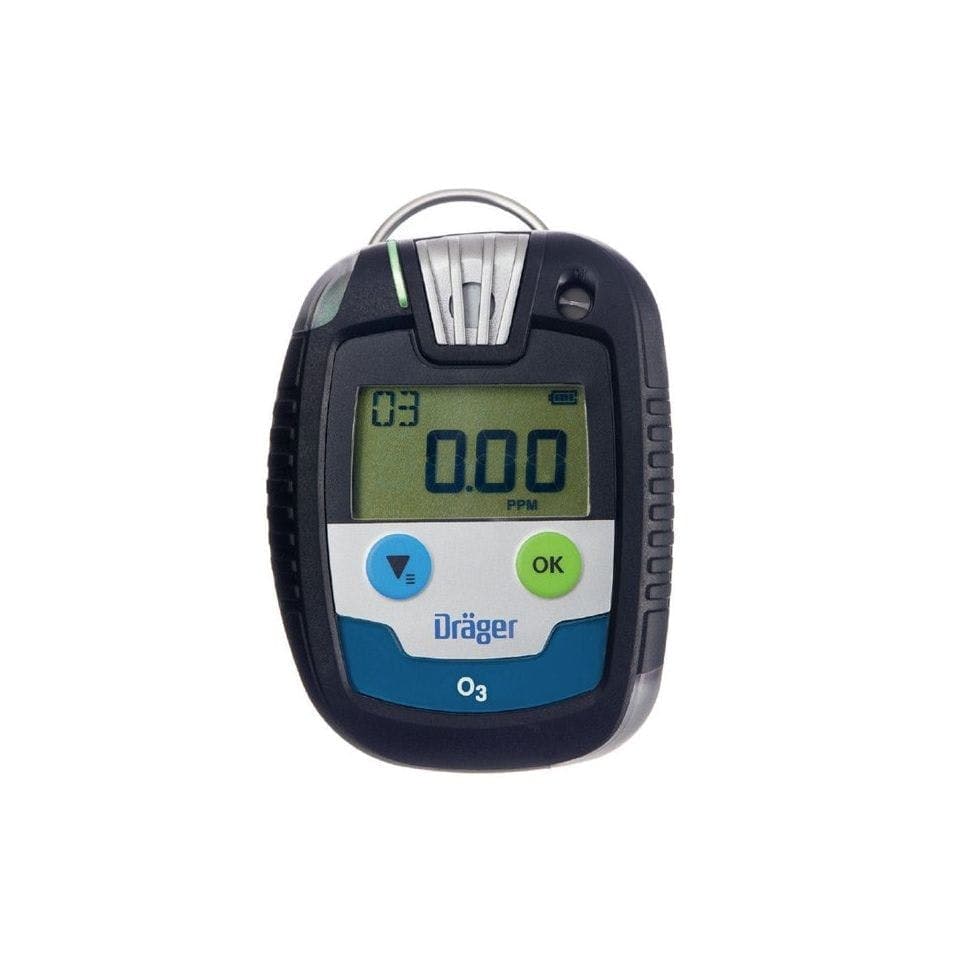
Estimated$500 – $900
Industrial Scientific Ventis Pro5
Industrial Scientific's Ventis Pro5 is a five-gas wearable made for heavy industrial welding teams that need comprehensive gas coverage, optional pump sampling and integrated fleet management; its configurable alarms and enterprise software help reduce administrative overhead across large crews. Financially and operationally it competes with MSA and Blackline by offering scalable fleet tools and pump options that can lower per-unit monitoring costs for organizations managing many devices over multiple sites.

We may earn a commission on purchases. It never affects our rankings.
$99,999.00CAD
Why science supports wearable welding safety sensors
A growing body of occupational health research and industry reports shows that continuous, wearable monitoring reduces exposure time, improves incident response, and supports long term health outcomes by making hazard data actionable. Evidence spans controlled exposure studies, field trials in construction and industrial sites, and applied research on heat stress and physiological monitoring. For beginners, the core findings are simple: faster detection reduces dose, aggregated device data uncovers hidden hazards, and biometrics add an important layer for preventing heat and cardiovascular events.
Real-time alerts reduce exposure duration: peer-reviewed and field studies show that immediate alarms shorten the time workers stay in hazardous atmospheres, lowering cumulative dose and long term risk.
Aggregated IoT data improves hazard identification: trend analysis of many wearable units helps safety teams find recurring problems that single-point monitors miss, enabling targeted controls.
Biometric monitoring predicts heat stress: heart rate, skin temperature, and activity patterns can identify early signs of heat strain before a worker needs medical attention, supported by occupational health research.
Predictive alerts and cloud analytics lower incident rates: combining sensor streams with analytics can flag risky conditions earlier than manual inspection alone, as shown in pilot programs in mining and construction.
Sensor accuracy and calibration matter: studies emphasize routine calibration and validated sensor chemistries to reduce false positives and maintain trust in wearable systems.
Integration with PPE and emergency systems improves adoption: devices that attach to or communicate with helmets, respirators, or site-wide alarm systems see higher compliance and faster rescue coordination.
Frequently Asked Questions
Which wearable sensor is best for lone welders?
Blackline Safety G7c is best for lone welders because it includes integrated location, man-down, and two-way voice, plus cellular/Wi‑Fi LTE connectivity for live incident monitoring (rating 4.6).
What gases does the MSA ALTAIR io 4 measure?
MSA ALTAIR io 4 measures O2, LEL, CO, and H2S with fast TWA/peak readings for welders (rating 4.5).
How does Honeywell BW Solo price compare for welders?
Honeywell BW Solo’s data says it undercuts multi-gas competitors on purchase price and maintenance simplicity, giving compact one-gas detection for CO monitoring (rating 4.2).
Does the Blackline Safety G7c support optional gas modules?
Yes—Blackline Safety G7c supports optional gas sensor modules for CO/H2S suited to welding environments, alongside cellular/Wi‑Fi LTE connectivity (rating 4.6).
Conclusion
In the Canadian market of 2026, wearable welding safety sensors and monitors are practical tools for reducing exposure to fumes and gases, managing heat stress, and preventing proximity and physiological incidents. The five top options to consider are Blackline Safety G7c, Honeywell BW Solo, MSA ALTAIR io 4, Dräger Pac 8000, and Industrial Scientific Ventis Pro5. For most Canadian workplaces prioritizing cloud analytics, reliable two-way alerting, and an integrated emergency response ecosystem, the Blackline Safety G7c stands out as the best overall choice on this list. If you did not find exactly what you need, you can refine or expand your search using the site search to filter by sensor type, connectivity, or industry application. We hope this guide helped you identify the right wearable welding safety solution for your site.