

Top 5 Conveyor Controls and Drives in Canada for 2026
Control systems, PLCs, variable frequency drives (VFDs), and motor drives that manage speed, accumulation, and synchronization across conveyor networks are central to modern Canadian material handling. In 2026 the market favors smart drives with built-in edge computing, predictive diagnostics, and standardized communication protocols such as EtherNet/IP, PROFINET, Modbus, and OPC UA to support Industry 4.0 interoperability. Buyers in Canada value solutions that deliver energy efficiency, reliable operation in diverse climates, local technical support and parts availability, and cybersecurity-ready communications. Key sectors using these products include e-commerce and warehousing, food and beverage, mining and aggregates, automotive, and light manufacturing. Canadian procurement decisions also reflect incentives and regulations that reward energy savings and safe operation, so drives that offer regenerative braking, harmonic mitigation, and compliance with CSA and cUL standards are particularly appealing.
Inception's AI took the time to understand this market in Canada · · How we pickWe may earn a commission on purchases. It never affects our rankings.
Top Picks Summary
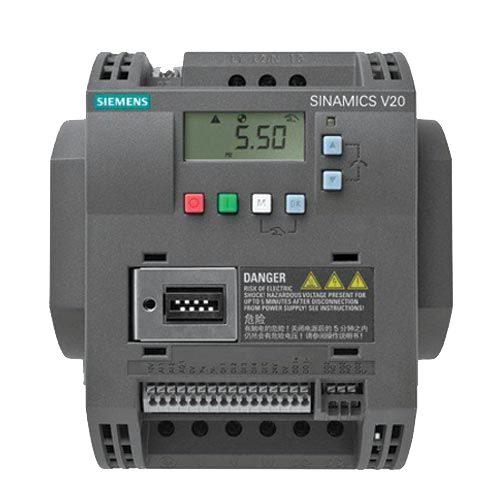
Siemens SINAMICS G120 Variable Frequency Drive
The SINAMICS G120 is a modular, scalable drive family aimed at conveyor and material handling applications, offering advanced vector control, integrated safety functions and broad communication choices for straightforward system integration. Compared with others on this list it strikes a balance between high-end features and lifecycle cost—delivering strong energy savings and remote diagnostics similar to ABB but with typically simpler modular deployment and commissioning than solutions tied tightly to specific PLC ecosystems.
Allen-Bradley PowerFlex 525 AC Drive
The PowerFlex 525 is a compact, user-friendly drive optimized for small-to-medium conveyors, featuring embedded EtherNet/IP, intuitive commissioning tools and tight integration with Rockwell Automation control systems. For plants standardized on Rockwell gear it reduces engineering and commissioning time compared with Siemens or ABB alternatives, though it can carry a higher upfront hardware or software premium that is often offset by faster startup and lower engineering labor.

Estimated$1,600 – $9,000
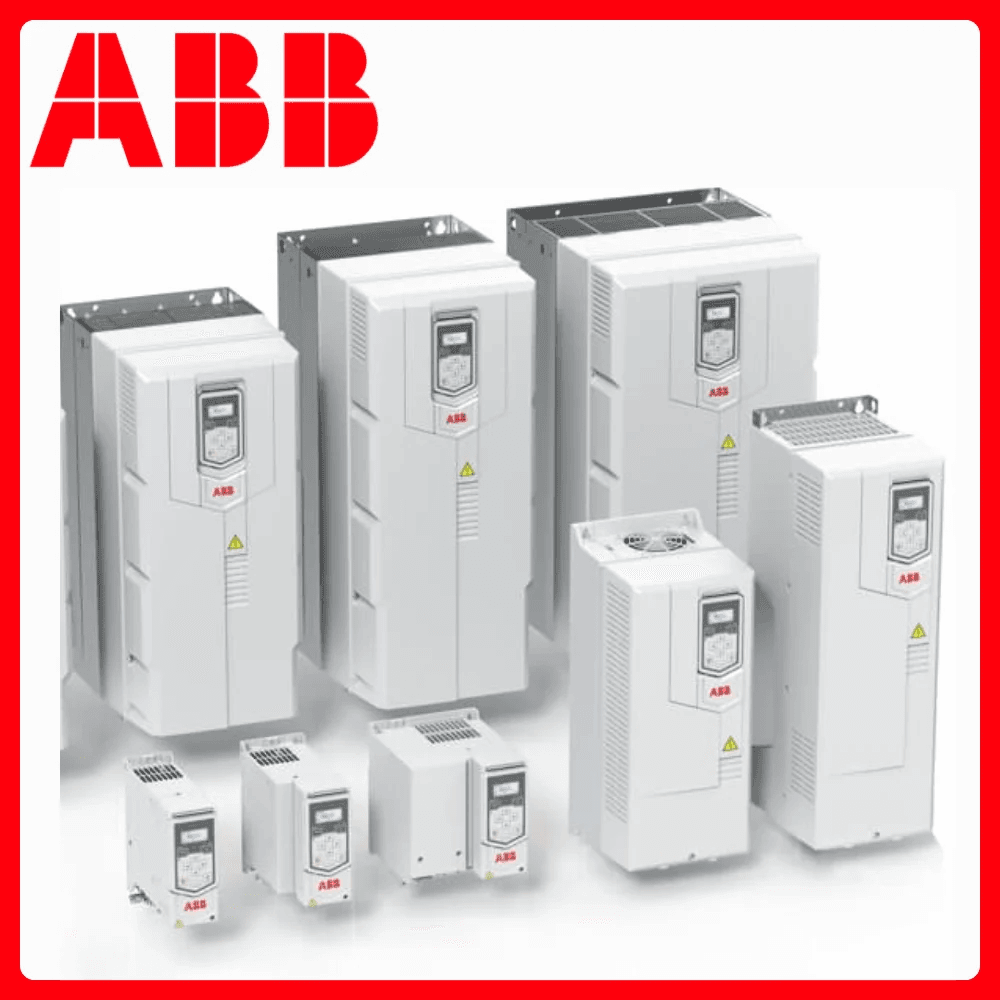
ABB ACS880 Industrial Drive
The ACS880 is a heavy-duty industrial drive built for demanding conveyor applications, providing precise torque control, robust thermal design and extensive safety and I/O options for long-run material handling systems. It typically outperforms many competitors on continuous-duty reliability and torque performance—trading a potentially higher initial purchase price for reduced downtime, lower maintenance intervention and predictable lifetime operating costs.
Estimated$1,800 – $9,500
Danfoss VLT AutomationDrive FC 302
The VLT AutomationDrive FC 302 emphasizes energy efficiency, low harmonic distortion and straightforward commissioning, making it a strong option for retrofits and distributed conveyor systems. Compared with the higher-featured Siemens and ABB drives it often delivers a lower total cost of ownership for mid-range conveyor lines while still offering flexible communications and advanced motor control suited to cost-sensitive material handling projects.

SEW-EURODRIVE MOVIDRIVE MDX61B Control Module
The MOVITRAC B is a compact, cost-effective drive designed for simple conveyor tasks and decentralized drive architectures, notable for easy setup, reliable brake handling and close motor-drive integration. It is typically the most economical option for straightforward material handling installations, providing lower capital expense than the feature-rich Siemens or ABB units at the expense of some advanced diagnostics and the broader power range those competitors offer.

Research and evidence: Why smart drives and controls deliver value
A growing body of peer-reviewed studies and industry reports shows that modern VFDs and integrated control systems reduce energy use, lower downtime, and improve throughput by enabling data-driven maintenance and precise motor control. For beginners, the core benefits come from variable speed operation, real-time condition monitoring, and standardized data access that allows diagnostic tools and plant historians to identify faults before they cause stoppages. Studies from engineering journals, energy agencies, and industrial research firms consistently highlight measurable returns when smart drives are deployed with good commissioning and network integration.
Energy savings: Controlled conveyors using VFDs commonly reduce motor energy use by 20 to 40 percent compared with fixed-speed systems, depending on duty cycle and load profile.
Reduced downtime: Predictive diagnostics and condition monitoring can reduce unplanned downtime by 30 percent or more in conveyor-intensive facilities by catching bearing, belt, or motor issues early.
Improved throughput and product quality: Precise speed and torque control plus synchronized indexing reduce product damage and increase line throughput, often improving overall equipment effectiveness (OEE).
Faster ROI: Industry reports show payback periods of one to three years for energy- and maintenance-driven retrofits in many conveyor applications when combined with proper commissioning.
Interoperability benefits: Standard communications and OPC UA data models simplify integration with SCADA, MES, and cloud analytics, accelerating digital transformation and enabling remote diagnostics.
Frequently Asked Questions
Which drive should I pick for conveyor control?
For conveyor and material handling systems, the Siemens SINAMICS G120 is a strong choice because it’s modular for single conveyors to multi-belt systems, includes built-in safety functions and integrated PLC options, and has a 4.6 average rating.
Does the ABB ACS880 support continuous-duty conveyors?
Yes—ABB ACS880 Industrial Drive is built with robust construction and cooling for continuous operation in heavy material handling environments, includes high-performance motion control with regenerative/energy-saving operating modes, and has a 4.6 average rating.
Is the Allen-Bradley PowerFlex 525 good value?
At $510 CAD, the Allen-Bradley PowerFlex 525 AC Drive gets embedded EtherNet/IP, compact commissioning tools, and seamless integration with Rockwell Automation PLCs and FactoryTalk software, plus sensorless vector and safe torque off features, with a 4.5 average rating.
What communications protocols does the ACS880 drive use?
The ABB ACS880 Industrial Drive supports EtherNet/IP, PROFINET, and Modbus for flexible conveyor system integration, and it carries a 4.6 average rating.
Conclusion
In Canada, conveyor controls and drives are evolving toward smarter, networked solutions that deliver energy savings, uptime improvements, and smoother integration into Industry 4.0 environments. The top options listed here cover a range of needs and budgets: Siemens SINAMICS G120 Variable Frequency Drive, Allen-Bradley PowerFlex 525 AC Drive, ABB ACS880 Industrial Drive, Danfoss VLT AutomationDrive FC 302, and SEW-Eurodrive MOVITRAC B Variable Frequency Drive. For most Canadian users seeking a balanced combination of functionality, local support, and scalable smart features, the Siemens SINAMICS G120 Variable Frequency Drive is a strong all-around choice. We hope you found what you were looking for; you can refine or expand your search using the search to compare features, certifications, and local vendor support.