

Top 6 Industrial Grinding Wheels in Canada for 2026
Heavy-duty grinding wheels engineered for high-volume material removal on metals and composites. These industrial grinding wheels come in vitrified, resin and bonded superabrasive formulations to deliver precision stock removal, consistent surface finish and extended service life. In Canada, manufacturers, fabricators and maintenance shops favor wheels that combine high removal rates with predictable wear, low vibration and compliance with workplace safety standards. Demand is strongest from automotive and electric vehicle suppliers, aerospace and defense subcontractors, rail and heavy equipment repair, and composite fabricators. Canadian buyers also prioritize product availability across provinces, technical support, lifecycle cost, and environmental and occupational safety credentials when specifying grinding wheels for production and repair operations.
Inception's AI took the time to understand this market in Canada · · How we pickWe may earn a commission on purchases. It never affects our rankings.
Top Picks Summary
Flexovit’s vitrified bench grinder wheels balance competitive pricing with solid abrasive technology, delivering dependable cutting and ease of use that appeals to mid-market buyers seeking better performance than entry-level wheels without the premium spend. Compared to Norton and Pferd, Flexovit often offers a slightly lower upfront cost while outperforming many generic wheels in life and consistency, and it sits as a cost-efficient alternative to Walter for moderate-duty industrial tasks. For users wanting a pragmatic blend of technical capability and price, Flexovit provides a strong middle ground in the vitrified grinding wheel lineup.
Show More Vitrified Grinding Wheels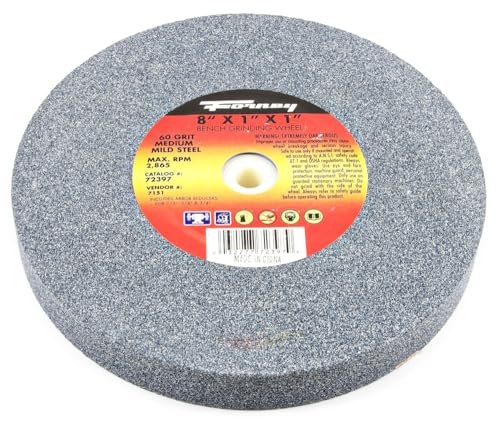
Weiler Tiger resin fiber discs are designed as durable, general-purpose resin bonded solutions that combine good cut rates with predictable finishing behavior, especially useful for blending and surface prep. They are generally more affordable than ceramic premium wheels like Cubitron II while outperforming many economy discs in longevity and heat control, offering a pragmatic middle ground for shops that need reliable performance without the highest capital outlay.
Show More Resin Bonded Grinding Wheels
The 3M Cubitron II Diamond Grinding Wheel leverages 3M's ceramic-shaped grain technology to deliver aggressive cutting rates and rapid stock removal, making it a market leader where throughput and reduced cycle time are top priorities. While its initial cost can be higher than some competitors, Cubitron II often lowers overall production expense through faster cutting and longer cutting life compared with conventional diamond wheels on this list.
Show More Bonded Superabrasive Wheels
Estimated$300 – $800
Norton Quantum is positioned as a best-in-class cylindrical grinding wheel thanks to its engineered abrasive grain and high-performance bond that deliver long life and tight dimensional control for precision parts. Compared with the other wheels in this list it balances exceptional material removal rates with predictable dressing intervals, giving a strong cost-per-part advantage over lower-cost centerless wheels while offering a more stable life profile than some ultra-fast-cutting ceramic options.
Show More Cylindrical and Centerless Grinding Wheels
Bosch's DC4510H 4-1/2 Inch Double Row Diamond Cup Wheel is recognized for heavy-duty, rapid stock removal thanks to its double-row segment pattern and robust cooling characteristics, positioning it above single-row competitors for slab prep and large-scale refinishing. Although typically pricier than single-row wheels like Makita or Norton Clipper, its faster cut rate and extended segment life lower total job-time costs for contractors handling large surface areas.
Show More Cup and Segmental Grinding Wheels
Estimated$85 – $140
Winterthur Technology Vitrified CBN Wheel Blank
Winterthur Technology’s vitrified CBN wheel blanks are the go-to choice for grinding hardened ferrous materials and achieving tight geometric tolerances due to CBN’s hardness and thermal resilience. Although the upfront cost is substantially higher than conventional vitrified blanks, the dramatic reduction in dressing frequency, superior dimensional stability and long life make it the most cost-effective option over time for high-precision, high-wear applications where 3M or Norton types cannot match performance.
Show More Grinding Wheel Blanks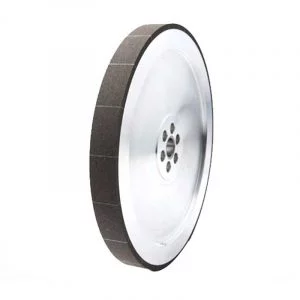
Why these grinding wheels work: science and practical evidence
The performance differences among vitrified, resin and bonded superabrasive wheels are explained by abrasive mechanics, bond chemistry and thermal management. Research in materials science and tribology shows how grain fracture, bond strength and coolant use control cutting efficiency, surface finish and wheel life. Superabrasives such as cubic boron nitride and synthetic diamond are supported by studies demonstrating superior wear resistance and stable cutting on hardened steels and advanced composites. Vitrified bonds provide dimensional stability and accurate dressing for precision grinding, while resin bonds deliver aggressive cutting with controlled friability. Taken together, these mechanisms explain the tradeoffs between removal rate, finish, heat generation and cost per part.
Abrasive grain type matters: superabrasives (CBN, diamond) maintain cutting edges longer on hard materials, reducing wheel changes and downtime.
Bond formulation controls rigidity and dressing frequency: vitrified bonds support precise tolerances; resin bonds allow faster stock removal.
Grit size balances removal rate and finish: coarser grit increases material removal, finer grit improves surface quality.
Thermal control is critical: studies show proper coolant and dressing minimize heat-related damage to parts and wheel glazing.
Dressing restores wheel geometry and cutting action: regular, correct dressing extends life and preserves part accuracy.
Optimized wheel selection and process parameters reduce cycle time, energy use and overall cost per part in high-volume production.
Frequently Asked Questions
Which wheel should I buy for general metal grinding?
Choose the CGW Camel Grinding Wheels Bench Grinding Wheel for general-purpose shop use; it’s an economical vitrified bench wheel with a stable, open-grit structure and 4.4 average rating.
Does the 3M Cubitron II depressed center wheel cut fast?
Yes—the 3M Cubitron II Depressed Center Grinding Wheel uses Cubitron II ceramic grain with an aggressive, self-sharpening cutting action and has a 4.8 average rating.
Is the 3M Cubitron II wheel cheaper than CGW Camel?
Yes: the 3M Cubitron II Depressed Center Grinding Wheel lists at CAD $35.99 versus the CGW Camel Grinding Wheels Bench Grinding Wheel at CAD $41.95.
What bond types are available for the Norton Winter Paradigm?
The Norton Winter Paradigm Diamond Wheel is available in vitrified and resin bond options, with a 4.7 average rating.
Conclusion
These top 6 heavy-duty grinding wheel options reflect the best performance and availability across Canada for 2026, covering metal and composite applications from precision shop work to high-volume production. We hope you found the type of grinding wheel you were looking for. If you want to refine results by material, bond type, grit or application, or expand the search by province or supplier, use the search to narrow your options.