

Top 8 Plain Bearings and Bushings in Canada for 2026: Simple Self-Lubricating Solutions
Plain bearings and bushings are compact, cost-effective components used to support rotating, sliding, and oscillating shafts in a wide range of Canadian industries. This category includes bronze, polymer, composite, and PTFE-lined bushings designed for low-speed, high-load, and reciprocating applications where simplicity and durability matter most. In Canada the market is focused on self-lubricating materials, corrosion resistance for coastal and winter environments, and compact designs that enable maintenance-free operation and lower total cost of ownership. Buyers prefer solutions that deliver consistent service life in harsh conditions, meet industry standards for food, marine, and heavy equipment use, and are available through reliable local supply chains and technical support.
Inception's AI took the time to understand this market in Canada · · How we pickWe may earn a commission on purchases. It never affects our rankings.
Top Picks Summary
Boston Gear bronze sleeve bushings combine robust material selection with OEM-focused tolerances and easy interchangeability, making them a strong choice for gear and transmission integration where fit and repeatability matter. They sit between precision boutique suppliers and broad-line distributors financially — typically more economical in production volumes than Grainger-sourced single buys, while offering better dimensional control than many cast commodity sleeves.
Show More Bronze Solid Sleeve Bushings
Oilite Bronze bushings are the long-standing, widely available standard for sintered porous oil-impregnated bushings, chosen for broad applicability and attractive unit cost for high-volume runs. For the specific use case of sintered porous oil-impregnated bushings they offer proven dimensional stability and predictable break-in behavior, making them a cost-effective alternative to premium engineered brands like SKF while generally undercutting them on price. Compared with polymer-forward options from igus or niche custom suppliers like Bunting, Oilite parts trade some advanced surface or support services for a lower per-piece cost and a large installed base.
Show More Sintered Porous Oil Impregnated Bushings
The Oilite flange-mounted sleeve bearing is an oil-impregnated bronze alternative that excels where thermal capacity, shock tolerance and built-in lubrication are prioritized over polymer linings; its flange configuration also reduces installation and machining time. Although not polymer-lined, Oilite can offer lower lifecycle cost in heavy or high-temperature applications and serves as a robust substitute when polymer materials would overheat or wear prematurely.
Show More Polymer Lined Plain Bushings
Oilite bronze bushings are sintered, oil-impregnated metal bearings that excel at heavy loads, shock resistance, and thermal conductivity, making them the practical choice for high-load or high-temperature assemblies. They are typically the most economical metal option on the list and outperform many composites on load capacity, though they lack the ultra-low friction of PTFE-lined composites and can require careful installation and conditioning compared with maintenance-free polymer solutions like Iglide.
Show More Composite Self Lubricating Bushings
Igus iglide A500 Stainless Steel Sleeve Bushing earns a best-in-class spot for corrosion-resistant bushing applications by pairing a stainless steel sleeve with iglide A500 self-lubricating material for low friction and maintenance-free operation. For the stainless steel corrosion resistant bushings use case it presents a cost-effective, lightweight alternative to full-metal PTFE-lined bearings, undercutting premium metal liners on initial price while offering longer service life in contaminated or wet environments than plain stainless steel options.
Show More Stainless Steel Corrosion Resistant Bushings
Estimated$20 – $70
Martin Sprocket's split taper bushing is a market leader for shaft-to-component mounting in split-install contexts, enabling fast, repeatable assembly and repairable fits for sprockets and pulleys without needing full shaft extraction. Unlike full bearing housings, this bushing emphasizes quick changeover and lower part cost, making it a preferred option when the use case prioritizes replaceable mounting interfaces over heavy radial load support.
Show More Split Installable Repairable Bushings
GGB DU Flanged Bushing stands out for flanged mounting sleeve bushings that need very low friction and smooth break-in performance thanks to its metal-backed composite with a PTFE-based sliding layer, striking a balance between load capacity and low wear. It typically costs less than top-tier precision metal bearings while offering better friction characteristics than plain bronze and greater temperature and contamination tolerance than many polymer-only parts.
Show More Flanged Mounting Sleeve Bushings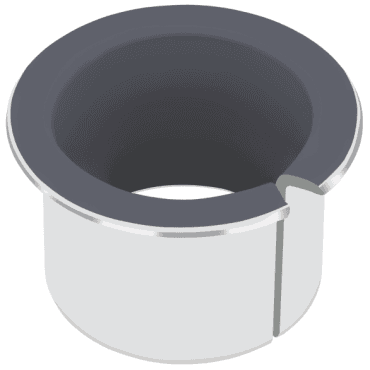
Estimated$25 – $140
Bunting Bearings TT thrust washers are precision-manufactured, industry-focused washers that emphasize value, short lead times and practical interchangeability for industrial maintenance and rebuilds. For the thrust washers and thrust bushings use case they are frequently selected by buyers seeking a budget-friendly, readily available alternative to global-brand premium composites, with the added advantage of strong regional support and competitive pricing in aftermarket supply chains.
Show More Thrust Washers and Thrust Bushings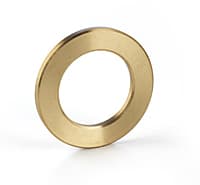
Estimated$12 – $120
Learn the Science: Why Plain Bearings Work
Plain bearings reduce friction and wear by using low-friction materials, internal lubricants, or engineered surface textures rather than rolling elements. Sintered bronze bushings are often impregnated with lubricant to release oil under load, while PTFE-lined and composite bearings provide a dry running surface with low friction and high wear resistance. Research in tribology shows these designs are particularly effective for low-speed, high-load, and oscillating motions because they spread loads over larger contact areas and avoid impact stresses common with rolling bearings. Choosing the right material and geometry helps balance load capacity, temperature tolerance, corrosion resistance, and service interval needs.
Self-lubricating sintered bronze bushings release oil under load to extend maintenance intervals.
PTFE-lined and fiber-reinforced composites offer low friction coefficients and good performance in oscillating motion.
Materials like PEEK and UHMWPE perform well in chemically aggressive or food-grade environments.
Tribology studies report significant reductions in wear and service downtime when replacing metal-on-metal interfaces with engineered plain bearings.
Composite and polymer bearings often provide corrosion resistance and can operate without external lubrication in cold Canadian climates.
Proper sizing and installation are critical; bearing life depends on load distribution, speed, alignment, and operating temperature.
Frequently Asked Questions
Which bushing should I choose for minimal lubrication access?
Choose the Oilite Bronze Sleeve Bearing for porous, oil-impregnated self-lubrication that reduces maintenance, with an average rating of 4.8 and a listing price of CAD 14.30.
What self-lubrication material does the Oilite Bronze Bushing use?
The Oilite Bronze Bushing uses sintered bronze construction impregnated with oil for long-term, maintenance-free lubrication, with an average rating of 4.5 and listing price CAD 12.59.
Is the Oilite Bronze Sleeve Bearing better value than others?
At CAD 14.30, the Oilite Bronze Sleeve Bearing costs CAD 1.71 more than the Oilite Bronze Bushing at CAD 12.59, but has the higher average rating of 4.5 (vs 4.5).
Who should avoid the Saint-Gobain Norglide Composite Bushing?
Avoid the Saint-Gobain Norglide Composite Bushing if you need a simple standard, since it’s an engineered composite with low-friction PTFE-based liner meant for heavy-duty, tight-tolerance design-in; its average rating is 4.6.
Conclusion
Plain bearings and bushings remain a practical, high-value choice across Canadian sectors from agriculture and forestry to food processing and marine applications. We hope you found the right type and key selection criteria here for 2026. Use the search or filters to refine by material, load rating, bore size, or maintenance profile to expand or narrow your options.