

Top 5 Grounding and Earthing Terminal Blocks in Canada — 2026 Guide
Grounding and earthing terminal blocks ensure reliable protective earth connections and equipotential bonding in industrial panels. They feature robust conductive inserts, high fault current ratings, and secure mounting to meet safety and compliance requirements across Canadian installations. In Canada, buyers prioritize products that meet CSA and IEC standards, offer easy installation and maintenance, provide clear marking and testing points, and resist corrosion in varied climates from coastal salt air to inland industrial environments. The growing demands from renewable energy, electric vehicle charging, and industrial automation mean customers also favor modular, space-saving designs with high fault current capacity and proven long-term reliability.
Inception's AI took the time to understand this market in Canada · · How we pickWe may earn a commission on purchases. It never affects our rankings.
Top Picks Summary
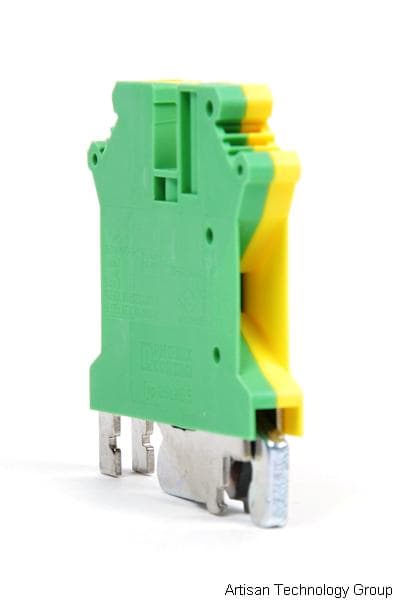
Phoenix Contact USLKG 5 Ground Terminal Block
The Phoenix Contact USLKG 5 is a compact, DIN-rail grounding terminal block designed for reliable earthing connections across a broad conductor range, making it well suited for dense control panels. It stands out for its robust screw-clamp design and modular accessories, offering a lower per-unit hardware cost for high-volume installations compared with spring-clamp alternatives, though it can be marginally slower to install than push-in systems like WAGO.
Estimated$3 – $7
Wago 281-907 Ground Terminal Block
The Wago 281-907 ground terminal block uses WAGO's proven spring-clamp (push-in) technology to deliver fast, vibration-resistant earthing terminations that reduce labor time and long-term maintenance costs. Its higher upfront price is offset by rapid installation and reliable contact performance, making it a favorable choice where installation speed and repeatable torque-free connections matter compared with traditional screw-based blocks such as Phoenix Contact or ABB.

Estimated$2 – $6
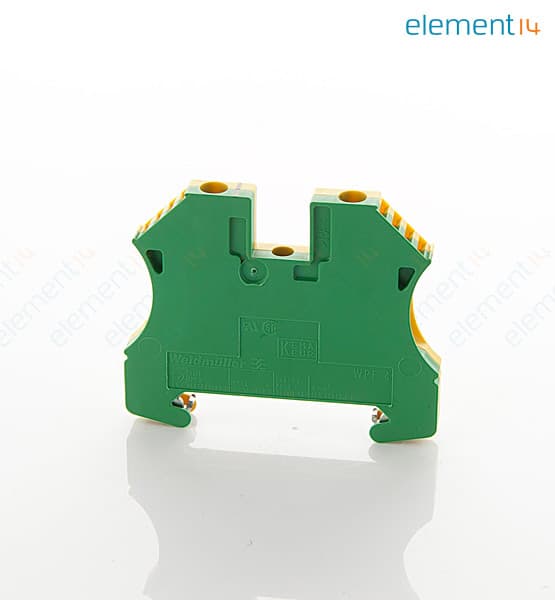
Weidmuller WPE 4 PE Terminal Block
The Weidmuller WPE 4 PE terminal block focuses on heavy-duty earthing with generous conductor capacity and excellent mechanical stability for industrial environments, often allowing larger cross-sections than comparable slim-line blocks. Technically optimized for high-current grounding and busbar integration, it competes on value for installations that require higher conductor sizes and rugged performance versus more compact or system-focused options from Schneider and Phoenix Contact.
Estimated$2 – $5
ABB Entrelec SNK Series Terminal Blocks
ABB's D4/6.P grounding terminal block emphasizes certified reliability and global approvals, delivering consistent electrical and thermal performance in demanding distribution and control applications. While typically positioned at a premium compared with commodity blocks, ABB provides strong documentation, global support and integration advantages that justify the cost for projects needing traceable compliance and long-term supplier backing compared with smaller specialist blocks.

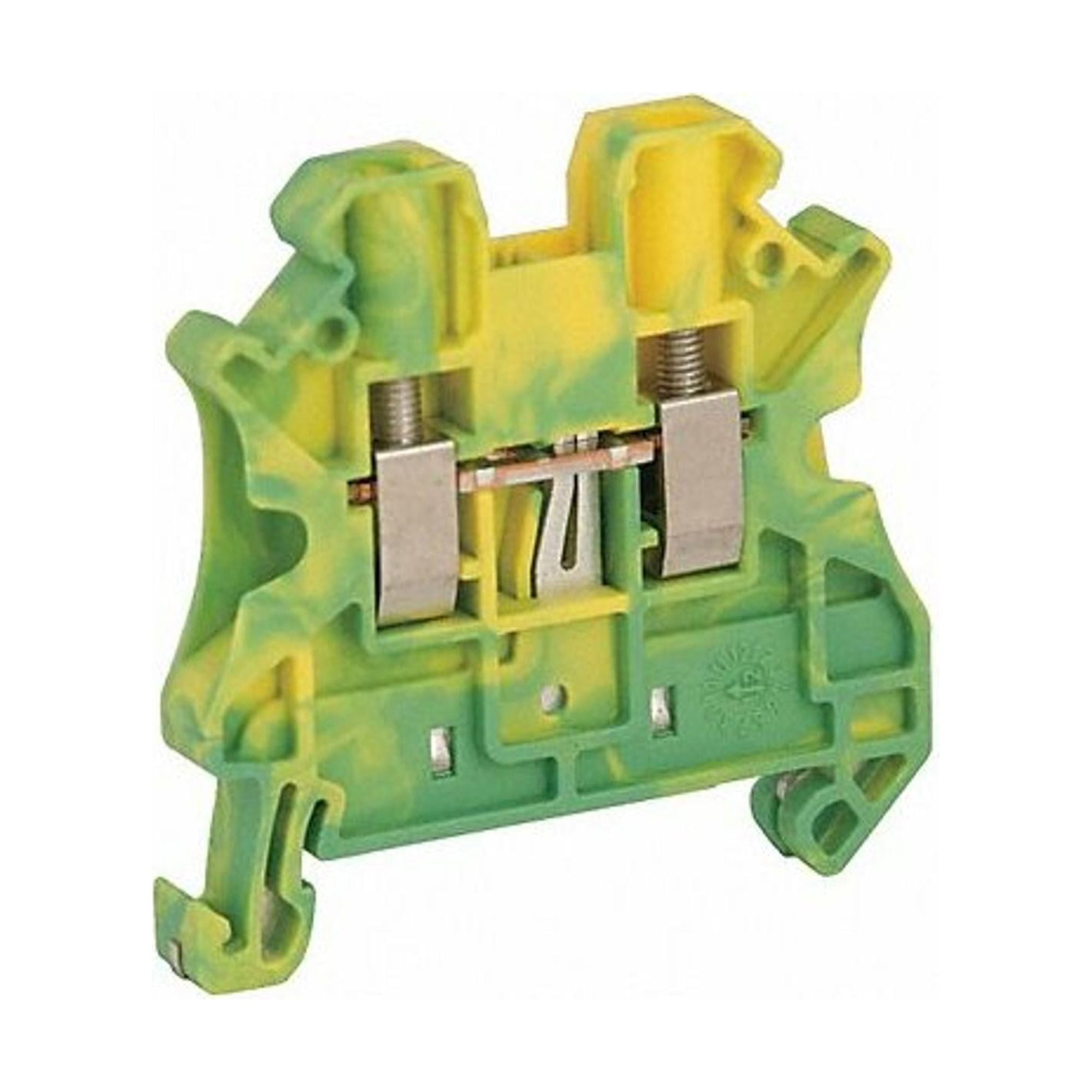
Schneider Electric NSYTRV42PE Ground Terminal Block
The Schneider Electric NSYTRV42PE is engineered for system-level compatibility in panel-building and distribution equipment, offering grounding performance tuned to Schneider enclosures and accessories for streamlined BOM and procurement. It provides a balanced mid-range price and good global availability, making it attractive for customers who prioritize integrated system warranties and ease of sourcing versus the raw conductor capacity of industrial-focused blocks like Weidmuller.
Estimated$4 – $12
Why Proper Grounding and Earthing Matter: Research and Standards
Research, industry standards, and safety guidelines consistently show that correctly designed and installed grounding systems reduce electrical hazard risk, improve equipment longevity, and limit electromagnetic interference. Guidance from bodies such as CSA Group, IEC, and technical literature from IEEE underline how low-impedance earth paths, adequate cross-section conductors, and reliable connection points directly affect safety, performance, and maintainability of industrial electrical systems.
Fault current capacity: Studies and standards emphasize sizing terminal blocks and conductors to carry prospective fault currents momentarily without losing conductivity, preventing fire and equipment damage.
Low impedance paths: Research finds that low-resistance grounding reduces transient overvoltages and limits touch and step potentials, improving personal safety and reducing equipment stress.
Corrosion resistance: Long-term testing shows that corrosion-resistant materials and coatings preserve conductivity and reduce maintenance in harsh Canadian environments, including coastal and industrial sites.
Testing and maintenance: Standards recommend dedicated test points and clear labeling to support routine verification of earth continuity and to catch degradation before failures occur.
Modularity and installation: Field studies indicate that modular, DIN-rail mounted terminal blocks with easy connection systems cut installation time and lower human error, especially in repetitive industrial and renewable energy applications.
Frequently Asked Questions
Which grounding terminal block is best for control panels?
Choose the Phoenix Contact USLKG 5 Ground Terminal Block for dense control panels because it’s compact, DIN-rail mountable, and rated 4.6 stars with a robust screw-clamp/bolt connection for secure PE grounding.
Does the Wago 281-907 support tool-free installation?
Yes—the Wago 281-907 Ground Terminal Block uses a WAGO spring-cage clamp for vibration-proof, tool-free conductor insertion, and it’s rated 4.5 stars.
What value do I get with Weidmuller WPE 4?
The Weidmuller WPE 4 PE Terminal Block lists at $6.01 and targets heavy-duty earthing with a slim-profile design optimized for high-density grounding strips, rated 4.4 stars.
How does Phoenix Contact USLKG 5 mount on rails?
The Phoenix Contact USLKG 5 Ground Terminal Block is DIN-rail mountable with a modular design, uses a robust bolt connection for PE/ground conductor mounting, and has a 4.6 star rating.
Conclusion
Grounding and earthing terminal blocks are a small but critical part of safe electrical systems in Canada. The Phoenix Contact USLKG 5 Ground Terminal Block, Wago 281-907 Ground Terminal Block, Weidmuller WPE 4 PE Terminal Block, ABB D4/6.P Ground Terminal Block, and Schneider Electric NSYTRV42PE Ground Terminal Block each offer strong fault current ratings, reliable conductive inserts, and features tailored to modern Canadian needs. For most Canadian buyers, the Phoenix Contact USLKG 5 stands out as the best overall choice because of its balance of fault current capacity, modular design, and broad certification. We hope you found what you were looking for; use the search to refine by certification, connection type, or application if you want to expand or narrow your options.