

Best Thread Forming Screws in Canada 2026: Top 5 Picks for Strong, Debris-Free Joints
Published on Saturday, January 24, 2026
Thread forming screws displace material to create mating threads without cutting, resulting in strong, vibration-resistant joints in ductile materials like aluminum and plastics. In Canada these fasteners are popular across automotive, electronics, appliance and renewable energy manufacturing because they improve part strength, reduce debris and simplify high-volume assembly. Canadian buyers also favor coatings and materials that stand up to local climates and corrosion risks, metric sizing and fast delivery from national distributors. Growing trends toward lightweighting for electric vehicles, tighter contamination controls in electronics and greater automation on assembly lines continue to drive demand for thread forming designs that deliver consistent clamp loads, fewer rejects and lower long-term assembly cost.
Top Picks Summary
EJOT PT Screws
EJOT PT Screws are best-in-class for high-performance thread forming applications, featuring optimized thread geometry and corrosion-resistant finishes that deliver reliable chip-less installation in plastics and thin metals. Compared with the other products listed, EJOT prioritizes higher load capacity and long-term durability, which can reduce warranty and replacement costs even if the initial unit price is modestly higher.
REMINC Taptite II Thread Forming Screws
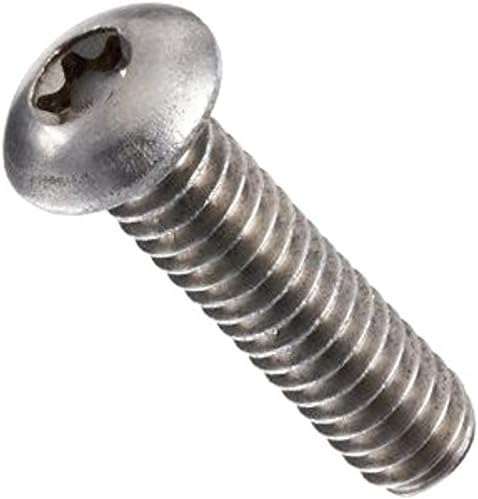
REMINC Taptite II screws are a market-leading solution for creating consistent formed threads in ductile sheet materials, offering excellent strip resistance and predictable torque‑to‑tension behavior. Versus the other options here, Taptite II strikes a strong balance of low installation torque and material savings in sheet-metal assemblies, making it a cost-effective choice for high-volume production where cycle time and reduced rework lower total cost of ownership.

Where to buy REMINC Taptite II Thread Forming Screws in Canada: the trusted retailers we track in this market, with the best price we have observed at each. Prices are checked regularly and can change, and the retailer confirms the final price at checkout.
We may earn a commission on purchases. It never affects our rankings.
$60 – $180
Stanley Engineered Fastening PLASTITE 45 Screws
Stanley Engineered Fastening PLASTITE 45 screws are designed for secure, vibration-resistant joints in plastics and thin-gauge metals, using a 45° thread profile to minimize stress on mating materials and reduce cracking. Compared to the heavier-duty or specialized geometries in this list, PLASTITE 45 offers competitive performance at a lower unit cost and broad availability, appealing to manufacturers who need reliable performance under tighter budget constraints.
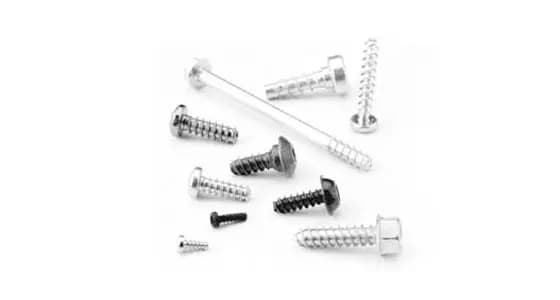
Where to buy Stanley Engineered Fastening PLASTITE 45 Screws in Canada: the trusted retailers we track in this market, with the best price we have observed at each. Prices are checked regularly and can change, and the retailer confirms the final price at checkout.
We may earn a commission on purchases. It never affects our rankings.
$35 – $100
TR Fastenings Trilobular Thread Forming Screws
TR Fastenings' trilobular thread forming screws use a patented lobed cross-section to control material displacement, reduce installation torque and improve fatigue life, which makes them particularly well-suited to automated, high-speed assembly lines. In contrast to conventional thread formers on this list, the trilobular geometry delivers measurable productivity gains—faster drive speeds and fewer cross-threads—that translate into lower cycle costs in mass-production environments.

Bossard ecosyn-form Thread Forming Screws
Bossard ecosyn-form screws pair proven thread-forming geometries with environmentally friendly coatings and rigorous quality control, targeting sustainable manufacturing and consistent joint performance. Unlike rivals that focus primarily on peak mechanical metrics, ecosyn-form emphasizes reduced environmental impact and supply-chain traceability, which can yield financial benefits through compliance, lower scrap rates and stronger supplier partnerships.

Where to buy Bossard ecosyn-form Thread Forming Screws in Canada: the trusted retailers we track in this market, with the best price we have observed at each. Prices are checked regularly and can change, and the retailer confirms the final price at checkout.
We may earn a commission on purchases. It never affects our rankings.
$80 – $250
How Thread Forming Screws Work and What Research Shows
Thread forming screws create their mating thread by displacing and cold-working the parent material instead of cutting it. This produces a positive mechanical interlock, often with higher pull-out and vibration resistance than comparable tapped or self-tapping screws in ductile plastics and softer metals. Industry testing and laboratory studies show that properly specified thread forming screws reduce particulate generation, improve cycle time in automated insertion, and can increase joint fatigue life when pilot hole, screw geometry and insertion control are optimized. For reliable results, manufacturers match screw profile and pilot hole diameter to substrate type, control insertion torque and consider coatings or stainless grades for corrosion resistance.
Higher pull-out and strip resistance in many plastics and aluminum alloys compared with cut threads.
Lower particulate generation because material is displaced not removed, important for electronics and sealed assemblies.
Trilobular and trilobe profiles reduce insertion torque and improve material flow, according to comparative test data.
Correct pilot hole sizing and torque-controlled insertion are critical to avoid over-stressing the parent material.
Properly specified thread forming screws support faster cycle times and lower scrap in high-volume production.
Frequently Asked Questions
Which thread forming screw is best for thermoplastics?
EJOT PT Screws are best for thermoplastic assemblies, featuring low insertion torque design and high pull-out strength that helps minimize stress and cracking in plastics, with an average rating of 4.7.
What thread profile does Stanley PLASTITE 45 use?
Stanley Engineered Fastening PLASTITE 45 Screws use a 45° thread profile, which minimizes insertion torque and reduces stress on mating materials to lower cracking risk; they have an average rating of 4.4.
How much do REMINC Taptite II thread forming screws cost?
Price isn’t provided for REMINC Taptite II Thread Forming Screws, but they have an average rating of 4.6 and a trilobular/forming profile for forming threads in thin metal reliably with consistent torque control.
Do EJOT PT screws reduce cracking in plastics?
Yes—EJOT PT Screws are designed for thermoplastic assemblies to deliver high pull-out strength while minimizing stress and cracking in plastics; they have an average rating of 4.7.
Conclusion
In the Canadian 2026 market, thread forming screws remain a go-to solution where vibration resistance, low debris and efficient high-volume assembly matter. The top five options listed here reflect the range of profiles and strengths installers and OEMs need: EJOT PT Screws, REMINC Taptite II Thread Forming Screws, Stanley Engineered Fastening PLASTITE 45 Screws, TR Fastenings Trilobular Thread Forming Screws, and Bossard ecosyn-form Thread Forming Screws. For most manufacturers and installers in Canada, REMINC Taptite II offers the best balance of proven performance, availability and broad material compatibility, while the other four remain excellent choices for specific substrates or coating preferences: EJOT PT for precision plastics and light alloys, PLASTITE 45 for traditional plastics applications, TR Fastenings trilobular designs for low insertion torque, and Bossard ecosyn-form for sustainability-minded specifications. I hope you found what you were looking for. You can refine or expand your search by material, head type, coating or size using the search to narrow results for your specific application.