

Food Grade Greases: Top 5 NSF H1 Options in Canada for 2026
Published on Saturday, January 24, 2026
Food grade greases are lubricants formulated and certified for incidental food contact environments, meeting NSF H1 and other international and Canadian compliance standards. In Canada in 2026, demand is driven by stricter regulatory expectations, greater focus on traceability, and operator preference for low-toxicity, clean-running formulations that reduce contamination risk in food and beverage processing, packaging, and handling equipment. Trends favor synthetic base oils and advanced thickeners because they deliver longer service life, better thermal and oxidative stability, and reduced breakdown products compared with conventional mineral greases. Buyers in Canada also prioritize products with clear supply-chain documentation, regional availability, and demonstrated performance in cold storage, high-humidity, and washdown environments.
Top Picks Summary
Petro-Canada Purity FG2 Grease
Petro-Canada Purity FG2 Grease is a food-grade formulation valued for dependable, general-purpose lubrication in food-processing environments and for its competitive acquisition cost. Compared with specialty synthetics on this list it offers a strong balance of performance, availability and lower upfront expense, making it a practical choice where extreme chemical inertness or the longest relubrication intervals are not critical.

Kluber Klubersynth UH1 14-151
Klüber Klubersynth UH1 14-151 is a high-performance synthetic food-grade grease designed for extended service life and stable behavior across a wide temperature range. It sits between commodity food greases and ultra-high-end PFPEs by delivering improved thermal and oxidation resistance at a mid-to-premium price, so operators who want longer intervals and better efficiency without Krytox-level cost often choose it.
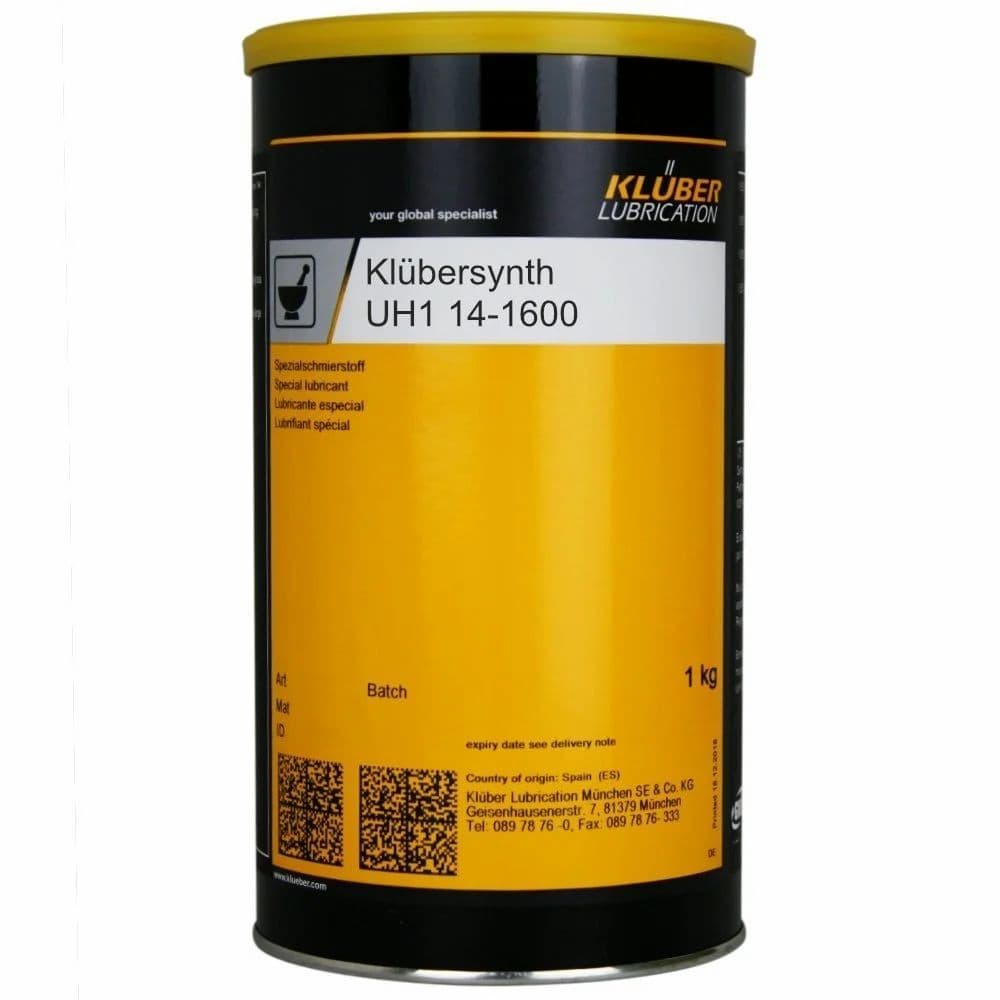
Fuchs Cassida Grease EPS 2
Fuchs Cassida Grease EPS 2 is a well-rounded food-grade grease that emphasizes reliable performance and attractive cost-to-performance for routine food industry lubrication tasks. In comparison to Shell Cassida RLS 2 and Petro-Canada Purity FG2 it competes on price and broad applicability, often representing a sensible choice for operators prioritizing predictable service life and global supply.

Where to buy Fuchs Cassida Grease EPS 2 in Canada: the trusted retailers we track in this market, with the best price we have observed at each. Prices are checked regularly and can change, and the retailer confirms the final price at checkout.
We may earn a commission on purchases. It never affects our rankings.
$180 – $350
Shell Cassida Grease RLS 2
Shell Cassida Grease RLS 2 leverages Shell’s global formulation standards and supply network to deliver consistent, regulatory-aware food-grade lubrication for multinational operations. Technically and financially it competes closely with the other mainstream greases here by offering dependable coverage and superior logistics and support, which can reduce total cost of ownership for large-scale users.
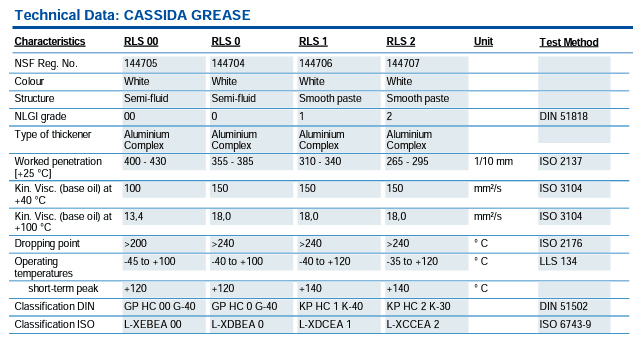
Where to buy Shell Cassida Grease RLS 2 in Canada: the trusted retailers we track in this market, with the best price we have observed at each. Prices are checked regularly and can change, and the retailer confirms the final price at checkout.
We may earn a commission on purchases. It never affects our rankings.
$200 – $350
Chemours Krytox GPL 227
Chemours Krytox GPL 227 is the technical market leader for demanding food-industry applications, providing exceptional chemical inertness, extreme temperature stability and very low volatility that extend relubrication intervals. Although it carries a premium price compared with the other products listed, its PFPE chemistry reduces contamination risk and lifecycle maintenance cost where performance and reliability are paramount.

What research and testing say about food grade greases
Independent tribology testing, manufacturer validation, and toxicology reviews support core benefits of modern food grade greases. Key findings document improved wear protection, extended relubrication intervals, and high thermal stability from synthetic base fluids. NSF H1 registration is awarded after toxicological and migration assessments that verify acceptability for incidental contact. For critical applications such as conveyors, bearings, and refrigeration equipment, laboratory and field trials consistently show that choosing the right grease reduces downtime, contamination risk, and maintenance cost.
NSF H1 registration involves toxicology screening and migration testing to ensure low risk for incidental contact with food.
Tribology studies show synthetic bases like PAO, ester, and PFPE provide lower friction and better wear protection than many mineral oil greases.
Oxidation and thermal stability tests indicate synthetic greases resist breakdown at higher temperatures and under repeated washdown cycles, extending service intervals.
Independent lab testing and controlled field trials demonstrate that traceable supply chains and clear product specifications reduce recall risk and simplify regulatory audits.
Frequently Asked Questions
Which NSF H1 grease should I choose for food plants?
Petro-Canada Purity FG2 Grease is the safest general-purpose pick for food-processing equipment, with NSF H1 approval, synthetic lithium-complex in NLGI 2, and an average rating of 4.5.
What does Kluber Klubersynth UH1 14-151 include exactly?
Kluber Klubersynth UH1 14-151 uses a PAO-based synthetic formulation for food-contact applications, with strong shear stability, excellent low-temperature performance, and low oil separation; it’s rated 4.6.
Is Fuchs Cassida Grease EPS 2 a good value option?
I can’t compare value because no Canada price is provided for Fuchs Cassida Grease EPS 2; I only see it rated 4.4 and listed as NLGI 2 with extreme-pressure additive protection and high water resistance.
Is Petro-Canada Purity FG2 Grease good for washdown?
Yes—Petro-Canada Purity FG2 Grease is described as having good water resistance and corrosion protection for bearings, conveyors, and mixers, and it carries NSF H1; rating is 4.5.
Conclusion
In Canada, selecting the right food grade grease means balancing regulatory compliance, performance, and supply-chain confidence. The five leading choices featured here are Petro-Canada Purity FG2 Grease, Kluber Klubersynth UH1 14-151, Fuchs Cassida Grease EPS 2, Shell Cassida Grease RLS 2, and Chemours Krytox GPL 227. For most Canadian operations looking for a strong combination of local availability, NSF H1 compliance, and broad application flexibility, Petro-Canada Purity FG2 Grease is the best overall choice among these options. We hope this guide helped you find the right direction; you can refine or expand your search using the site search to compare specifications, safety data sheets, and distributor availability.