

Top 7 Industrial Metalworking Fluids in Canada for 2026
Industrial metalworking fluids include cutting oils, soluble oils, and neat oils designed to lubricate, cool, and flush chips during machining and grinding operations. In Canada, demand emphasizes performance and compliance: shop managers and buyers look for fluids that extend tool life, improve surface finish, reduce cycle times, and lower total cost of ownership while meeting environmental and occupational health standards. Current market trends for 2026 favor bio-based and low-odour formulations, improved biostability in water-soluble blends, and high-performance additive packages that boost wear protection and thermal control. These characteristics make modern metalworking fluids appealing across Canadian industries from aerospace and automotive to custom job shops and heavy fabrication, where sustainability, regulatory compliance, worker comfort, and supplier technical support strongly influence purchasing decisions.
Inception's AI took the time to understand this market in Canada · We may earn a commission on purchases. It never affects our rankings.
Top Picks Summary
Quaker Houghton Hocut 795-H is engineered for heavy-duty machining and excels at tramp oil rejection, corrosion control and long-term emulsion stability in challenging production environments. Its strength in contaminated or high-throughput operations reduces downtime and maintenance expenses, giving it a financial advantage over cleaner, more sensitive synthetics on this list. Compared with the other products, Hocut 795-H is preferred where robust contamination tolerance and machine protection are prioritized over the absolute highest tool-life gains.
Show More Soluble Cutting Fluids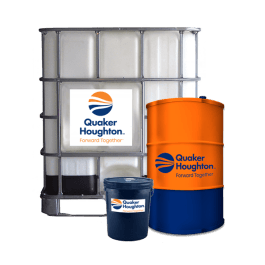
Where to buy Quaker Houghton Hocut 795-H in Canada: we track one retailer, Onestopsupplies24, and show the price we last observed there; the price you see at checkout may differ.
We may earn a commission on purchases. It never affects our rankings.
$250 – $400
Blaser Synergy 735 is a premium synthetic noted for exceptional tool life, corrosion protection, and tramp-oil handling, making it ideal for high-precision and high-value machining where part-quality and scrap reduction are paramount. Compared with the other products here it targets the highest technical performance and lowest rework rates, which can justify a higher upfront price through savings on tooling, rejects, and downstream processing.
Show More Semi Synthetic Metalworking Fluids
Where to buy Blaser Synergy 735 in Canada: we track one retailer, Blaser, and show the price we last observed there; the price you see at checkout may differ.
We may earn a commission on purchases. It never affects our rankings.
$200 – $350
Petro-Canada Lubricants HD 10 Cutting Oil
Petro-Canada HD 10 Cutting Oil delivers a balance of reliable cutting performance and cost-effectiveness, aimed at shops that need good load-carrying ability without premium pricing. Its value proposition is attractive for high-volume or mixed-work applications where predictable sump life and straightforward inventory management reduce operating expense. Relative to the other options, HD 10 is typically more economical than premium specialty oils while offering better performance than basic commodity formulations.
Show More Synthetic Metalworking Fluids
Where to buy Petro-Canada Lubricants HD 10 Cutting Oil in Canada: we track one retailer, Petrocanadalubricants, and show the price we last observed there; the price you see at checkout may differ.
We may earn a commission on purchases. It never affects our rankings.
$140 – $260
Castrol Hysol MB 50 is a proven mineral-oil based grinding and honing lubricant known for strong boundary lubrication and film strength, making it a go-to for heavy-duty or coarse stock removal tasks. Its technical advantage is robust load-carrying capability and predictable performance under severe conditions, which can justify higher oil usage and disposal costs compared with synthetics like Hangsterfer's S-500, while offering a different cost/performance trade-off than eco-focused products such as Fuchs Ecocool Grindstar 10.
Show More Neat Cutting Oils
Blaser Swisslube Forming Oil B-Cool 655
Blaser Swisslube B-Cool 655 is a premium-formulation forming oil emphasizing high lubricity and environmentally considerate chemistry that simplifies regulatory compliance and wastewater handling. Compared to more conventional oils on this list, it may carry a higher upfront cost but can lower lifecycle expenses through reduced emissions, better worker safety profiles and longer component life in demanding draw operations.
Show More Grinding and Honing Fluids
Where to buy Blaser Swisslube Forming Oil B-Cool 655 in Canada: we track one retailer, Blaser, and show the price we last observed there; the price you see at checkout may differ.
We may earn a commission on purchases. It never affects our rankings.
$300 – $600
Blaser Swisslube Blasocut BC 35 Kombi
Blasocut BC 35 Kombi is positioned as a premium, best-in-class synthetic concentrate for machine coolants and chip flush fluids, offering exceptional tool life, surface finish and compatibility with difficult alloys. Its higher upfront cost is offset by technical gains—reduced tool wear, cleaner parts and longer coolant service intervals—making it economically advantageous in high-precision or high-value machining compared with generic soluble oils and economy blends. Against the other products listed, Blasocut stands out for specialty applications where performance and part quality outweigh straightforward purchase price.
Show More Forming and Drawing Oils
Where to buy Blaser Swisslube Blasocut BC 35 Kombi in Canada: we track one retailer, Blaser, and show the price we last observed there; the price you see at checkout may differ.
We may earn a commission on purchases. It never affects our rankings.
$300 – $450
Krown is a petroleum-based rust protection spray widely used in automotive undercoating and fleet preservation because it forms a long-lasting, flexible film that resists road salts and abrasion. It is a market leader in vehicle protection and offers a competitive financial model through regional service programs and affordable per-vehicle costs, making it more economical for consumer and fleet automotive preservation than specialty industrial VCIs. Technically it prioritizes mechanical adhesion and road-debris resistance, whereas products like Zerust focus on VCI vapor-phase protection for enclosed storage.
Show More Machine Coolants and Chip Flush Fluids
What the Science Says About Metalworking Fluid Benefits
Laboratory research and field studies consistently support the core benefits of properly selected metalworking fluids. Peer-reviewed and industry studies show that effective lubrication and cooling reduce friction and cutting temperatures, which in turn protects tool geometry and improves part surface finish. Water-miscible fluids with robust biostability maintain sump life and reduce microbial contamination, while neat oils and high-performance additive packages can deliver superior boundary lubrication for severe operations. Recent research also examines tradeoffs between biodegradability and performance, and the value of low-odour, low-volatile formulations for occupational health. Below are beginner-friendly highlights of the main findings that guide practical choices.
Lubrication and friction control: Studies show that reduced friction lowers tool wear and helps maintain dimensional accuracy and surface finish.
Thermal management: Research demonstrates that effective coolant action lowers cutting temperatures and reduces thermal damage to both tools and parts.
Biostability and sump life: Investigations into water-soluble blends show that improved biostability extends fluid life, reduces bacterial and fungal growth, and lowers disposal frequency and costs.
Additive effects: Controlled trials confirm that extreme pressure and anti-wear additives extend tool life in demanding operations such as hard turning and high-speed milling.
Bio-based and biodegradable options: Comparative studies find that many modern bio-based fluids can match conventional performance for typical machining tasks, though selection and trialing are important for specialized applications.
Worker health and comfort: Occupational exposure research supports the adoption of low-odour, low-volatile formulations to reduce respiratory and skin irritation complaints in shop environments.
Frequently Asked Questions
Which fluid should I pick for long sump life?
Master Chemical TRIM SC520 suits buyers who want long sump life, since it’s a semi-synthetic soluble coolant designed for heavy-duty and long-run operations with strong corrosion inhibition and biostable performance (4.4 rating, CA$159.75).
Does Blaser Synergy 735 handle tramp oil well?
Yes—Blaser Synergy 735 is noted for tramp-oil handling, with advanced extreme-pressure additives meant to extend tool life and reduce wear, plus strong microbial resistance for low maintenance (4.7 rating).
What do I get for paying CA$531.10 for Castrol Hysol MB 50?
Castrol Hysol MB 50 costs CA$531.10 and is a semi-synthetic metalworking fluid with a stable emulsion for machining and grinding, good corrosion protection, extended sump life, and low-foam formulation with broad compatibility on steels and common alloys (4.6 rating).
Is Castrol Hysol MB 50 good for general machining?
Castrol Hysol MB 50 is described as a go-to for general machining because it’s a stable semi-synthetic emulsion with broad compatibility on steels and common alloys, plus good corrosion protection and extended sump life under mixed-use shop conditions (4.6 rating).
Conclusion
As the Canadian market moves toward cleaner, longer-lasting, and higher-performing metalworking fluids, the top options for 2026 reflect a balance of sustainability, tool protection, and cost efficiency. We hope this page helped you find the right fluid category or product type for your application. Use the site search to refine by application, fluid base, biostability, or regulatory credentials to narrow or expand your results.