

Best Composite Pallets for Packaging and Shipping in Canada — Top 5 for 2026
Composite pallets are engineered platforms made from mixed materials such as wood-plastic composites, fiber-reinforced blends, presswood and other hybrid constructions. They combine the strength and load capacity of traditional wooden pallets with improved moisture resistance, lower pest risk, and a lighter overall weight that helps reduce transportation costs. In Canada, buyers increasingly choose composite pallets for their balance of durability, sustainability, and compatibility with automated handling and cold chain requirements. Preferences in the Canadian market favor products that meet cross-border phytosanitary rules, stand up to wet and seasonal conditions, reduce total lifecycle costs, and align with corporate sustainability goals such as reduced emissions and improved recyclability. The result is strong demand for composite designs that deliver consistent performance across warehousing, retail distribution, and export logistics.
Inception's AI took the time to understand this market in Canada · · How we pickWe may earn a commission on purchases. It never affects our rankings.
Top Picks Summary
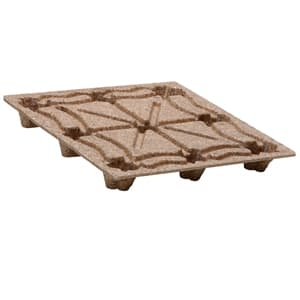
Litco Inca Presswood Pallet
The Litco Inca Presswood Pallet is a low-cost, molded presswood composite designed for export and one-way shipping where ISPM-15 compliance and low unit price matter. It holds its place for high-volume, single-use packaging because it offers easy recyclability and the lowest capital outlay among the listed options; compared with CABKA, Rehrig and other reusable composites it trades durability for purchase and disposal savings, making it the budget choice for disposable or short-lifecycle shipments.
Estimated$30 – $60
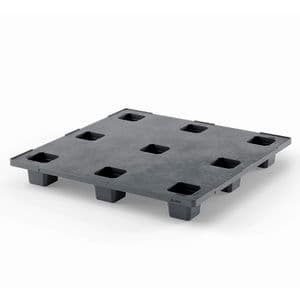
CABKA-IPS Nest H1 Pallet
The CABKA-IPS Nest H1 Pallet is a nestable composite plastic pallet engineered to minimize return freight and storage costs while providing consistent durability for repeated use in closed-loop distribution. It stands out technically for its high nestability and low transport inefficiency versus block or non-nestable boards, and financially it can beat pooled-rental or bulk-owned alternatives when a company controls its own reverse logistics and wants lower long-term per-unit cost compared with single-use or non-nestable composites.
Estimated$130 – $220
Kamps Molded Wood Pallet
The Kamps Molded Wood Pallet blends wood fiber and resin into a molded composite that delivers consistent dimensions, better impact resistance and improved load capacity compared with pressed-board alternatives. It occupies a middle ground between the cheapest Inca presswood and higher-cost plastic/reinforced composites like CABKA or Rehrig, providing a cost-effective, automated-handling-friendly option for shippers who need more durability than single-use pallets but want lower acquisition cost than full-plastic solutions.

Estimated$40 – $80
CHEP Lightweight Block Pallet
The CHEP Lightweight Block Pallet is a market-leading composite block pallet supported by CHEP's global pooling and rental network, delivering predictable lifecycle costs and wide logistical compatibility for packaging and shipping. Its primary advantage is the rental model—shifting capital expenditure to operating expenses and leveraging CHEP's redistribution and repair services—which often reduces total supply-chain cost and complexity compared with owning units such as Litco, CABKA or Rehrig pallets despite recurring rental fees.

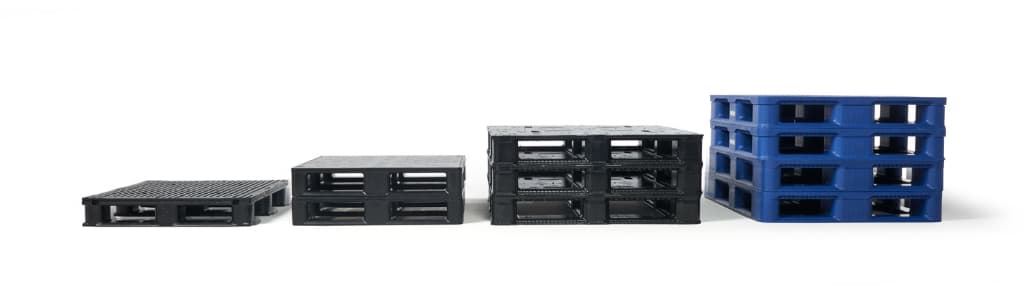
Rehrig Pacific TriEnda Composite Pallet
The Rehrig Pacific TriEnda Composite Pallet uses a tri-runner composite design to provide high stiffness, excellent durability and consistent performance for racking and long-haul shipping. It distinguishes itself by offering longer service life and superior load performance compared with presswood and many molded-wood options, and although its upfront price is higher than single-use boards, its extended reuse and lower damage rates can deliver a lower total cost-per-trip in returnable or pooled supply chains.
Estimated$120 – $200
What research and testing say about composite pallets
Scientific studies, industry testing, and life cycle assessments offer evidence that composite pallets can provide important advantages for packaging and shipping. Research typically examines mechanical performance, moisture and pest resistance, lifecycle environmental impact, and cost over time. Findings show composite and hybrid pallets often achieve comparable load capacity to traditional wood while resisting water and biological degradation better, which extends usable life in damp or variable climates like much of Canada. Life cycle assessments indicate that when extended service life and recyclability are accounted for, composite solutions can match or improve lifecycle greenhouse gas outcomes for many use cases. Standardized lab testing and field trials also confirm their suitability for automated material handling, racking, and multi-trip logistics.
Mechanical testing: Lab and industry tests show many composite pallets meet common strength and rackability standards for industrial use, making them appropriate for heavy loads and automated warehouses.
Moisture and pest resistance: Composite materials reduce water uptake and lower the risk of insect infestation, easing cross-border and export compliance and reducing maintenance costs.
Lifecycle assessments: LCAs suggest composites can have competitive or improved environmental profiles when longer service life and end-of-life recycling are considered.
Total cost of ownership: Analyses that include reduced damage, lighter shipping weight, and longer replacement intervals often find lower lifecycle costs compared with low-grade wood pallets.
Standards and compliance: Composite pallets can help meet sanitary and phytosanitary expectations for Canadian domestic and export supply chains, especially in food, beverage, and pharmaceutical logistics.
Frequently Asked Questions
Which composite pallet should I buy for one-way exports?
Choose the Litco Inca Presswood Pallet for export and one-way shipping, since it’s a low-cost molded presswood composite designed for ISPM-15 compliance and easy disposal or recycling (average rating 4.3).
What does the CABKA-IPS Nest H1 pallet do for logistics?
The CABKA-IPS Nest H1 Pallet is injection-molded and nestable to minimize return-transport volume, and it has high impact resistance for repeated packaging and shipping cycles (average rating 4.6).
How does the Litco Inca Presswood compare on price?
The provided info only states the Litco Inca Presswood Pallet is a low-cost option for one-way packaging, but it does not list a price in CAD (average rating 4.3), so I can’t compare value against the others’ exact costs.
Is the CABKA-IPS Nest H1 pallet forklift and racking compatible?
Yes—the CABKA-IPS Nest H1 Pallet is compatible with conveyors, forklifts, and common racking systems, and it’s designed for closed-loop distribution durability (average rating 4.6).
Conclusion
Composite pallets are a practical and increasingly popular choice for Canadian shippers who want strength, moisture and pest resistance, lighter weight, and more sustainable lifecycle options. The top 5 options highlighted on this page represent different composite approaches and market strengths: Litco Inca Presswood Pallet, CABKA-IPS Nest H1 Pallet, Kamps Molded Wood Pallet, CHEP Lightweight Block Pallet, and Rehrig Pacific TriEnda Composite Pallet. For most Canadian operations looking for the best overall balance of durability, nestability, and supply chain compatibility, the CABKA-IPS Nest H1 Pallet is our top pick. We hope you found the information you were looking for. If you want to refine or expand your search, use the search to filter by load capacity, footprint, material type, or sustainability features.