

Top 5 Pallet Collars and Extensions in Canada — 2026 Buyer's Guide
Modular pallet collars and extensions increase pallet volume for stacking and storage and are available in wood, plastic, and metal options for reusable and returnable packaging. Designed for quick assembly and secure stacking, pallet collars optimize shipping density, reduce product movement during transit, and simplify returns and reverse logistics. In Canada, demand for versatile, durable pallet systems has grown due to rising e-commerce volumes, stricter sustainability targets, and industry needs in food, beverage, and manufacturing. Buyers favor solutions that balance cost, hygiene, durability, and collapse-for-return convenience: wooden collars remain popular for low-cost general use, plastic collars lead for sanitary and repeatable returns, and collapsible metal or engineered options serve heavy-duty or high-frequency reuse scenarios.
Inception's AI took the time to understand this market in Canada · · How we pickWe may earn a commission on purchases. It never affects our rankings.
Top Picks Summary
Kronus Wood Pallet Collars
Kronus Wood Pallet Collars hold a best-in-class spot for budget-focused operations that require traditional wooden construction and straightforward repairability; their heavy finger-jointed timber panels and robust corner hinges deliver strong static load capacity at a lower upfront price than many engineered alternatives. Compared with ULINE and Rehrig, Kronus typically offers the most aggressive unit cost, though it trades off the longer lifecycle and hygiene benefits of Orbis plastic collars and the space-saving collapsibility of Nefab ExPak. For pallet collars and extensions where cost-per-unit and easy field repairs matter most, Kronus provides a compelling value proposition.
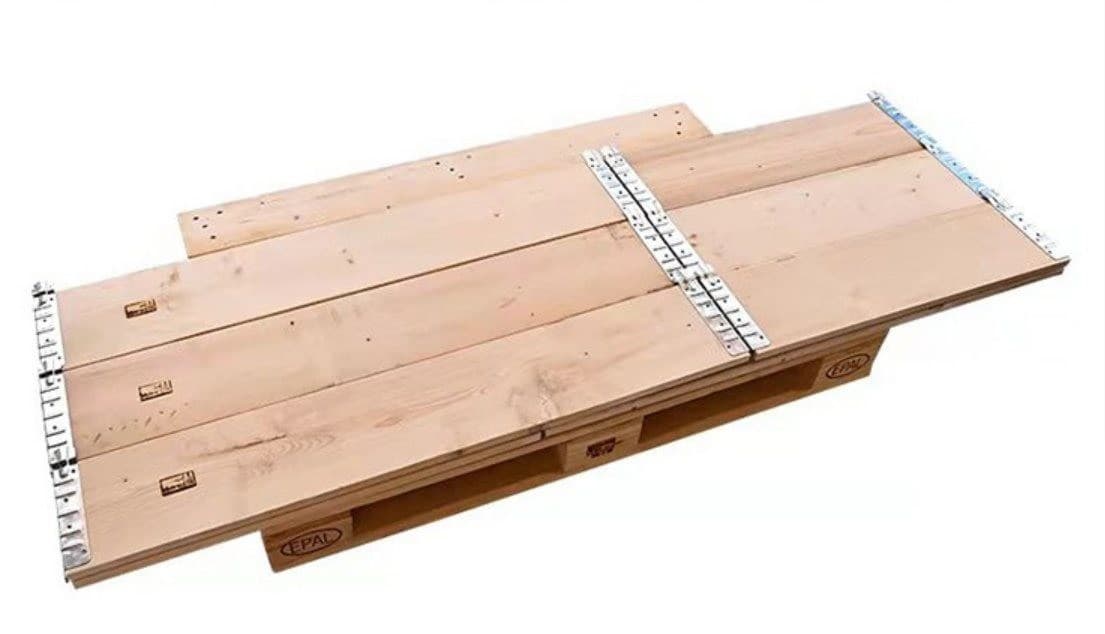
Estimated$150 – $250
ULINE Wooden Pallet Collars
ULINE Wooden Pallet Collars are market-leading due to ULINE’s extensive distribution, fast fulfillment, and broad size range, making them a go-to choice for companies that need reliable availability and standardized options. Financially, ULINE balances moderate unit pricing with low lead times, outperforming smaller suppliers on procurement speed, while technically it offers comparable durability to Kronus and Rehrig but without the material advantages of Orbis plastic or the transport efficiency of Nefab’s collapsible system. For supply chains prioritizing inventory continuity and predictable replacements, ULINE’s offering minimizes downtime and procurement friction.
Estimated$200 – $350
Rehrig Pacific ProStack Pallet Collar
Rehrig Pacific ProStack Pallet Collars earn their position for industrial users who want engineered durability and standardized interfacing with Rehrig pallet systems; the ProStack line emphasizes reinforced corners and consistent tolerances for heavy-cycle operations. Compared to wooden rivals like Kronus and ULINE, Rehrig’s collars often deliver longer service life and tighter dimensional control, which translates into lower lifecycle costs in automated or high-turn environments, though they may have higher upfront cost than simple wooden collars. When pallet collars and extensions are being used in repeated, mechanized handling, Rehrig’s technical focus reduces damage and fitment issues.
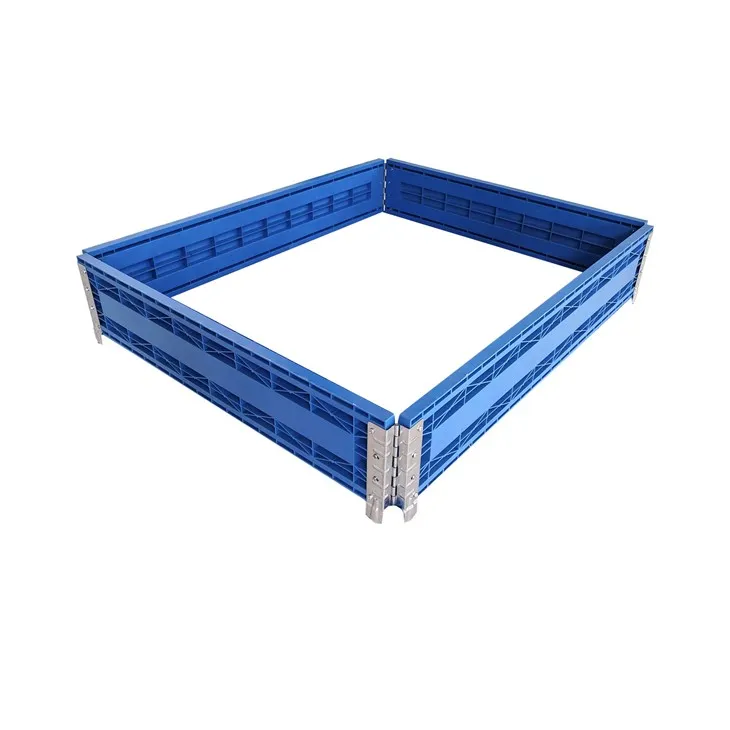
Estimated$250 – $400
Orbis Plastic Pallet Collar
Orbis Plastic Pallet Collar stands out for hygienic, reusable plastic construction that resists moisture, pests, and abrasion, making it best-in-class for food, pharma, and washdown environments where wooden collars are infeasible. Technically, Orbis’s molded design offers predictable strength and long service life, which offsets a higher initial investment versus wooden alternatives by lowering replacement and sanitation costs; it does, however, trade off some of the collapse-and-return transport efficiency provided by Nefab’s ExPak. For companies valuing cleanliness, repeatability, and lower total cost of ownership over time, Orbis is a strong technical and financial choice.
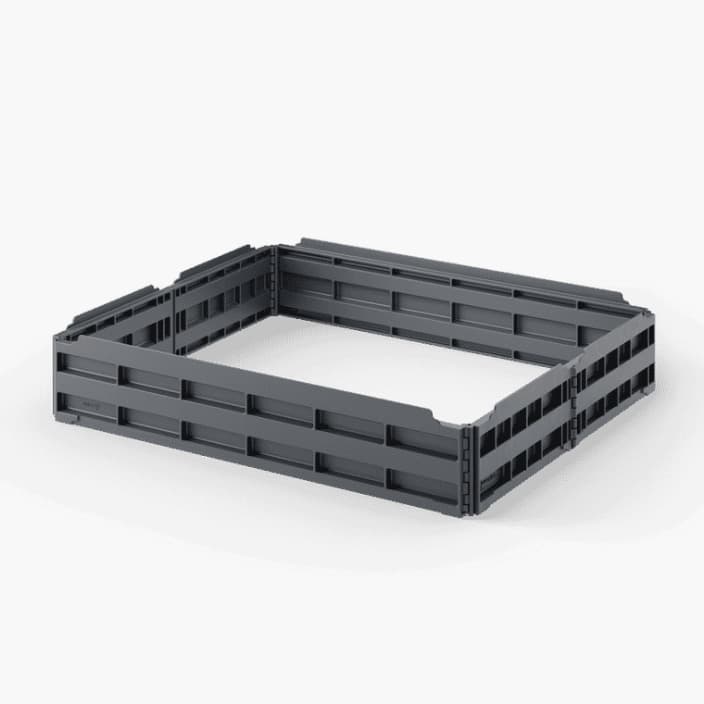
Estimated$300 – $500
Nefab ExPak Collapsible Pallet Collar
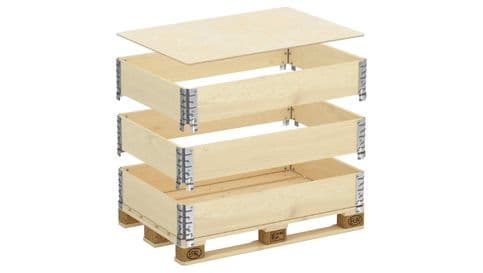
Nefab ExPak Collapsible Pallet Collar is recognized for its space- and cost-saving collapsibility designed to minimize return freight and warehouse footprint, making it the top pick for multi-leg logistics and global distribution networks. While its upfront price can be higher than basic wooden collars (Kronus, ULINE) or standard plastic options (Orbis), the ExPak’s ability to collapse flat dramatically reduces transport and storage costs, outcompeting others on total logistics expense in high-reuse cycles. For pallet collars and extensions where reverse logistics and compact returnability are primary drivers, Nefab delivers clear financial and operational advantages.
Estimated$400 – $650
Why pallet collars and extensions work: research and industry findings
A range of industry reports and academic investigations support the practical benefits of modular pallet collars. Studies and testing programs focus on load stability, lifecycle environmental impacts, handling ergonomics, and protection against transit damage. When specified and used correctly, collars and extensions lower product damage, improve stacking efficiency in warehouses and trailers, and deliver environmental gains when reused frequently instead of single-use packaging.
Load stability and damage reduction: industry testing and packaging engineering analyses show that correctly sized collars and extensions reduce lateral movement and pallet toppling during transport, leading to fewer damaged shipments and returns.
Life cycle and sustainability: life cycle assessments of reusable pallet packaging often indicate lower per-use environmental impacts when collars are reused over many cycles, especially for plastic or metal systems that have long service lives and are recyclable at end of life.
Ergonomics and handling: ergonomic studies in warehousing demonstrate that modular collars that fold or stack easily speed assembly and reduce repetitive strain compared with ad hoc blocking and bracing methods.
Hygiene and contamination control: comparative studies and food industry guidance highlight that plastic pallet collars are easier to sanitize than untreated wood, making them better suited for food, beverage, and pharmaceutical supply chains.
Frequently Asked Questions
Which pallet collars should I buy for heavy warehouse use?
Choose the Rehrig Pacific ProStack Pallet Collar if you run heavy-cycle warehouse storage, since it’s engineered with reinforced corners and robust hinge hardware for frequent reuse.
What exact design feature helps with quick assembly?
Kronus Wood Pallet Collars use a simple metal hinge system for quick assembly and removal without special tools.
How do ULINE wooden pallet collars compare on price?
The provided info doesn’t list ULINE Wooden Pallet Collars’ price, but it states they use kiln-dried wood panels with reinforced hinges and come in multiple heights and standard footprints.
Are these pallet collars meant for standard pallet footprints?
Yes—Kronus Wood Pallet Collars are compatible with standard pallet footprints like 48x40 / 1200x1000 mm, and they’re rated 4.3.
Conclusion
In Canada the pallet collar market is diverse: Kronus Wood Pallet Collars and ULINE Wooden Pallet Collars offer reliable, cost-effective wood options; the Rehrig Pacific ProStack Pallet Collar provides engineered durability for frequent use; the Orbis Plastic Pallet Collar stands out for hygiene, longevity, and repeatable returns; and the Nefab ExPak Collapsible Pallet Collar delivers space-saving collapsibility for complex logistics. For most Canadian businesses balancing reuse, hygiene, and durability, the Orbis Plastic Pallet Collar is the best overall choice on this list. We hope you found what you were looking for. If you want to narrow or expand your options, use the search to refine by material, size, collapse style, or industry requirements.