

Top 6 Heat-Resistant Alloy Electrodes and Rods in Canada for 2026
High temperature and heat resistant alloy electrodes and rods provide creep, oxidation, and thermal fatigue resistance for service in turbines, boilers, exhaust systems, and petrochemical plants. In Canada these products are chosen for extreme-service weld repairs, new fabrication, and maintenance where long life at elevated temperature matters. Popular filler families include nickel-based, cobalt-based, and chromium-enriched alloys; buyers increasingly demand customized chemistries, certified traceability, and compatible welding procedures to withstand higher operating temperatures and aggressive process streams. Canadian purchasers prioritize supplier certification, local stock or short lead times, documented qualifications for hydrogen and sulphidation exposure, and weldability that minimizes rework. Growing trends for 2026 include higher-performance nickel superalloys, tailored filler metal blends for LNG and hydrogen service, and an emphasis on lifecycle cost through improved corrosion resistance and reduced downtime.
Inception's AI took the time to understand this market in Canada · · How we pickWe may earn a commission on purchases. It never affects our rankings.
Top Picks Summary
Stellite 6 Bare Rod
Stellite 6 Bare Rod is a best-in-class cobalt-chromium hardfacing rod for high-temperature service, prized for its outstanding wear and oxidation resistance and dimensional stability under cyclic thermal loads. As a bare rod it offers higher deposition efficiency and lower per-gram material cost in controlled processes (GTAW/GMAW) with less slag and post-weld cleanup than stick electrodes, though it requires more operator skill than coated options like Stellite 21 or Stoody Cobalt 6. Compared with premium filler wires such as Haynes 25 (L-605), Stellite 6 is generally more economical for large-area overlays while trading some ultimate high-temperature strength for that cost advantage.
Show More Cobalt Based Welding Electrodes and Rods for High Temperature Service
Estimated$200 – $350
ESAB Stoody 101HC-O
ESAB Stoody 101HC-O is a premium chromium‑rich rod developed specifically for oxidation resistant cladding with a focus on controlled dilution and metallurgical stability at elevated temperatures. Its technical strengths—refined chemistry for minimal embrittlement and consistent overlay integrity—make it preferable for critical-service clads where lifecycle cost and reduced rework outweigh the higher initial material price relative to more economy-focused choices like Hobart.
Show More Chromium Rich Welding Electrodes and Rods for Oxidation Resistant Cladding
Harris Brazing Alloy 560
Harris Brazing Alloy 560 is a production-oriented filler metal known for good capillary action, predictable melting behavior, and economical performance in brazing stainless steels and heat-resistant alloys. It competes on price and ease of use against premium options like Oerlikon 620, while offering slightly lower maximum service temperature and strength than the market-leading nickel-chrome specialty rods, making it attractive for high-volume or cost-sensitive brazing operations.
Show More High Temperature Brazing Rods for Heat Resistant Alloy Joining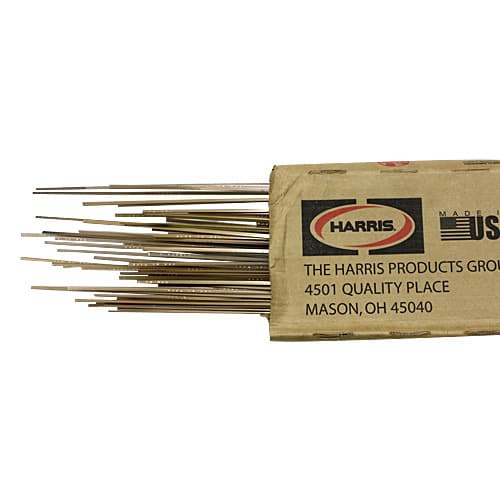
Estimated$120 – $250
Stoody Nickel 625
Stoody Nickel 625 is a market-recognized nickel-based filler prized for its exceptional high-temperature strength, oxidation resistance, and resistance to chloride and sulphide stress-corrosion cracking in aggressive industrial environments. Backed by Stoody's long history in demanding sectors like petrochemical and aerospace, it delivers consistent chemistry and low dilution welds that preserve alloy properties better than many stainless alternatives, albeit at a higher material cost than 309L-class fillers. When long component life, minimal failure risk and strict metallurgy are the priorities, Stoody Nickel 625 is often the preferred premium choice.
Show More Wear Resistant Hardfacing Electrodes and Rods for High Temperature Service
Estimated$250 – $700
How Research Supports High-Temperature Alloy Performance
Scientific testing and engineering studies explain why nickel, cobalt, and chromium-based fillers perform well at elevated temperatures. Key mechanisms include solid-solution and precipitation strengthening that slow creep, formation of protective oxide scales that limit high-temperature corrosion, and alloy design that resists thermal fatigue and hot corrosion. Industry and academic labs use standard methods to quantify service life under realistic conditions and to qualify filler metals for critical equipment.
Creep resistance: Long-term constant-load creep tests show that nickel-based superalloys maintain strength and dimensional stability at sustained high temperature, making them a common choice for turbine and boiler repairs.
Oxidation and hot corrosion: Thermogravimetric analysis and cyclic oxidation tests demonstrate that chromium and aluminum additions form protective oxide layers that slow material loss in oxidizing and sulfur-bearing environments.
Thermal fatigue: Repeated heating and cooling cycles are evaluated with thermal fatigue tests; alloys with stable precipitates and low coefficient of thermal expansion have better resistance to crack initiation.
Weldability and filler selection: Metallurgical studies emphasize matching filler metal composition and thermal cycles to base metal to avoid zones of weakness; proper welding procedures and post-weld heat treatment extend component life.
Standards and qualification: ASTM and ASME test methods and qualification protocols remain the basis for certifying filler metals for pressure equipment and power generation service.
Emerging focus areas: Canadian research and industry testing increasingly examine performance in hydrogen-rich atmospheres, high-temperature sulphidation, and additive manufacturing compatibility for custom alloy placements.
Frequently Asked Questions
Which electrode or rod should I pick for heat repairs?
For oxidation-resistant cladding and repair on carbon steels, choose ESAB Stoody 101HC-O; it uses a low-hydrogen formulation for reduced cracking risk and a chromium-rich overlay for oxidation resistance, with an average rating of 4.8.
What spec does ESAB Stoody 101HC-O have for oxidation cladding?
ESAB Stoody 101HC-O is a low-hydrogen, chromium-rich rod made for oxidation resistant cladding, producing sound, well-adhered deposits on carbon steels with stable arc characteristics for manual or semi-automatic open-arc scenarios.
How does the price of Stellite 6 Bare Rod compare here?
The provided data lists Stellite 6 Bare Rod at an average rating of 4.6, but it does not include any price, currency, or cost comparison details.
Is H.C. Starck WL20 compatible with DC and AC welding?
Yes—H.C. Starck Tungsten Electrode WL20 is described as versatile for DC and many AC applications, using a WL20 formulation with ~2% lanthanum for stable arc starting and about long tip life, with an average rating of 4.6.
Conclusion
High temperature and heat resistant alloy electrodes and rods remain essential for critical Canadian industries that operate at elevated temperature. Whether you need nickel, cobalt, or chromium-based fillers for turbines, boilers, exhaust systems, or petrochemical equipment, the right selection reduces downtime and extends service life. We hope this collection helps you find the best options for 2026. If you did not find exactly what you need, refine or broaden your search to explore more compositions, certifications, or supplier locations.