

Top 5 TIG Welders in Canada for 2026: Precision GTAW Picks
TIG welders, or gas tungsten arc welding (GTAW) machines, are the go-to tools for high-precision, low-spatter welding on stainless steel, aluminum and exotic alloys. In Canada they are especially valued in aerospace, bike building, high-end fabrication and specialty repair because GTAW delivers exceptional weld appearance, tight tolerances and dependable mechanical properties. Modern Canadian buyers look for AC/DC capability for aluminum and steel work, pulse control to limit heat input and distortion, inverter-based efficiency for portability, and reliable service networks and warranties given the country’s wide geography. For 2026, priorities also include energy efficiency, multi-process flexibility for small shops, and user-friendly controls that shorten the learning curve for apprentices and hobbyists while satisfying professional fabricators.
Inception's AI took the time to understand this market in Canada · · How we pickWe may earn a commission on purchases. It never affects our rankings.
Top Picks Summary
Miller Syncrowave 210
The Syncrowave 210 holds a best-in-class reputation for professional AC/DC TIG performance thanks to very stable arc control, refined AC balance/tuning and a build quality aimed at heavy use. Compared with the other machines on this list it typically carries a higher upfront cost but offers a stronger duty cycle and long-term reliability that can lower total cost of ownership for shops that need consistent, repeatable aluminum and stainless TIG welds. Its combination of features and durability makes it a top choice where precision and uptime matter most.

We may earn a commission on purchases. It never affects our rankings.
$4,443.42CAD
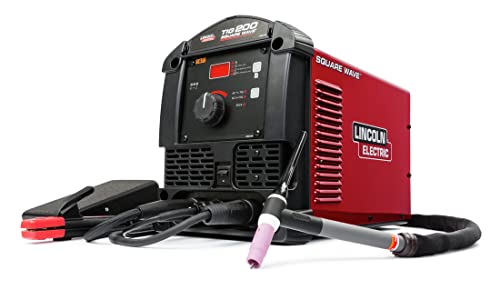
Lincoln Electric Square Wave TIG 200
The Square Wave TIG 200 is a market-leading choice for welders who want excellent aluminum performance and straightforward control at a competitive price. Versus pricier brands like Miller and Fronius it delivers very good AC square-wave technology and a broad service/distribution network, making it a strong value for small shops and serious hobbyists. Financially it often represents the best balance of capability to cost for general-purpose TIG work.
We may earn a commission on purchases. It never affects our rankings.
$4,184.00CAD
ESAB Rebel EMP 215ic
The Rebel EMP 215ic stands out as a flexible multi-process inverter that combines TIG, MIG and stick capabilities into a single portable unit, offering cost efficiency for users who would otherwise buy separate machines. While it may not match the specialized AC wave-shaping of Fronius or Miller for fine aluminum work, its versatility means a lower overall capital outlay for shops that need multiple processes and a single rugged machine. For purchasers prioritizing multi-function value over dedicated TIG finesse, it is a strong contender.

Estimated$1,800 – $2,800
Fronius TransTig 210
The TransTig 210 is a precision-focused European TIG unit prized for its refined arc control and superb AC performance on thin or cosmetic aluminum work, delivering finish quality that justifies a premium in precision applications. Compared with Miller and Lincoln it leans more towards high-end control and weld appearance rather than pure value, making it especially attractive to fabrication shops and aerospace or motorsport shops where weld quality commands a price premium. Its technical advantages are best appreciated where small weld bead control and repeatability are critical.

Estimated$4,000 – $6,000
Everlast PowerTIG 255EXT
The PowerTIG 255EXT is a budget-conscious, high-output TIG inverter that brings many professional features (strong amperage range, remote/foot control support) at a fraction of the cost of legacy brands. It offers compelling financial value for hobbyists and small shops that need power and features without paying for premium branding, though buyers trade off the broader dealer network and some refinements found on Miller, Lincoln or Fronius units. For cost-sensitive buyers wanting near-professional performance, it represents excellent bang-for-buck.

Scientific backing: why GTAW matters
Research and industry testing consistently show that GTAW produces superior surface finish, lower spatter and better control of heat-affected zones compared with many other processes. Scientific studies and welding handbooks highlight how waveform control, shielding gas quality and pulse settings influence fusion, penetration and microstructure. For new users and advanced fabricators alike, evidence-based techniques reduce rework, improve part fit-up and produce welds that meet stricter acceptance criteria in regulated industries.
Pulse TIG lowers average heat input and reduces distortion while maintaining penetration when properly set.
AC waveform control and balance settings improve oxide cleaning on aluminum, producing more consistent fusion without excessive tungsten contamination.
Stable shielding gas flows and high-purity argon reduce porosity and improve mechanical properties in stainless and exotic alloys.
Inverter-based power supplies provide steadier arcs and better open-circuit stability than older transformer units, improving arc starts and control.
Weld microstructure and toughness are strongly tied to heat input and filler selection; controlled GTAW parameters help maintain desirable mechanical performance in critical applications.
Frequently Asked Questions
Which TIG welder should I choose for aluminum work?
For aluminum-focused GTAW, choose Lincoln Electric Square Wave TIG 200, since it uses square-wave AC for strong cleaning action and excellent arc control; it’s rated 4.6.
Does the Miller Syncrowave 210 include pulse and AC controls?
Yes—the Miller Syncrowave 210 includes pulse and advanced AC controls for precise heat input and arc stability; it’s rated 4.7.
Is the Lincoln Square Wave TIG 200 worth $4184?
At $4,184.00 CAD, the Lincoln Electric Square Wave TIG 200 gives square-wave AC for excellent aluminum arc control plus inverter-based portability and remote/foot pedal amperage compatibility; it’s rated 4.6.
Can ESAB Rebel EMP 215ic TIG weld and also MIG?
Yes—the ESAB Rebel EMP 215ic is a multi-process inverter that supports MIG, TIG, and stick welding from a single unit; it’s rated 4.4.
Conclusion
Whether you need a versatile shop workhorse or a premium, ultra-clean arc for aerospace-grade assemblies, the five machines on this page cover the main needs in Canada: Miller Syncrowave 210, Lincoln Electric Square Wave TIG 200, ESAB Rebel EMP 215ic, Fronius TransTig 210, and Everlast PowerTIG 255EXT. For most Canadian users seeking a balanced mix of reliability, features and after-sales support, the Miller Syncrowave 210 stands out as the best overall choice. The Lincoln Square Wave TIG 200 is a strong value for straightforward TIG work, the ESAB Rebel EMP 215ic is ideal if you want multiprocess flexibility, the Fronius TransTig 210 is aimed at precision-focused fabricators, and the Everlast PowerTIG 255EXT delivers high performance for its price point. We hope you found what you were looking for; use the site search to refine by material, input voltage, portability or budget to expand or narrow your options.