

Top 5 Enzymatic Cleaners in Canada for Janitorial & Industrial Use — 2026
Enzymatic cleaners are biologically active formulations that use targeted enzymes to break down organic soils such as proteins, fats and starches. For janitorial and industrial applications in Canada, these products are prized for effective odor control, improved soil removal, and a reduced chemical load compared with traditional solvent or heavy-bleach systems. They are used across foodservice, hospitality, healthcare, manufacturing and municipal maintenance where drains, carpets, grease traps and food-contact surfaces require deep cleaning without harsh residues. Canadian buyers increasingly prefer enzyme-based solutions for their sustainability profile, compatibility with septic systems and lower worker exposure risks. Market trends through 2026 emphasize concentrated formulas, cold-water activation, stabilized enzyme blends, eco-certifications, and compatibility with automated dosing systems to cut waste and labor costs.
Inception's AI took the time to understand this market in Canada · · How we pickWe may earn a commission on purchases. It never affects our rankings.
Top Picks Summary
Roebic K-37 Septic Tank Treatment is a specialist product designed for septic systems and downstream line biology, using bacteria and enzymes selected for survival in septic conditions to reduce solids and grease over monthly dosing cycles. Its technical advantage lies in strains optimized for low-oxygen, septic environments, making it cost-effective for routine septic care and reducing service frequency compared with reactive drain cleaners. Relative to Bio-Clean and Green Gobbler, Roebic is more focused on septic tank ecology and preventive maintenance than on immediate drain clearing.
Show More Enzymatic Drain Grease Trap and Line Treatments
Prochem Enzyme Prespray
Prochem Enzyme Prespray is best-in-class for large-scale extraction workflows because its high-performance enzymatic formula loosens heavy traffic soils and works efficiently with rotary and truckmount equipment, saving time and labor on tough jobs. Technically formulated for professional use, it trades off some of the pinpoint spotter speed of Bridgepoint for superior overall soil-lifting on carpets and upholstery, making it a cost-effective choice for contractors who prioritize throughput.
Show More Enzymatic Carpet and Upholstery Extraction and Spotting Solutions
Estimated$45 – $75
Avmor EP64 Enzyme Laundry Booster
Avmor EP64 is a Canada-developed enzyme booster formulated to integrate with existing laundry chemistries to enhance stain removal without major program changes, making it a practical choice for regional operators. Its cost advantage lies in targeted boosting—small additions that deliver disproportionate stain-lift benefits—helping reduce rewash and preserve fabric life compared with systems that require larger dose changes. Relative to global brands, Avmor emphasizes regulatory familiarity in North American markets and straightforward compatibility for healthcare and hospitality laundries.
Show More Enzymatic Industrial Laundry Presoak and Additive Solutions
Estimated$170 – $340
Zep BioFilm Drain Purge is a value-oriented enzymatic drain and line cleaner designed for small-to-medium processors who need an accessible, shelf-stable product with straightforward dosing and economical pack sizes. It offers a lower unit cost and wide availability through distribution channels, which translates to immediate budgetary savings though with less hands-on technical support than enterprise vendors. When compared to premium service-led solutions, Zep’s appeal is its low total cost of ownership for routine maintenance rather than validated, contract-backed biofilm eradication programs.
Show More Enzymatic Biofilm and Tank Line Removers for Process Equipment
Estimated$100 – $250
Bio-Clean Drain Septic Bacteria
Bio-Clean uses a diverse microbial consortium optimized for grease, hair and organic solids breakdown, making it especially effective in small-system and drain-specific applications where biological versatility matters. Technically it offers broad-spectrum biodegradation that can outperform single-enzyme additives for mixed-waste scenarios, but its per-dose cost is often higher than bulk maintenance products such as Roebic K-37, trading lower frequent dosing for higher per-application expenditure.
Show More Enzymatic Wastewater Treatment and Sludge Reduction Additives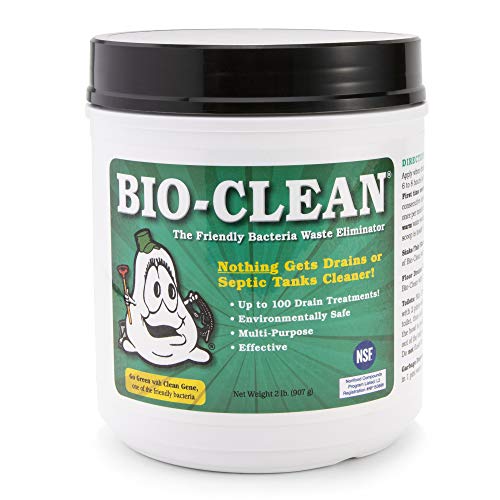
The Science Behind Enzymatic Cleaners
Enzymatic cleaners rely on naturally occurring proteins called enzymes to catalyze the breakdown of specific organic molecules. Different enzyme classes target different soil types: proteases break down proteins, lipases break down fats, and amylases target starches. By converting large, sticky soils into smaller, water-soluble fragments, enzymes make rinsing and microbial control easier without relying on harsh oxidizers or solvents. Research and industry trials show enzymes can reduce cleaning time, improve odor removal by eliminating food sources for odor-causing microbes, and lower total chemical use when properly applied. Performance depends on formulation, enzyme concentration, pH, temperature, and contact time. Where available, look for third-party performance testing, biodegradability information, and relevant Canadian regulatory compliance for janitorial and foodservice use.
Enzyme types: proteases (proteins), lipases (fats/oils), amylases (starches), and specialized enzymes for cellulose or uric salts.
Mechanism: enzymes catalyze the hydrolysis of large organic molecules into smaller, water-soluble fragments that rinse away or become available to beneficial microbes.
Odor control: removes the nutrient sources for odor-causing bacteria instead of merely masking smells.
Environmental benefits: many formulations are biodegradable and reduce reliance on high-pH or chlorinated chemistries.
Operational notes: effective performance requires appropriate contact time, correct dilution, and consideration of temperature and pH ranges specified by the manufacturer.
Limitations: not a universal solution for inorganic soils, heavy mineral scale or rust; may be slower acting than aggressive chemical stripping in some cases.
Safety and compliance: many enzyme cleaners lower worker hazard compared with caustic alternatives, but product-specific safety data sheets and Health Canada/CFIA guidance should be consulted for food-contact applications.
Frequently Asked Questions
Which enzymatic cleaner should I buy for septic systems?
Choose Roebic K-37 Septic Tank Treatment: it’s formulated specifically to support septic systems and grease traps with targeted bacterial strains and enzymes for scheduled monthly dosing. It’s rated 4.4 and comes as granular treatments.
What enzyme spec does Prochem Enzyme Prespray use?
Prochem Enzyme Prespray uses a high-strength enzymatic prespray formula that loosens soils and organic matter before extraction. It’s fast-acting and designed to be compatible with hot and cold water extraction, rated 4.7.
How does Zep BioFilm Drain Purge compare on price?
It’s rated 4.2 with an economical concentrate for scheduled dosing and spot treatment.
Is Roebic K-37 safe for grease traps and septic lines?
Roebic K-37 Septic Tank Treatment is designed for septic systems and downstream line biology, including grease traps. It uses targeted bacterial strains and enzymes to accelerate breakdown of organic solids and reduce solids buildup, rated 4.4.
Conclusion
Enzymatic cleaners offer an effective, sustainable option for janitorial and industrial cleaning needs across Canada in 2026, especially where odor control, grease and organic soil removal are priorities. We hope this category overview helped you find the right direction. Use the site search to refine by application, certification, concentration or region to expand or narrow your results.