

Top 5 Surface Analysis Mass Spectrometers in Canada for Industrial and Automotive Labs — 2026
Published on Saturday, July 25, 2026
Surface-sensitive mass spectrometry solutions such as TOF-SIMS and laser desorption systems are essential tools for analyzing thin films, coatings, and material interfaces in industrial and automotive laboratories. In Canada, demand has grown for platforms that deliver high lateral resolution, accurate depth profiling, and trace-level sensitivity to support adhesion testing, contamination mapping, and coating composition studies. Canadian users favor systems that combine robust performance with reliable local service, modular upgrade paths, and clear data workflows so results can be integrated into product development, failure analysis, and regulatory compliance efforts. These instruments are especially appealing to automotive R&D teams working on lightweight composites, corrosion-resistant coatings, and electrification-related materials where surface chemistry and contamination control directly affect durability and performance.
Top Picks Summary
ION-TOF TOF.SIMS 5
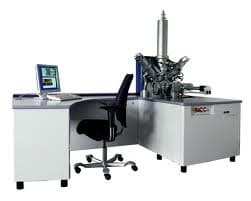
ION-TOF's TOF.SIMS 5 is widely regarded as a best-in-class TOF-SIMS platform for industrial and automotive surface analysis thanks to its high-throughput imaging, flexible cluster ion sources and stable long-term operation that support routine QA/QC and failure analysis. Compared with competitors on this list it emphasizes production-ready robustness and depth profiling performance—trading a higher acquisition cost for proven uptime and broad application flexibility across materials and coatings. Labs that prioritize high-resolution lateral chemical mapping and consistent daily throughput commonly choose this system as their workhorse.
Why surface analysis MS matters: evidence and practical benefits
Surface-sensitive mass spectrometry techniques are well established in materials science for revealing chemical composition at the outermost layers and interfaces. Peer-reviewed research and industry reports consistently show that TOF-SIMS and related desorption ionization methods provide unmatched lateral resolution for mapping contaminants and additives, while depth profiling strategies enable layered-coating characterization. Complementary techniques, particularly XPS, provide chemical state information that enhances interpretation of MS data. For laboratory managers and engineers new to these methods, the evidence supports investing in instrumentation that balances sensitivity, throughput, and ease of data interpretation to accelerate development cycles.
High sensitivity: Studies demonstrate TOF-SIMS can detect trace contaminants and additives at ppm to sub-ppm surface concentrations, improving contamination control and root-cause analysis.
Nanoscale mapping: Research highlights lateral resolution into the tens of nanometers for advanced TOF systems, enabling characterization of microstructural coating defects and interface heterogeneity.
Accurate depth profiling: Combined sputter-and-MS workflows provide reproducible layer thickness and composition profiles for multi-layer coatings used in automotive and industrial applications.
Complementary analytics: When paired with XPS, mass spectrometry results yield both molecular fingerprints and chemical state information, improving confidence in material identification and failure mode explanations.
Operational benefits: Publications and field reports emphasize the value of local service, training, and standardized workflows for data reproducibility and faster time-to-insight in industrial settings.
Frequently Asked Questions
Which TOF-SIMS is best for industrial automotive labs?
ION-TOF TOF.SIMS 5 is the best fit for industrial and automotive surface analysis because it supports routine QA/QC and failure analysis with high-throughput imaging and stable long-term operation, rated 4.6.
Does PHI nanoTOF 3 support high-throughput surface imaging?
Yes—PHI nanoTOF 3 is a high-throughput time-of-flight analyzer optimized for rapid, high-sensitivity surface imaging, with a 4.5 average rating.
What value do I get with IONTOF M6 pricing?
The data provided doesn’t list any price for IONTOF M6, but it’s rated 4.4 and described as a cost-conscious, modular TOF-SIMS with balanced lateral resolution and throughput plus versatile cluster ion beams.
Is nanoTOF 3 compatible with XPS for chemical info?
PHI nanoTOF 3 includes integrated compatibility with XPS and other surface techniques for complementary chemical information, and it has an average rating of 4.5.
Conclusion
This selection highlights five leading platforms suited to Canadian industrial and automotive labs: ION-TOF TOF.SIMS 5, PHI nanoTOF 3, IONTOF M6, Thermo Scientific Nexsa G2 XPS, and ULVAC-PHI TRIFT V nanoTOF. For high-performance TOF-SIMS mapping, the ION-TOF TOF.SIMS 5 stands out as the best overall choice here because of its combination of sensitivity, spatial resolution, and upgradeability for production-focused labs. The PHI nanoTOF 3 and ULVAC-PHI TRIFT V nanoTOF are excellent alternatives when nanoscale imaging and specialized desorption modes are needed, while the IONTOF M6 is a dependable workhorse for routine depth profiling. Thermo Scientific Nexsa G2 XPS complements TOF-MS by adding surface chemical state analysis for more complete material characterization. We hope you found the information you were looking for; you can refine or expand your search using the site search to compare specifications, local support options, and pricing.