

Top 5 Electrochemical Toxic Gas Analyzers in Canada — 2026 Picks
Handheld electrochemical toxic gas analyzers use compact electrochemical sensors to detect gases such as carbon monoxide (CO), hydrogen sulfide (H2S), nitrogen dioxide (NO2), and chlorine (Cl2) with high specificity and low power consumption. These devices are preferred in Canada for personal protection monitoring, leak localization, confined space entry, and regulatory compliance because they combine fast response, low false alarm rates, and simple maintenance. Canadian buyers prioritize instruments with recognized safety approvals, rugged construction for cold and wet environments, long battery life, local service and calibration support, and data logging or wireless telemetry for incident records and compliance reporting.
Inception's AI took the time to understand this market in Canada · · How we pickWe may earn a commission on purchases. It never affects our rankings.
Top Picks Summary
BW Technologies GasAlertMicroClip XL
The BW Technologies GasAlertMicroClip X3 is a compact, cost-conscious three-gas electrochemical monitor prized for its portability and low total cost of ownership, making it best-in-class for contractors and mobile teams who need dependable toxic-gas sensing without extra complexity. Compared with the single-gas Honeywell BW Solo it delivers multi-gas coverage at a modest premium, and it undercuts larger multi-gas platforms like the MSA ALTAIR 5X and Industrial Scientific Ventis Pro5 on upfront cost and simplicity while offering better situational capability than the Dräger X-am 2500 for three-gas rapid-deployment scenarios.

Honeywell BW Solo
The Honeywell BW Solo earns a market-leading position for single-gas electrochemical detection by combining extremely simple operation, low acquisition and maintenance costs, and long service intervals—attributes that make it the economical choice for one-parameter monitoring and mass distribution. While it lacks the multi-gas coverage of the GasAlertMicroClip X3, MSA ALTAIR 5X, Dräger X-am 2500 and Ventis Pro5, its financial advantages and minimal training requirements make it the preferred pick where budget and simplicity outweigh broader sensing capability.

MSA Altair 5X
The MSA ALTAIR 5X is positioned as a market-leading multi-gas electrochemical analyzer thanks to its robust design, rapid sensor response and advanced diagnostics that reduce nuisance downtime—qualities that appeal to industrial users who prioritize accuracy and ruggedness. Although it commands a higher upfront price than compact or single-gas alternatives, its reduced calibration frequency and strong field reliability typically lower lifecycle cost versus simpler units like the GasAlertMicroClip X3 and Honeywell BW Solo, and it competes closely with the Ventis Pro5 on enterprise readiness.

Dräger X-am 2500
The Dräger X-am 2500 is recognized for German engineering and compact multi-gas electrochemical performance, delivering stable sensor readings and straightforward maintenance in a lightweight package that suits confined-space and portable monitoring needs. It offers a middle-ground option—more capable than single-gas devices like the BW Solo and often lighter or simpler than full-featured five-gas platforms—providing a balanced financial and technical profile for teams that need reliable electrochemical sensing without the higher complexity or cost of enterprise-grade systems.

We may earn a commission on purchases. It never affects our rankings.
Estimated$800 – $1,300
Industrial Scientific Ventis Pro5
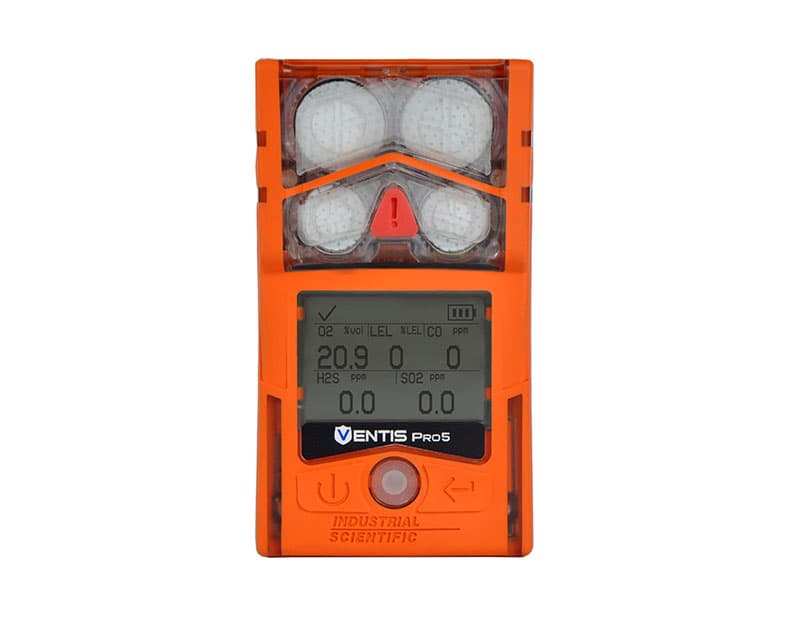
The Industrial Scientific Ventis Pro5 stands out as an enterprise-focused five-gas electrochemical analyzer, combining modular sensor flexibility with strong connectivity and fleet-management capabilities that drive lower operational cost across large deployments. Compared with compact or single-gas alternatives it requires a higher initial investment, but its built-in device management, remote diagnostics and configurable sensor choices deliver measurable savings in uptime and compliance administration relative to standalone monitors like the GasAlertMicroClip X3 or BW Solo, and it matches or exceeds the MSA ALTAIR 5X on scalable fleet services.
We may earn a commission on purchases. It never affects our rankings.
$99,999.00CAD
How electrochemical sensors work and what the research shows
Electrochemical sensors measure toxic gases by producing a small electrical current through a chemical reaction at the sensor electrode proportional to gas concentration. Scientific and industry studies consistently show electrochemical sensors deliver reliable low-ppm sensitivity and good selectivity for many toxic gases while using minimal power. Research emphasizes proper calibration, compensation for temperature and humidity, and awareness of known cross-sensitivities to maintain accuracy over time.
Sensitivity and selectivity: Peer-reviewed studies demonstrate electrochemical sensors can reliably detect toxic gases at low parts-per-million levels with good specificity when properly chosen for the target gas.
Calibration and drift: Regular calibration (commonly every 3 to 12 months depending on use and manufacturer guidance) is essential. Studies show drift is manageable with scheduled bump tests and full calibrations.
Cross-sensitivity: Research documents specific cross-interferences (for example, some sensors respond to multiple oxidizing gases). Manufacturers mitigate this via sensor chemistry and algorithms; users should consult datasheets and perform field checks.
Environmental effects: Temperature and humidity affect sensor output. Field studies recommend using built-in compensation and storing sensors within recommended conditions to extend life.
Sensor lifetime and maintenance: Typical electrochemical sensor life ranges from about 1.5 to 3 years in normal service. Proper storage, regular testing, and avoiding prolonged exposure to high concentrations prolong useful life.
Regulatory and practical acceptance: Industry reports and standards bodies in North America accept electrochemical sensors for personal and area monitoring when used per manufacturer and regulatory guidance.
Frequently Asked Questions
Which toxic gas analyzer should contractors buy in Canada?
For contractors and mobile teams needing dependable multi-gas sensing, the BW Technologies GasAlertMicroClip X3 is the best fit at CAD 679, with a 4.3 average rating and a three-sensor CO/H2S plus O2 electrochemical configuration.
Does the MSA ALTAIR 5X support five-gas detection?
Yes—the MSA ALTAIR 5X provides five-gas capability using electrochemical toxic sensors plus combustible and oxygen monitoring, and it’s rated 4.6 on average.
How does CAD 679 compare for GasAlertMicroClip X3?
At CAD 679, the BW Technologies GasAlertMicroClip X3 gives three-gas sensing (O2 plus electrochemical toxic CO/H2S), IP67 protection, onboard event logging, and simple one-button operation, with a 4.3 average rating.
What gases and warranty does Honeywell BW Solo cover?
Honeywell BW Solo uses a single-channel electrochemical sensor available for CO, H2S, SO2 or NO2, has a 4.2 average rating, and offers Bluetooth/data management compatibility; warranty duration isn’t provided in the provided data.
Conclusion
Electrochemical handheld analyzers remain a practical, proven choice for toxic gas detection across Canadian industries. The five top options covered on this page — BW Technologies GasAlertMicroClip X3, Honeywell BW Solo, MSA ALTAIR 5X, Dräger X-am 2500, and Industrial Scientific Ventis Pro5 — each deliver reliable electrochemical sensing for CO, H2S, NO2, and Cl2 in slightly different form factors and feature sets. For an all-around balance of ruggedness, sensor performance, connectivity options, and field service availability in Canada, the MSA ALTAIR 5X stands out as the best overall choice among these picks. We hope you found what you were looking for. Use the site search to refine by sensor type, certification, or features if you want to expand or narrow your search.