

Canada's Top 5 Electrical Calibration Standards 2026: Voltage, Current & Resistance
Published on Saturday, January 24, 2026
Calibrated sources and measurement standards for voltage, current, resistance, and electrical power are essential tools for labs, service centers, manufacturers, utilities, and test houses across Canada. This category covers precision DC and AC calibrators, reference voltage standards, high-accuracy digital multimeters, and standard resistors with traceable certificates that meet ISO/IEC 17025 requirements. Canadian buyers prioritize traceability to national labs, low measurement uncertainty, long-term stability, and local support or on-site calibration options. Growing demand from electric vehicle testing, renewable energy, advanced manufacturing, and IoT sensor networks is driving interest in multi-product calibrators and standards that combine accuracy, ease of use, and documented traceability for regulatory compliance and quality assurance.
Top Picks Summary
Fluke 5522A Multi-Product Calibrator
The Fluke 5522A Multi-Product Calibrator earns its place as a best-in-class multi-function source by combining precise voltage, current and resistance outputs in one bench instrument, reducing capital expenditure compared with buying separate standards. It trades a small fraction of the ultimate stability of dedicated references (like the Guildline 9330 or Fluke 732B) for broad capability and excellent throughput, making it the most cost-effective option for labs that need flexible, traceable calibration across all three domains.

Where to buy Fluke 5522A Multi-Product Calibrator in Canada: the trusted retailers we track in this market, with the best price we have observed at each. Prices are checked regularly and can change, and the retailer confirms the final price at checkout.
We may earn a commission on purchases. It never affects our rankings.
$30,000 – $40,000
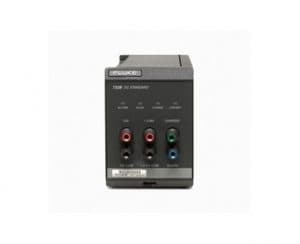
Fluke 732B DC Voltage Reference Standard
The Fluke 732B DC Voltage Reference Standard is positioned as a practical, high-stability voltage reference that balances excellent short-term noise and low drift with compact portability and a friendlier price than top-tier laboratory voltage standards. Compared with the Guildline 9330 it offers lower purchase and operational cost for many industrial and service labs, while remaining a more stable and traceable reference than relying solely on precision DMM-based methods such as the Keysight 3458A for absolute voltage realization.
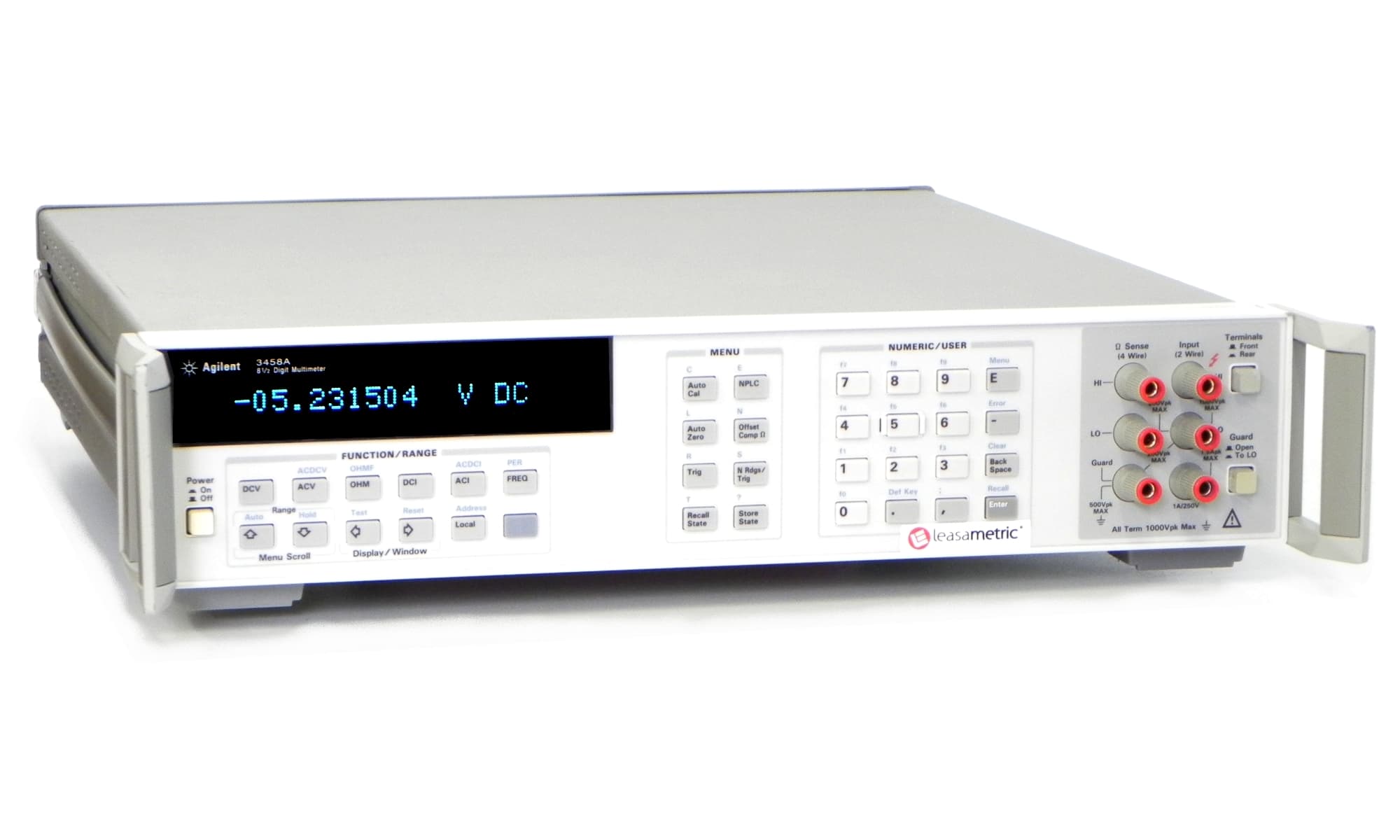
Keysight 3458A Digital Multimeter
The Keysight 3458A Digital Multimeter is a market-leading measurement-grade instrument renowned for its 8.5-digit resolution, exceptional low noise and measurement repeatability, making it a preferred choice as a reference meter in voltage, current and resistance calibrations. It outperforms many sources in measurement precision and versatility, but as a measurement instrument rather than a source it is best paired with stable standards (e.g., Guildline 9330 or Fluke 732B) when absolute traceability and long-term stability are required.
Guildline 9330 Precision DC Voltage Standard
The Guildline 9330 Precision DC Voltage Standard holds the top spot for laboratories requiring the lowest drift and highest long-term stability, delivering metrology-grade performance that justifies its premium cost for national labs and calibration houses. Relative to multifunction calibrators like the Fluke 5522A and compact references like the Fluke 732B, the 9330 provides superior stability and lower uncertainty for primary voltage realization, making it the preferred financial investment when minimizing re-calibration frequency and uncertainty budgets is critical.

Where to buy Guildline 9330 Precision DC Voltage Standard in Canada: the trusted retailers we track in this market, with the best price we have observed at each. Prices are checked regularly and can change, and the retailer confirms the final price at checkout.
We may earn a commission on purchases. It never affects our rankings.
$18,000 – $28,000
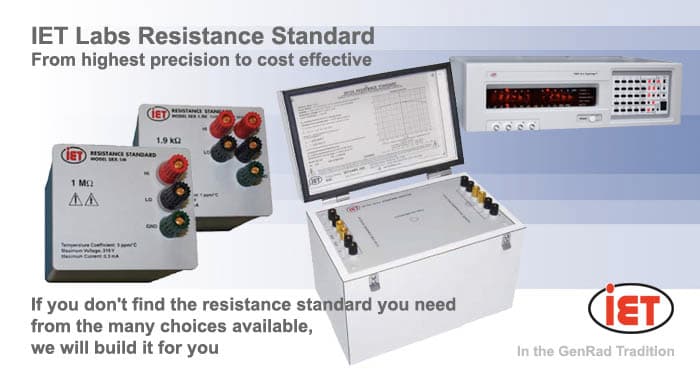
IET Labs SRS-300 Standard Resistor
The IET Labs SRS-300 Standard Resistor is a specialist resistance standard offering low temperature coefficient and excellent long-term stability, making it the clear choice for traceable resistance calibrations and for validating resistance measurement ranges on instruments like the Keysight 3458A. While voltage needs are better served by dedicated voltage standards or multifunction calibrators, the SRS-300 provides a cost-effective, technically appropriate foundation for any lab focused on precise resistance metrology.
Learn the Science Behind Calibration Standards
Reliable calibration is based on traceability, uncertainty budgeting, and stable reference devices. Standards organizations and national metrology institutes demonstrate that using well-specified reference standards reduces systematic error, improves repeatability, and supports conformity assessments under ISO/IEC 17025. For beginners, the key concepts are traceability to a recognized national standard, the calibration uncertainty statement, and environmental control during measurement. These elements together ensure measurements can be compared across time and between labs, which is vital for product quality, safety, and regulatory compliance.
Traceability: References to national labs such as the National Research Council of Canada (NRC) or NIST provide an audit trail that validates results.
Uncertainty budgets: Scientific studies and metrology practice show that a documented uncertainty budget helps users understand limits of measurement and when to recalibrate.
Stability and drift: Research into reference sources emphasizes the importance of low long-term drift and minimal temperature coefficient for consistent performance.
Interlaboratory comparisons: Peer-reviewed metrology work and proficiency testing programs confirm that accredited calibration reduces interlaboratory variation.
Environmental effects: Studies note humidity, temperature, and power quality as common factors affecting measurement accuracy and recommend controlled conditions or appropriate correction factors.
Frequently Asked Questions
Which is better for lab calibration, Fluke 5522A or 732B?
Choose the Fluke 5522A Multi-Product Calibrator if you need one bench instrument for DC/AC voltage, DC/AC current, and resistance calibration; the Fluke 732B is a portable 10 V DC reference standard. Fluke 5522A rating is 4.6, Fluke 732B rating is 4.6.
Does the Keysight 3458A measure with 8.5-digit resolution?
Yes—the Keysight 3458A Digital Multimeter provides 8.5-digit-class DC measurements for ultra-high resolution in voltage and resistance calibration, with exceptional stability, low noise, and linearity as a laboratory primary standard. It has a 4.8 average rating.
How does the Fluke 732B price compare to 3458A?
The provided data doesn’t include prices for the Fluke 732B DC Voltage Reference Standard or the Keysight 3458A Digital Multimeter, so a value comparison by cost isn’t possible. Ratings listed are 4.8 for Fluke 732B and 4.8 for Keysight 3458A.
What’s the warranty on the Fluke 5522A calibrator?
The provided product data doesn’t mention a warranty duration for the Fluke 5522A Multi-Product Calibrator. It does list an average rating of 4.6 and capabilities for precise DC/AC voltage and current outputs plus resistance and frequency calibration functions.
Conclusion
In Canada, a well-chosen calibration standard supports traceable, low-uncertainty measurements for lab and field work. The five top options featured here are the Fluke 5522A Multi-Product Calibrator, Fluke 732B DC Voltage Reference Standard, Keysight 3458A Digital Multimeter, Guildline 9330 Precision DC Voltage Standard, and IET Labs SRS-300 Standard Resistor. For most calibration labs and service centers the Fluke 5522A Multi-Product Calibrator stands out as the best overall choice because of its versatility and multi-parameter capability, while the Keysight 3458A is ideal where ultimate DMM resolution is needed, the Guildline 9330 and Fluke 732B excel as precision voltage references, and the IET Labs SRS-300 provides a stable resistance reference. We hope you found what you were looking for; you can refine or expand your search using the site search to compare specifications, calibration options, and pricing across Canadian suppliers.