

Top 5 C8 Octylsilane Reversed-Phase Columns in Canada for 2026
Published on Saturday, January 24, 2026
C8 octylsilane columns offer shorter retention and faster elution for moderately nonpolar compounds commonly encountered in industrial and automotive laboratories. In Canada, these columns are valued for high-throughput screening of additives, solvents, lubricant degradation products, fuel components, and formulation impurities where quicker cycle times reduce instrument bottlenecks and operating costs. Laboratories prefer C8 stationary phases when they need balanced hydrophobic selectivity that speeds analysis without sacrificing peak shape for mid-polarity analytes. Key consumer preferences in this market include column robustness under routine use, reproducible lot-to-lot performance, broad solvent compatibility for mixed mobile-phase methods, availability from domestic distributors, and technical support for method transfer. Demand in Canadian labs also reflects trends toward smaller particle sizes and UHPLC-capable formats to maximize throughput while lowering solvent consumption and per-sample cost.
Top Picks Summary
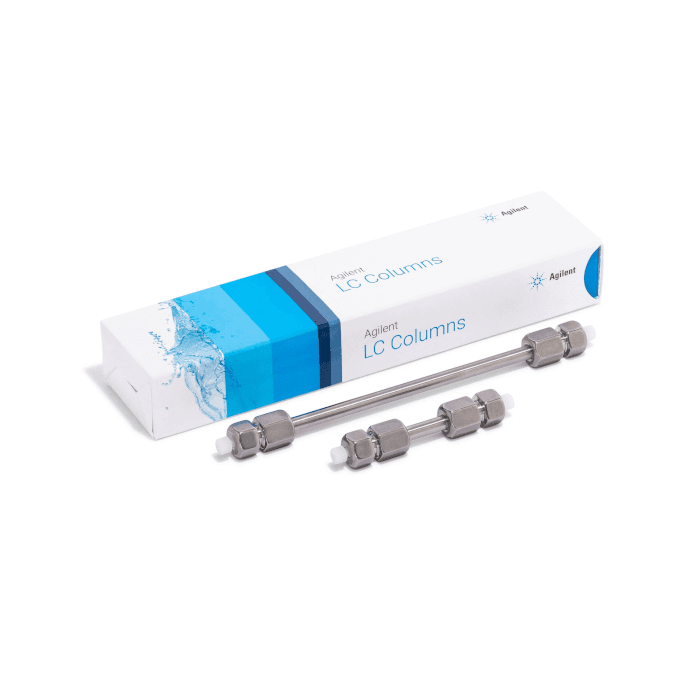
Agilent ZORBAX Eclipse XDB-C8
Agilent's ZORBAX Eclipse XDB-C8 earns a best-in-class spot for automotive and industrial labs by combining highly controlled bonding chemistry and exceptional batch-to-batch reproducibility, which reduces method revalidation and downtime. Its premium build and consistent retention characteristics justify a higher upfront cost through longer service life and stable results compared with more budget-focused C8s, while remaining competitive with high-pH specialists like Waters for many routine and demanding applications.
Waters XBridge C8 Column
Waters XBridge C8 is a market leader for industrial settings because its hybrid particle chemistry delivers broad pH stability and ruggedness that simplify method transfer and scale-up in automotive testing workflows. That wide pH tolerance and long column lifetime often translate into lower total cost of ownership for heavy-use labs, making it a stronger choice than some traditional silica C8s when extreme cleaning or alkaline mobile phases are required.

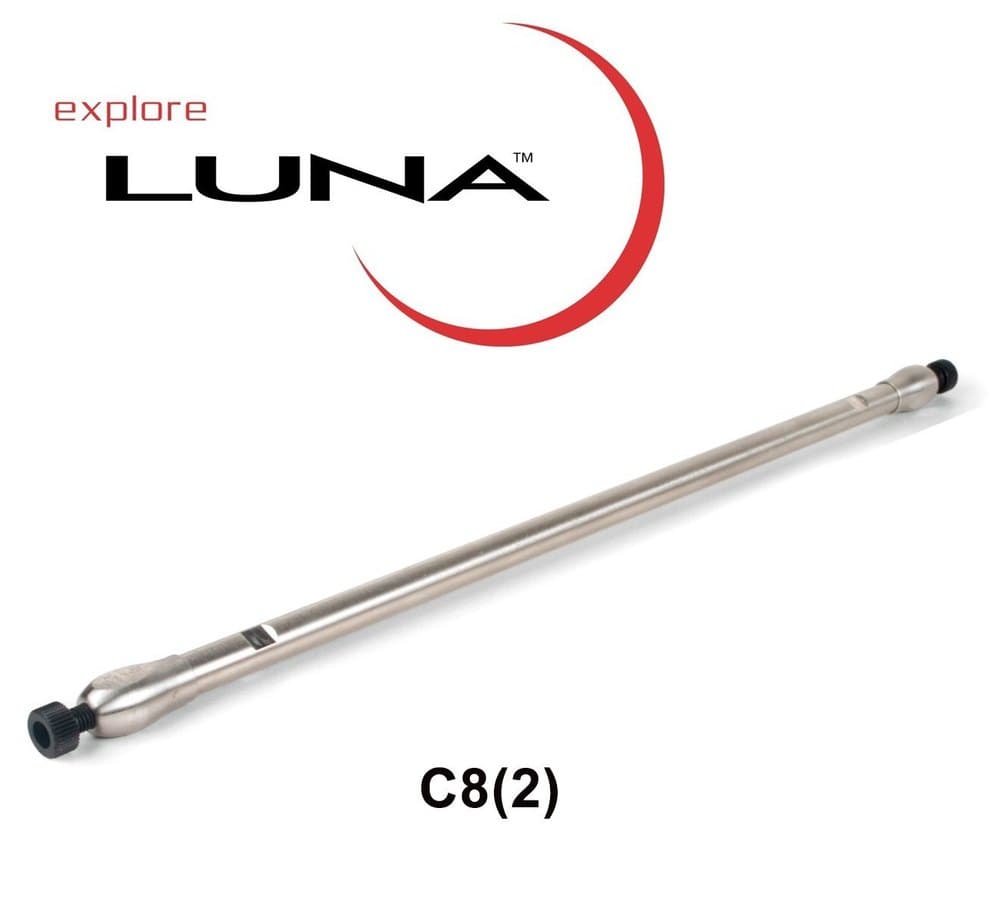
Phenomenex Luna C8(2) Column
Phenomenex Luna C8(2) is valued in automotive and industrial QC for its reliable silica bonding and tight lot-to-lot reproducibility, offering a balanced combination of performance and mid-range cost. It is a practical alternative for labs that need consistent routine separations without the premium pricing of some high-end columns, though it may not match the extreme pH durability of Waters XBridge or the ultra-low bleed of Thermo's MS-oriented offerings.
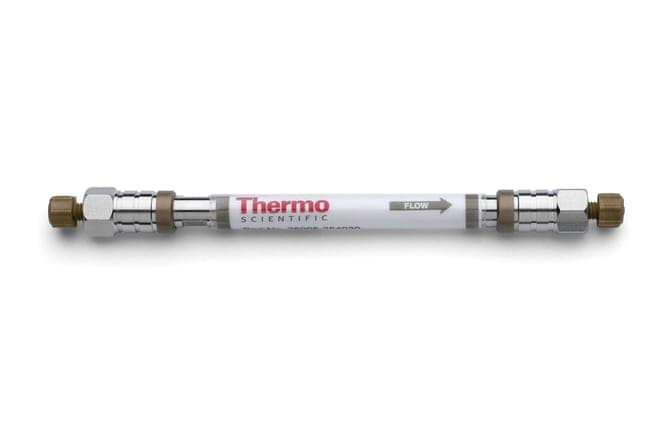
Thermo Scientific Hypersil GOLD C8
Thermo Scientific Hypersil GOLD C8 stands out for high-efficiency separations and very low column bleed, making it the preferred choice for trace-level contaminant screening and mass-spectrometry workflows in automotive and industrial labs. While it typically carries a premium price, its technical advantages in sensitivity and peak shape deliver superior analytical confidence for critical measurements compared with economy C8 options, and it complements rather than competes directly with high-pH-focused products.
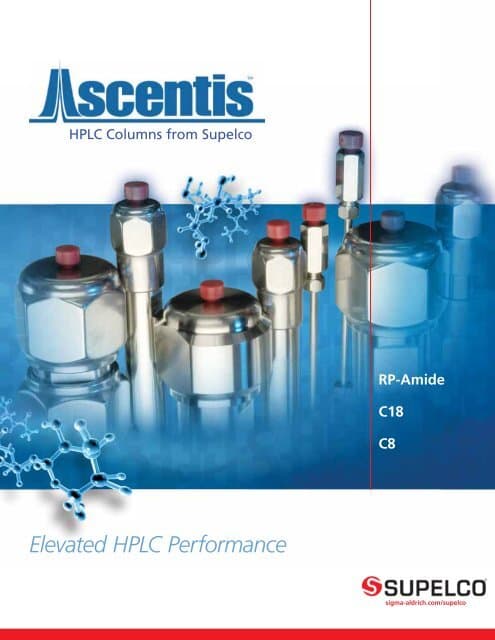
Supelco Ascentis C8 Column
Supelco Ascentis C8 is positioned as the value leader for industrial labs that require dependable performance at a lower procurement cost, offering rugged columns that hold up under heavy throughput and routine analyses. Its attractive price-to-performance ratio and durable phase chemistry make it a cost-effective choice for large-volume automotive testing, although labs needing extreme pH resilience or the highest MS sensitivity may prefer premium alternatives from Waters or Thermo.
Why C8 Columns Are Effective for Industrial and Automotive Analysis
Scientific studies and method development reports show that octylsilane (C8) phases provide a useful compromise between strongly hydrophobic C18 phases and shorter-chain chemistries. The C8 ligand reduces retention for moderately nonpolar compounds, producing faster elution and narrower peaks in many methods. This characteristic is helpful when targeting additives, mid-polarity degradation products, or solvent residues where C18 would retain too strongly and polar phases would not retain enough. Research also documents that modern C8 chemistries with controlled bonding and endcapping deliver good peak shape, reduced silanol interaction, and stable performance across a range of pH and organic modifiers. For industrial workflows, that translates to reliable, high-throughput methods with lower solvent usage and simpler sample preparation.
C8 phases shorten retention for mid-polarity analytes compared with C18, enabling faster run times and higher sample throughput.
Controlled bonding and endcapped silica reduce secondary interactions and improve peak symmetry for many acidic and basic additives.
Smaller particle sizes (sub-2 µm to 3 µm) and superficially porous particle options increase efficiency and support UHPLC platforms for industrial screening.
Method reports show lower solvent consumption per sample when converting from C18 to C8 for specific target lists, supporting cost and green lab goals.
C8 chemistries offer broad mobile-phase compatibility, including common modifiers such as methanol, acetonitrile, and buffered aqueous phases used in automotive testing.
Frequently Asked Questions
Which C8 column should I buy for automotive QC?
Agilent ZORBAX Eclipse XDB-C8 is the better pick for automotive and industrial labs because its stable octylsilane C8 phase and highly controlled bonding chemistry aim to reduce method revalidation downtime; it has an average rating of 4.6.
What feature matters most for nonpolar fuels on C8?
For nonpolar analytes common in fuels and lubricants, the Agilent ZORBAX Eclipse XDB-C8 lists a stable octylsilane C8 phase with “excellent peak shape”; it’s rated 4.6 and designed for robust performance.
Is Waters XBridge C8 better value than Luna C8(2)?
I can’t compare value from the provided data because no prices are listed for Waters XBridge C8 or Phenomenex Luna C8(2); both have ratings (Waters 4.5, Phenomenex 4.4), but pricing isn’t available.
Is the Waters XBridge C8 rugged for harsh matrices?
Waters XBridge C8 is positioned for ruggedness: its hybrid particle chemistry provides high mechanical strength and low bleed for extended QC sequences, and it tolerates aggressive sample matrices; it’s rated 4.5, with no warranty duration listed.
Conclusion
For Canadian automotive and industrial labs looking for dependable, fast C8 performance, the top candidates for 2026 are Agilent ZORBAX Eclipse XDB-C8, Waters XBridge C8 Column, Phenomenex Luna C8(2) Column, Thermo Scientific Hypersil GOLD C8, and Supelco Ascentis C8 Column. Each has strengths: Waters XBridge offers ruggedness for routine use, Phenomenex Luna C8(2) balances selectivity and cost, Thermo Hypersil GOLD emphasizes high inertness, and Supelco Ascentis is a solid value for screening. Overall, the Agilent ZORBAX Eclipse XDB-C8 stands out as the best choice for many Canadian industrial and automotive workflows because of its wide format availability, consistent lot-to-lot performance, and vendor support that eases method transfer. We hope this list helped you find what you need; use the search to refine by particle size, column dimensions, or application to expand or narrow your options.