

Top Reagents, Solvents and Chemical Consumables for Automotive Laboratories in Canada — 2026 Picks
Published on Saturday, January 24, 2026
Certified reagents, GC-MS and HPLC/LC-MS grade solvents, and trace-metal free chemicals are essential for automotive laboratories that perform emissions analysis, fuel and lubricant testing, material compatibility checks, and component diagnostics. In Canada, automotive labs prioritize products with full documentation and certificates of analysis, ISO or NIST traceability, and consistent lot-to-lot performance. This category highlights high-purity solvents, stabilized reagents, calibration standards, and consumables formulated for automotive matrices: low-bleed solvents for chromatography, metal-free acids for trace analysis, and certified reference materials for accurate quantitation. Customers in this market value supplier reliability, regulatory compliance with ASTM and CSA guidance, supply chain transparency, and environmental considerations such as reduced solvent waste and responsibly sourced reagents.
Top Picks Summary
Sigma-Aldrich Chromasolv LC-MS Acetonitrile
A best-in-class LC-MS grade acetonitrile formulated for ultra-low UV absorbance and minimal ionic and organic contaminants, making it ideal for trace-level LC-MS analysis in automotive laboratories (PAHs, additives, extractables). It holds its position through stringent lot-to-lot consistency and lower ion-suppression than many commodity grades, though it commands a price premium compared with Fisher's Optima line; the higher upfront cost can be offset by fewer re-runs and more stable baselines on high-resolution instruments.

Where to buy Sigma-Aldrich Chromasolv LC-MS Acetonitrile in Canada: the trusted retailers we track in this market, with the best price we have observed at each. Prices are checked regularly and can change, and the retailer confirms the final price at checkout.
We may earn a commission on purchases. It never affects our rankings.
$90 – $160
Fisher Chemical Optima LC/MS Grade Methanol
Optima methanol is a market-leading, cost-efficient LC/MS-grade solvent that balances high purity with broad global availability, well suited for routine sample prep and chromatography in automotive testing workflows. Compared with premium niche brands, Optima typically offers better price-performance for high-throughput labs—its slightly higher baseline in ultra-trace applications is offset by lower per-liter cost and strong supply-chain support for large-volume users.
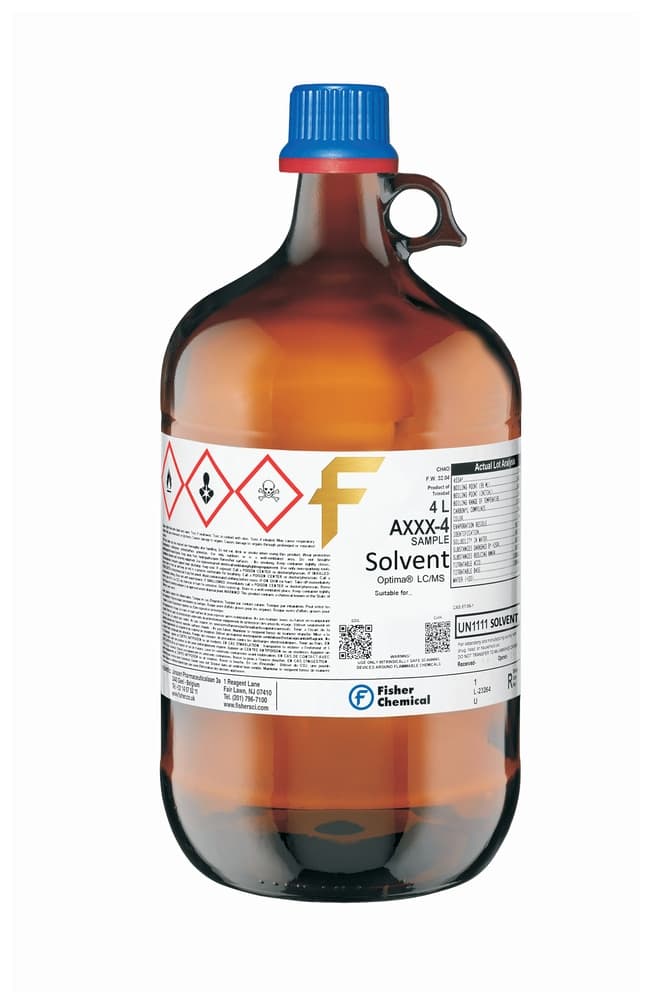
Where to buy Fisher Chemical Optima LC/MS Grade Methanol in Canada: the trusted retailers we track in this market, with the best price we have observed at each. Prices are checked regularly and can change, and the retailer confirms the final price at checkout.
We may earn a commission on purchases. It never affects our rankings.
$70 – $130
Honeywell Burdick & Jackson GC Resolved Hexane
Burdick & Jackson GC Resolved Hexane is tailored for hydrocarbon separations and fuel/lubricant analysis, with reduced sulfur and resolvable isomer content to improve GC peak shape and detection of light hydrocarbons. Its technical advantage in gasoline and extraction workflows—minimizing co-elution of polar interferents—makes it more appropriate than polar LC solvents for many automotive GC methods, and it remains competitively priced for bulk consumable use in service labs.
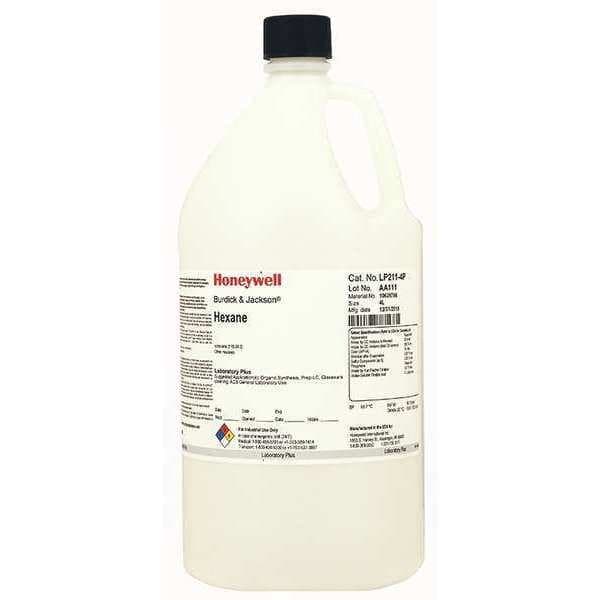
Where to buy Honeywell Burdick & Jackson GC Resolved Hexane in Canada: the trusted retailers we track in this market, with the best price we have observed at each. Prices are checked regularly and can change, and the retailer confirms the final price at checkout.
We may earn a commission on purchases. It never affects our rankings.
$60 – $120
Agilent Certified Reference Standard Diesel Range Organics Mix
Agilent's certified Diesel Range Organics (DRO) standard is a traceable, fully characterized calibration mix designed for quantitation and method validation of diesel- and fuel-range organics in emissions and environmental testing. As a market leader, it reduces uncertainty and development time compared with in-house mixes or non‑certified blends; although more expensive than DIY standards, it delivers regulatory defensibility and faster method acceptance in automotive compliance testing.
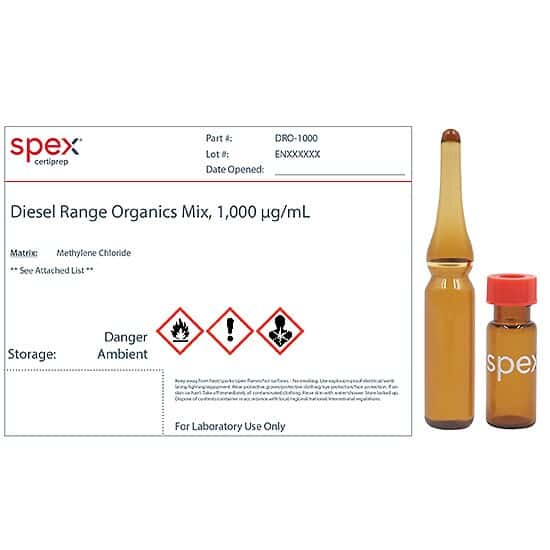
Where to buy Agilent Certified Reference Standard Diesel Range Organics Mix in Canada: the trusted retailers we track in this market, with the best price we have observed at each. Prices are checked regularly and can change, and the retailer confirms the final price at checkout.
We may earn a commission on purchases. It never affects our rankings.
$300 – $700
MilliporeSigma Supelco Trace Metal Grade Nitric Acid
Supelco Trace Metal Grade Nitric Acid is formulated for ultra-low metal backgrounds and is supplied with certificates suitable for ICP-MS/ICP-OES sample digestion in automotive wear and contamination analysis. Its technical edge over reagent-grade acids is critical for preventing contamination in trace-metal assays (e.g., wear metals in engine oils), and while priced higher, it reduces the risk of false positives, repeat analyses, and instrument downtime—important cost savings in high-sensitivity labs.

Where to buy MilliporeSigma Supelco Trace Metal Grade Nitric Acid in Canada: the trusted retailers we track in this market, with the best price we have observed at each. Prices are checked regularly and can change, and the retailer confirms the final price at checkout.
We may earn a commission on purchases. It never affects our rankings.
$120 – $280
Why Certified Solvents and Standards Matter
High-purity solvents and certified reference materials reduce analytical uncertainty, suppress background noise in GC-MS and LC-MS, prevent contamination of trace analysis, and support method validation for automotive testing. Scientific work and industry guidance consistently show that using certified reagents and traceable standards improves repeatability, accelerates accreditation under ISO 17025, and reduces out-of-specification results. For laboratories testing fuels, emissions, and components, choosing the right grade of solvent or reagent directly affects detection limits and long-term instrument health.
Chromatography-grade solvents with low UV and MS background provide better peak shape and lower limits of detection, which is critical for regulated emissions and fuel component testing.
Trace-metal grade acids and metal-free reagents reduce contamination in ICP-MS and AAS workflows, enabling reliable measurement of parts-per-billion metal concentrations in lubricants and engine parts.
Certified reference standards and calibration mixes maintain measurement traceability and are recommended for routine verification to meet ISO 17025 and national accreditation requirements.
Multiple studies and laboratory intercomparisons show that replacing technical grade reagents with certified grades reduces rework and instrument maintenance, which lowers long-term cost per analysis.
Documented certificates of analysis and lot-specific data help labs manage quality control, auditing, and reporting for regulatory compliance in automotive emissions and materials testing.
Frequently Asked Questions
Which solvent should I use for trace LC-MS analysis?
Choose Sigma-Aldrich Chromasolv LC-MS Acetonitrile (average rating 4.8) for ultra-low UV absorbance and minimal ionic/organic contaminants, which helps reduce background and ion suppression during trace-level LC-MS sample analysis.
What purity or performance spec does Optima methanol have?
Fisher Chemical Optima LC/MS Grade Methanol (average rating 4.7) is optimized for minimal background and low non-volatile residues, and it’s suitable for HPLC and LC‑MS workflows used in automotive fuel and lubricant testing.
How do these solvents compare on price and value?
I can’t compare price/value because no prices are provided for Sigma-Aldrich Chromasolv LC-MS Acetonitrile, Fisher Chemical Optima LC/MS Grade Methanol, or Honeywell Burdick & Jackson GC Resolved Hexane in the data.
Is Burdick & Jackson GC Resolved Hexane good for gasoline samples?
Yes—Honeywell Burdick & Jackson GC Resolved Hexane (average rating 4.5) is GC‑resolved and designed for hydrocarbon separations, with very low sulfur and polar impurities for cleaner GC baselines in fuel/lubricant extraction and analysis workflows.
Conclusion
For Canadian automotive laboratories in 2026, these top options deliver the documentation, purity, and traceability you need. Sigma-Aldrich Chromasolv LC-MS Acetonitrile, Fisher Chemical Optima LC/MS Grade Methanol, Honeywell Burdick & Jackson GC Resolved Hexane, Agilent Certified Reference Standard Diesel Range Organics Mix, and MilliporeSigma Supelco Trace Metal Grade Nitric Acid each serve critical roles from solvent systems to calibration and trace metal control. For broad compatibility across LC-MS and routine chromatographic workflows, Sigma-Aldrich Chromasolv LC-MS Acetonitrile stands out as the best overall choice here. We hope you found what you were looking for; you can refine or expand your search using the search function to filter by grade, certificate type, or application.