

Best Gauge Pressure Transducers in Canada 2026: Top 5 Rugged, Fast, IoT-Ready Picks
Gauge pressure transducers measure pressure relative to ambient atmospheric pressure and are widely used in tire testing, intake manifold diagnostics, hydraulic systems and leak detection in labs and workshops. Contemporary designs emphasize ruggedness, fast response, digital interfacing and compatibility with IoT test systems. In Canada, buyers value transducers that deliver stable accuracy across wide temperature ranges, solid ingress protection for workshop and field use, easy integration with data acquisition and industrial networks, and reliable local support or distribution. Purchasing decisions often prioritize NIST traceable calibration, low drift, selectable electrical outputs (mV/V, 4-20 mA, 0-5 V, or digital protocols), and housings that resist vibration and corrosion for long service life in both cold northern climates and heavy industrial settings.
Inception's AI took the time to understand this market in Canada · · How we pickWe may earn a commission on purchases. It never affects our rankings.
Top Picks Summary
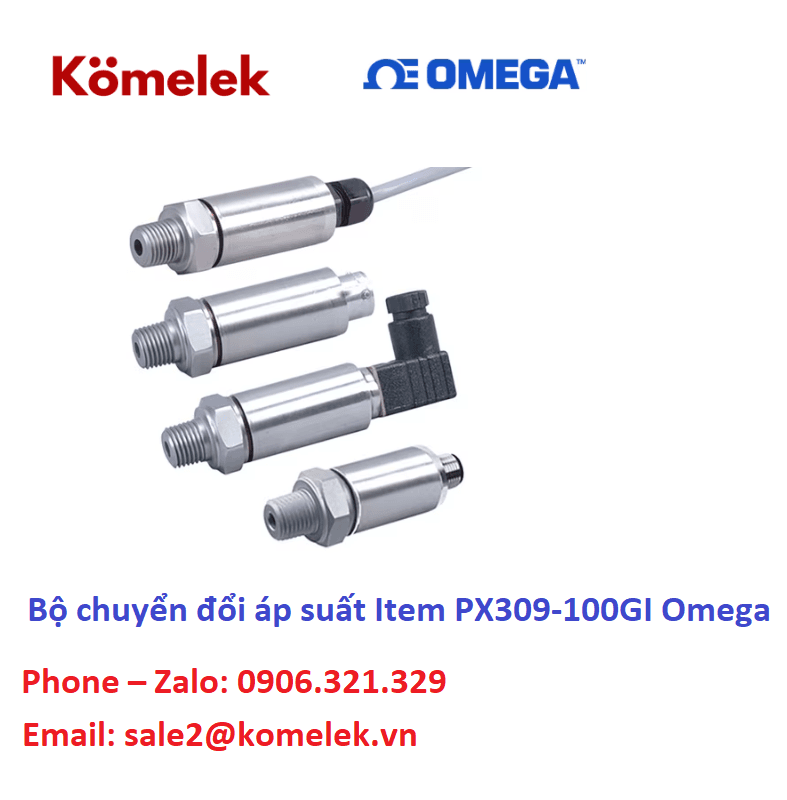
Omega PX309-100GI
The Omega PX309-100GI earns a best-in-class spot for gauge pressure transducers by balancing reliable stainless-steel construction with competitive pricing, making it an attractive choice for labs and light industrial installations. Compared with the other models on this list it typically offers one of the strongest cost-to-performance ratios, trading some of the ultra-high precision or OEM-focused packaging of rivals for broad applicability and lower lifecycle cost.
We may earn a commission on purchases. It never affects our rankings.
Estimated$200 – $350
Honeywell MLH100PGL06A
Honeywell's MLH100PGL06A is positioned as a market leader thanks to Honeywell's long-established reputation for tight manufacturing controls, traceable calibration, and long-term stability in gauge pressure transducers. It is generally adopted where certification, consistent repeatability and established supply chains matter most; compared with more budget-oriented options like the Omega or Sensata units, it often carries a premium but reduces total cost of ownership in regulated or high-reliability applications.

Estimated$250 – $450
WIKA A-10 Gauge Pressure Transmitter
The WIKA A-10 is recognized for industrial-grade precision and global service support, making it a go-to for plants that require durable performance and easy integration into instrumentation networks. Versus compact or cost-focused models on this list, the A-10 emphasizes measurement accuracy, modular options and worldwide after-sales support—attributes that justify its typically higher upfront price in mission-critical systems.

Estimated$180 – $400
Ashcroft G2 Pressure Transducer
Ashcroft's G2 transducer stands out for ruggedness and longevity in harsh industrial and process environments, offering robust housings and proven field reliability that appeal to heavy-duty OEMs and plant operators. Compared to lighter-duty or more miniaturized sensors in this lineup, the G2 commands attention for reduced downtime and maintenance costs over time, even if its initial cost can be higher than entry-level alternatives.

Sensata Kavlico P1J-100G-8TT
The Sensata Kavlico P1J-100G-8TT is notable for its compact, automotive-grade design and strong suitability for high-volume OEM applications where space, repeatability and unit cost are critical. Relative to full-featured, premium transmitters such as Honeywell or WIKA, the Sensata unit typically offers lower per-unit cost and simplified integration, making it the preferred choice when footprint and scalable pricing outweigh the need for the highest-end industrial certifications.

Estimated$220 – $420
How gauge pressure transducers work and the research behind their benefits
Gauge pressure transducers convert mechanical pressure on a sensing element into an electrical signal. Common sensing technologies include piezoresistive (silicon) elements, strain gauge assemblies, and capacitive sensors. Modern designs add temperature compensation, onboard signal conditioning, and digital outputs to reduce noise and long term drift. Industry research and international standards show that properly designed and installed transducers provide repeatable, traceable measurements suitable for test benches, process control and diagnostic work, especially when users follow calibration and installation best practices.
Sensor physics: Piezoresistive and strain gauge sensors produce a voltage change proportional to applied pressure; signal conditioning amplifies and linearizes that response for accurate readings.
Temperature and drift: Studies and manufacturer data demonstrate that active temperature compensation and thermal design greatly reduce zero and span shifts over typical Canadian operating ranges.
Response time: Research on dynamic pressure measurement shows that high natural frequency sensors with low damping provide faster response for transient events such as engine intake diagnostics or tire impact testing.
Digital interfacing benefits: Peer reviewed articles and industry reports note that on-sensor digitization reduces analog noise, simplifies wiring, and enables tighter integration with IoT and data acquisition systems.
Calibration and traceability: Conformance to calibration practices and traceability to national standards such as those from NIST and ISO improves measurement confidence for lab and regulatory use.
Frequently Asked Questions
Which gauge transducer should I buy for light industrial use?
Choose the Omega PX309-100GI for light industrial installations because it uses compact bonded foil strain gauge design with stainless steel wetted parts and offers IP65/IP67 options; it’s rated 4.5 on average.
What output options are available on the WIKA A-10?
The WIKA A-10 Gauge Pressure Transmitter offers 4-20 mA and 0-10 V output options, with selectable pressure ranges including 100 psi equivalents, and it averages a 4.6 rating.
Is the WIKA A-10 or Honeywell MLH100PGL06A better value?
The WIKA A-10 costs CA$313 while the Honeywell MLH100PGL06A lists for CA$958.7; you get WIKA’s 4-20 mA or 0-10 V outputs versus Honeywell’s high-stability silicon sensor with improved low long-term drift.
Does the Omega PX309-100GI fit general gauge pressure measurements?
Yes—Omega PX309-100GI is a compact bonded foil strain gauge design for general gauge pressure measurement, rated 4.5, and includes stainless-steel wetted parts with IP65/IP67 options.
Conclusion
In the Canadian context for 2026, gauge pressure transducers are essential tools for workshops, labs and field technicians who need ruggedness, responsiveness and easy integration with modern test systems. The top models reviewed here are the Omega PX309-100GI, Honeywell MLH100PGL06A, WIKA A-10 Gauge Pressure Transmitter, Ashcroft G2 Pressure Transducer, and Sensata Kavlico P1J-100G-8TT. For most buyers looking for the best balance of accuracy, digital interfacing and long-term reliability, the Honeywell MLH100PGL06A stands out as the recommended choice. We hope you found what you were looking for; you can refine or expand your search by pressure range, output type, accuracy class or communication protocol using the search.