

Top 5 RTD Probes in Canada for 2026: Precision Pt100 and Pt1000 Picks
Precision RTD probes for laboratory measurement and monitoring in automotive and industrial labs, offering stable, repeatable readings for process control and validation. Available in Pt100 and Pt1000 configurations with various lead styles, sheaths, and calibration certificates, these sensors are favored where accuracy and traceability matter. In Canada, buyers prioritize probes with certified calibration (ISO/IEC 17025), robust sheath materials for local environmental conditions, reliable lead and connector options for instrument compatibility, and consistent long term stability for validation workflows. Users in research labs, automotive test facilities, and industrial process control choose RTDs for their linear response, low drift, and interchangeable performance across standard transmitters and data acquisition systems. Local availability, post-sale support, and compliance with industry standards such as IEC 60751 also shape purchasing decisions in Canadian markets.
Inception's AI took the time to understand this market in Canada · · How we pickWe may earn a commission on purchases. It never affects our rankings.
Top Picks Summary
Endress+Hauser iTHERM TM401
The iTHERM TM401 is a market-leading RTD probe known for high-accuracy sensing, advanced diagnostics and industrial certifications that justify its premium positioning in process-critical environments. Its technical strengths—such as enhanced self-monitoring, traceability and compatibility with advanced transmitters—offer lifecycle cost advantages through reduced downtime and maintenance compared with simpler probes like the Omega PR-13 or WIKA TR10-B. For operators where measurement certainty and process safety drive ROI, the TM401 is typically the preferred investment despite a higher upfront cost.

Estimated$700 – $2,000
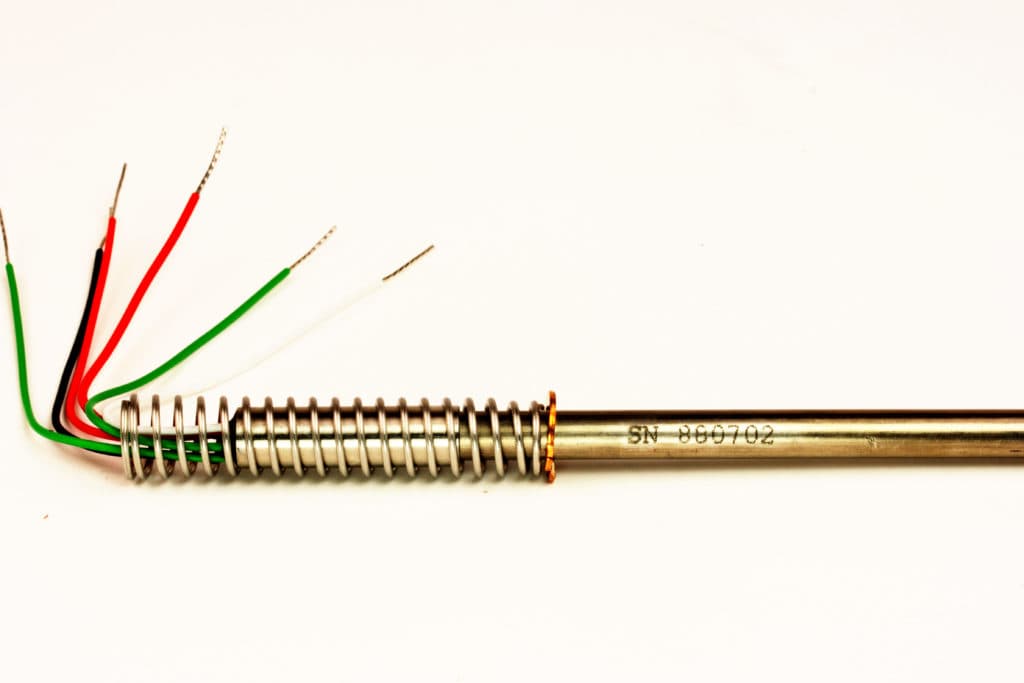
Burns Engineering Series 300 RTD
The Burns Engineering Series 300 RTD stands out for its customizable construction and specialty-material options, making it a top choice for corrosive, OEM or niche applications where standard probes fall short. Its financial upside is lower long-term replacement and retrofit expense in harsh environments because the unit can be specified precisely for the application, unlike off-the-shelf models such as the Omega PR-13 or WIKA TR10-B. When projects require bespoke immersion lengths, sheath alloys or mounting styles, the Series 300 minimizes integration risk and lifecycle costs.
Estimated$300 – $900
WIKA TR10-B RTD
The WIKA TR10-B is a reliable, broadly compatible RTD probe that offers German engineering quality at a competitive price, making it a go-to choice for general industrial and instrumentation panel installations. It provides a technical balance of robustness and maintainability that undercuts higher-end solutions like Endress+Hauser on price while matching or exceeding many standard-spec offerings such as the Omega PR-13. For organizations seeking predictable performance, wide availability, and solid build quality without premium diagnostics, the TR10-B is an efficient choice.

Estimated$120 – $450
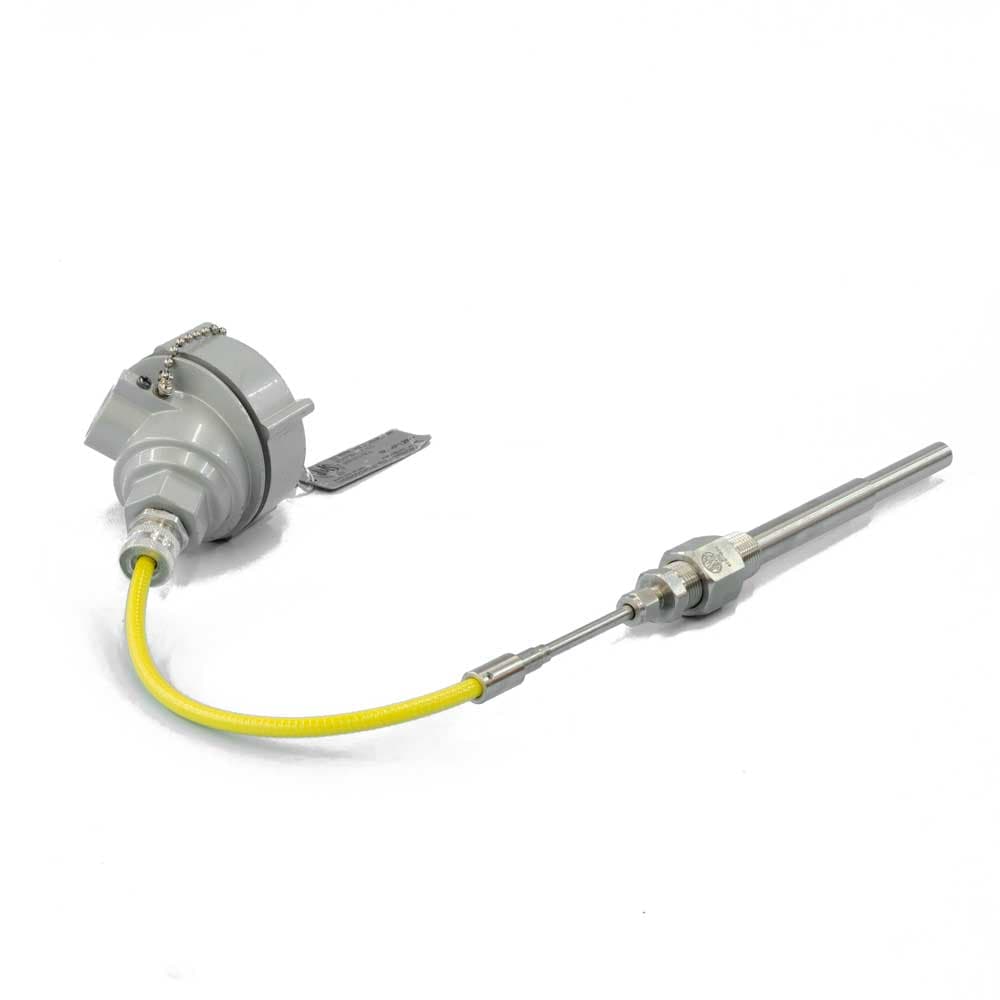
Honeywell STT850 RTD Assembly
The Honeywell STT850 RTD assembly is focused on integrated head/transmitter compatibility and process-control readiness, delivering reduced wiring complexity and improved loop accuracy for industrial control systems. Its financial and operational advantage is lower installation and commissioning cost versus discrete sensor-plus-transmitter setups, and it competes well with Endress+Hauser on integration while typically being more cost-effective for large-scale plant rollouts than niche custom units like Burns Series 300. For end-users prioritizing rapid deployment into control systems with minimized field wiring errors, the STT850 is a practical, industrial-grade option.
Estimated$250 – $1,200
Why RTDs Are Trusted: Science and Standards
Resistance temperature detectors use a platinum sensing element whose resistance changes predictably with temperature. That predictability, governed by international reference scales and test methods, makes RTDs a strong choice for precision measurement. The Pt100 and Pt1000 designations indicate nominal resistance at 0 degrees Celsius and trade off sensor sensitivity, wiring considerations, and noise performance. Industry standards and peer-reviewed research back RTD use in calibration labs and process control by documenting linearity, long term stability, and recommended wiring and calibration best practices.
Standards: IEC 60751 and the ITS-90 temperature scale provide the basis for consistent Pt100/Pt1000 calibrations and interchangeability across manufacturers.
Linearity and accuracy: Platinum RTDs offer predictable, near-linear resistance-to-temperature behavior, which simplifies drift correction and reduces measurement uncertainty compared with many thermocouples in the 0 to 200 degrees Celsius range.
Wiring methods: Three-wire and four-wire RTD connections eliminate lead resistance errors; four-wire is best for laboratory-grade low uncertainty measurements.
Self-heating and excitation: Research shows that using low excitation currents and proper sensor mounting reduces self-heating errors and improves repeatability.
Calibration practice: Regular calibration against a traceable standard in ISO/IEC 17025 labs is recommended; studies and industry guidance define typical recalibration intervals based on usage and required uncertainty.
Sheath and mounting effects: Materials such as stainless steel or Inconel and probe diameter affect response time and corrosion resistance. Selection should match the application environment to maintain measurement integrity.
Frequently Asked Questions
Which RTD probe should I choose for lab monitoring?
For lab monitoring where accuracy and diagnostics matter, consider the Endress+Hauser iTHERM TM401; it has an average rating of 4.7 and features a high-quality Pt100 element plus hygienic, CIP/SIP-ready construction for process-critical environments.
What sensing element does the Omega PR-13 use?
The Omega PR-13 RTD Probe is typically configured with a Pt100 sensing element, wrapped in a durable stainless-steel sheath and offered in multiple sheath lengths plus lead/termination options.
Does the Burns Engineering Series 300 RTD cost more?
The provided data doesn’t list any prices, so I can’t compare cost-to-value for the Burns Engineering Series 300 RTD; it’s rated 4.5 and supports custom construction with an impact-resistant sheath and thermowell compatibility.
Is the Endress+Hauser iTHERM TM401 for hygiene applications?
Yes—Endress+Hauser iTHERM TM401 is built for food, beverage, and pharmaceutical applications, with hygienic construction designed for cleanability and CIP/SIP-ready use; it uses a Pt100 element and has a 4.7 average rating.
Conclusion
These top five RTD probes cover the range of Canadian needs for 2026: the Omega PR-13 RTD Probe for customizable lab-grade sensing, the Endress+Hauser iTHERM TM401 for full-featured industrial validation (our top pick for overall performance), the Burns Engineering Series 300 RTD for rugged industrial installations, the WIKA TR10-B RTD for reliable value and broad compatibility, and the Honeywell STT850 RTD Assembly for options with integrated transmitter electronics. We hope you found what you were looking for; you can refine or expand your search using the site search to compare specifications, calibration options, or local suppliers.