

Top 5 Modular Rack Temperature Signal Conditioners in Canada - 2026
Modular rack temperature signal conditioners are modular, hot-swappable rack systems designed for centralized conditioning and routing of multiple temperature inputs in laboratories and industrial control rooms. In Canada these systems appeal to engineers and lab managers because they deliver scalable channel density, simplified maintenance, unified diagnostics, and consistent signal integrity across complex sensor networks. Buyers favor modular racks for their ability to reduce downtime with hot-swap replacement, to consolidate wiring and space in control rooms, and to support traceable calibration and compliance with industrial and laboratory standards. Rising interest in automation, remote monitoring, energy efficiency, and Industry 4.0 integration continues to push Canadian facilities toward centralized, rack-based conditioning solutions that simplify asset management and improve long-term measurement confidence.
Inception's AI took the time to understand this market in Canada · · How we pickWe may earn a commission on purchases. It never affects our rankings.
Top Picks Summary
Yokogawa YTMX580 Modular Temperature Transmitter
The YTMX580 earns a best-in-class position for modular rack temperature signal conditioning because it pairs industry-leading accuracy, advanced diagnostics and tight integration with Yokogawa DCS platforms, making it ideal for critical process loops. Compared with the other options in this list it commands a higher upfront price but delivers lower lifecycle costs through reduced maintenance and superior calibration traceability, which justifies the premium for mission-critical installations.

Phoenix Contact MACX MCR-T-UI-UP-SP Temperature Conditioner
The MACX MCR-T-UI-UP-SP stands out as a market leader for cost-effective, compact modular temperature conditioning, offering galvanic isolation, wide input compatibility and very attractive price/per-performance for DIN-rail systems. Against the Yokogawa and Acromag offerings it trades some advanced diagnostics and programmability for simpler commissioning and lower acquisition cost, making it a strong choice where budget and dense channel counts matter.

We may earn a commission on purchases. It never affects our rankings.
Estimated$150 – $300
Weidmuller ACT20M-RTI-AO-S Temperature Signal Conditioner
The ACT20M-RTI-AO-S ranks as a versatile mid-range modular temperature signal conditioner with robust surge protection, flexible RTD/TC inputs and reliable analog outputs tailored for harsh industrial environments. Compared to Phoenix Contact it offers greater ruggedness and field-proven industrial connectivity, and while it may lack Yokogawa's premium metrology or Acromag's deep programmability, it delivers a balanced technical feature set and predictable total cost for demanding plant-floor applications.

Estimated$250 – $450
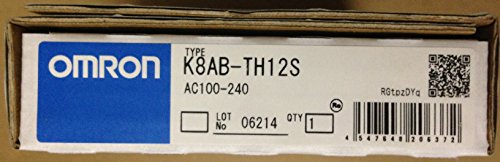
Omron K8AB-TH Temperature Conditioning Module
The K8AB-TH temperature conditioning module is an economical, compact solution favored for OEM and machine-builder modular racks due to its simple integration with Omron control systems and low initial cost. It provides fewer advanced diagnostics and less onboard programmability than leaders such as Yokogawa or Acromag, but its competitive price and straightforward functionality make it attractive where budget and tight panel space drive selection.
Why scientific research and industry reports support modular conditioning
A range of industry reports and technical white papers from organizations such as ISA, IEEE, and major instrumentation manufacturers document the measurable benefits of modular signal conditioning. Studies and field reports consistently show improvements in measurement accuracy, reduction in electrical noise and ground-loop errors, and faster mean time to repair when systems adopt isolated, channelized conditioning in a centralized rack format. These benefits are particularly important where many distributed sensors feed critical control and data-acquisition systems used in labs and industrial processes.
Improved signal integrity: Isolation and input-specific conditioning reduce noise and ground-loop errors, increasing effective sensor accuracy.
Lower downtime: Hot-swappable modules enable maintenance and replacement without shutting down the entire rack, reducing mean time to repair.
Scalability and cost efficiency: Modular racks permit phased expansion of channel counts and centralized diagnostics lower long-term maintenance costs.
Better regulatory traceability: Centralized calibration and diagnostics simplify audit trails and compliance with industry standards.
Enhanced EMI resistance: Proper conditioning and shielding in rack modules improve robustness in electrically noisy industrial environments.
Frequently Asked Questions
Which modular temperature conditioner suits critical process loops?
Choose the Yokogawa YTMX580 Modular Temperature Transmitter: it targets critical process loops with high-accuracy multi-sensor temperature measurement plus advanced onboard diagnostics, and it averages a 4.7 rating.
What inputs and diagnostics does Yokogawa YTMX580 support?
The Yokogawa YTMX580 supports RTD, thermocouple, and universal inputs, with advanced onboard diagnostics and optional fieldbus/HART connectivity for process integration; it has a 4.7 average rating.
How does Phoenix Contact MACX MCR-T-UI-UP-SP compare on price?
The provided data doesn’t list a price for the Phoenix Contact MACX MCR-T-UI-UP-SP Temperature Conditioner, but it is described as cost-effective with a 4.6 average rating and universal RTD/TC + millivolt inputs.
Who should pick Weidmuller ACT20M-RTI-AO-S over Yokogawa YTMX580?
Pick the Weidmuller ACT20M-RTI-AO-S if you need flexible analog outputs (voltage/current) with channel-to-channel isolation; it’s rated 4.5 and is configured for RTD/thermocouple with onboard linearization.
Conclusion
If you are choosing a modular rack temperature signal conditioner in Canada, these five products represent the leading options for 2026: Yokogawa YTMX580 Modular Temperature Transmitter, Phoenix Contact MACX MCR-T-UI-UP-SP Temperature Conditioner, Weidmuller ACT20M-RTI-AO-S Temperature Signal Conditioner, Omron K8AB-TH Temperature Conditioning Module, and Acromag 611T Intellipack Programmable Temperature Transmitter. For most laboratory and industrial control-room applications the Yokogawa YTMX580 stands out as the best overall choice because of its accuracy, extensive diagnostics, and strong regional support. Phoenix Contact and Weidmuller offer excellent flexibility and channel density for expanding systems, Omron provides compact, cost-effective modules for smaller racks, and Acromag delivers highly programmable options for complex integration. I hope you found what you were looking for; you can refine or expand your search using the site search to compare features, certifications, or supplier availability across Canada.