

Top 5 Vibration and Shock Monitoring Instruments in Canada for 2026
Vibration and shock monitoring instruments cover accelerometers, vibration analyzers, shock sensors, and modal testing equipment used for condition monitoring, product testing, and structural analysis. In Canada, buyers value instruments that combine accuracy, durability for harsh environments, and strong data integration with maintenance systems. Current trends in 2026 include wireless sensors for easier deployment, real time FFT analysis for fast diagnostics, predictive maintenance algorithms that reduce unplanned downtime, and compact MEMS devices enabling distributed monitoring at lower cost. Canadian purchasers also prioritize vendor support, interoperability with cloud and CMMS platforms, rugged enclosures for cold climates, and compliance with relevant industrial standards.
Inception's AI took the time to understand this market in Canada · · How we pickWe may earn a commission on purchases. It never affects our rankings.
Top Picks Summary
Fluke 805 Vibration Meter
The Fluke 805 Vibration Meter is a best-in-class handheld instrument for frontline vibration screening, prized for its ruggedness, fast triage readings, and easy-to-interpret health and severity indicators. It is significantly more affordable and more portable than full-featured analyzers like the Emerson CSI 2140 and less specialized than lab-grade accelerometers from Brüel & Kjær or PCB Piezotronics, making it the cost-effective choice for routine plant maintenance and quick fault detection in vibration and shock monitoring programs.

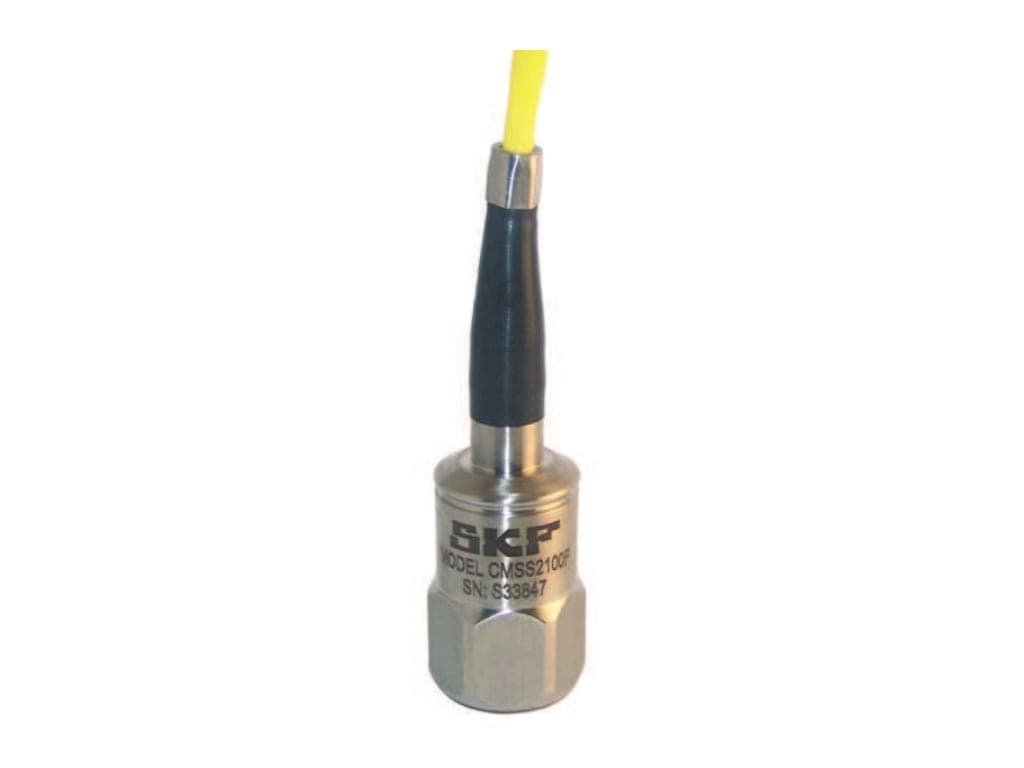
SKF CMSS 2200 Machine Condition Indicator
The SKF CMSS 2200 Machine Condition Indicator is a market-leading compact continuous monitoring solution that provides reliable alarm-based protection and simple trend visualization for rotating equipment. Positioned between handheld meters and high-end analyzers, it offers continuous coverage and strong integration with SKF's reliability services at a mid-range price point, delivering better ongoing surveillance than a Fluke handheld while avoiding the higher acquisition and specialist staffing costs of an Emerson CSI-class analyzer.
Estimated$2,000 – $3,500
PCB Piezotronics 352C33 Accelerometer
The PCB Piezotronics 352C33 accelerometer is a high-performance sensor optimized for shock and transient measurements, offering excellent dynamic range and rugged construction for field and test environments. Technically more suitable for capturing high-frequency shocks than general-purpose meters like the Fluke 805 and typically less costly than reference-grade transducers from Brüel & Kjær, it is a strong choice when pairing precision sensing with portable or multi-channel data collectors such as the Emerson CSI series.

Estimated$200 – $400
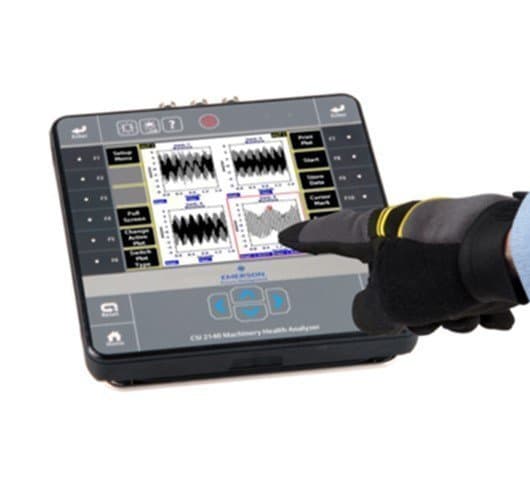
Emerson CSI 2140 Machinery Health Analyzer
The Emerson CSI 2140 Machinery Health Analyzer is a top-tier diagnostic platform for deep vibration analysis, combining multi-channel data acquisition, advanced spectral and time-domain tools, and route-based workflows for comprehensive machine health programs. While it commands a premium compared with handheld tools and compact indicators, its technical depth and scalable architecture deliver superior root-cause analysis and trending capabilities that justify the investment for centralized reliability teams managing complex assets.
Estimated$20,000 – $35,000
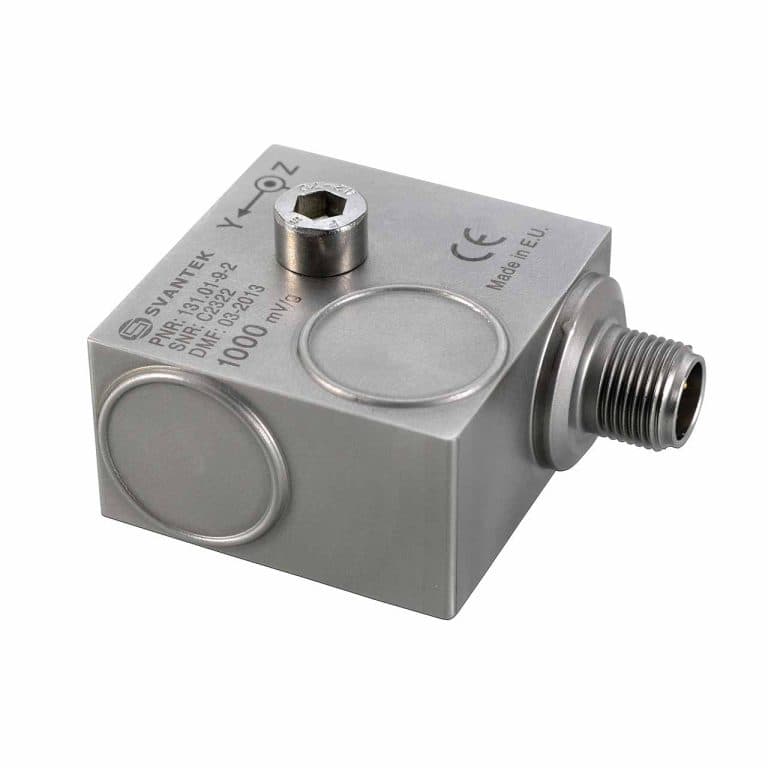
Brüel & Kjær Type 4534-B Accelerometer
The Brüel & Kjær Type 4534-B accelerometer is a market-leading, laboratory-grade transducer known for its wide, flat frequency response and metrological accuracy, making it ideal for calibration, reference measurements, and demanding shock analyses. It represents the highest-cost, highest-precision end of the spectrum—surpassing PCB sensors on traceability and precision—and is typically used to validate or calibrate field systems such as Emerson analyzers, SKF monitors, or Fluke screening tools in vibration and shock monitoring workflows.
Estimated$2,500 – $5,500
Why vibration and shock monitoring works
Scientific and industry research shows that vibration signatures and shock events reveal early stages of mechanical degradation and structural changes long before catastrophic failure. Signal processing methods such as fast Fourier transform analysis isolate characteristic frequencies tied to specific faults, while time-domain shock metrics identify transient impacts. Modern predictive maintenance approaches combine high-quality sensor data with analytics to detect trends and trigger timely interventions. For beginners, the key is that good sensors plus consistent data collection and basic analytics produce reliable alerts that save time and money compared with reactive repairs.
Frequency analysis identifies bearing faults, imbalance, misalignment, and gear defects by isolating characteristic harmonics.
Time-domain shock and peak measurements capture transient events that average vibration levels can miss.
High sampling rates and appropriate dynamic range are essential to capture both low-frequency machine vibrations and high-frequency shock impulses.
Piezoelectric accelerometers offer high sensitivity and wide bandwidth; MEMS sensors are compact, lower cost, and ideal for distributed monitoring.
Studies and industry reports indicate predictive vibration monitoring programs reduce unplanned downtime and maintenance costs when paired with actionable thresholds and good data practices.
Standards and guidelines such as ISO vibration measurement practices help ensure consistent, comparable results across applications.
Frequently Asked Questions
Which product should I choose for quick vibration walkdowns?
Choose the Fluke 805 Vibration Meter ($2,179.18 CADrating) because it gives quick single-button overall vibration measurement with peak hold and an onboard bearing-condition indicator for fast frontline screening.
What does the PCB Piezotronics 352C33 accelerometer support?
The PCB Piezotronics 352C33 is an ICP (piezoelectric) accelerometer with wide frequency response suitable for vibration and shock measurement, with low-noise, high-sensitivity design for modal testing and machinery diagnostics.
Is the Fluke 805 Vibration Meter worth CA$2199.99?
At $2,179.18 CAD(4.6 rating), the Fluke 805 Vibration Meter includes quick single-button overall vibration measurement, peak hold, an onboard bearing-condition indicator, rugged portable design, and basic data logging for trend checks.
Can the SKF CMSS 2200 connect to a phone for data transfer?
Yes—SKF CMSS 2200 includes Bluetooth and route software compatibility for simple data transfer and trending, and it supports vibration and temperature inputs for handheld machine surveys.
Conclusion
This selection highlights five strong options for vibration and shock monitoring in Canada: Fluke 805 Vibration Meter, SKF CMSS 2200 Machine Condition Indicator, PCB Piezotronics 352C33 Accelerometer, Emerson CSI 2140 Machinery Health Analyzer, and Brüel & Kjær Type 4534-B Accelerometer. If you need a handheld, fast field check, the Fluke 805 is a great choice. For continuous machine condition warning systems, the SKF CMSS 2200 is well suited. PCB Piezotronics 352C33 and Brüel & Kjær Type 4534-B are both excellent sensor choices depending on sensitivity and bandwidth needs. For full-featured analysis, real time diagnostics, and predictive maintenance workflows, the Emerson CSI 2140 Machinery Health Analyzer stands out as the best overall choice among these top products. I hope you found what you were looking for; you can refine or expand your search using the site search to match specific form factors, bandwidths, or integration needs.