

Top 5 High Cycle Fatigue Test Systems in Canada for 2026
Published on Saturday, January 24, 2026
High cycle fatigue test systems are specialized platforms designed to deliver very large numbers of load cycles quickly and reproducibly, enabling accurate fatigue life estimation for metals, composites, polymers and assemblies. In Canada, demand for high-frequency, high-throughput fatigue testing has grown across automotive, aerospace, renewable energy, and advanced manufacturing sectors as engineers push lighter, faster and more efficient designs. Buyers favor systems that combine speed with tight control and reliable data capture: resonance and high-frequency electromechanical drives for millions to billions of cycles, servohydraulic rigs when force range and waveform flexibility matter, and integrated monitoring for early crack detection and condition-based test stopping. Other Canadian preferences include compliance with ASTM and ISO fatigue standards, compact lab footprints, local service and support, and modular systems that adapt to additive manufacturing, battery, and composite testing programs.
Top Picks Summary
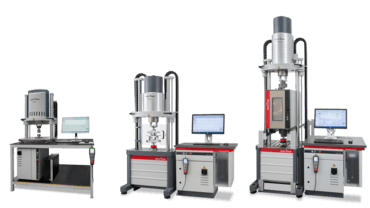
Instron ElectroPuls E10000
The Instron ElectroPuls E10000 is an electrodynamic high cycle fatigue platform engineered for wide-bandwidth, high-frequency endurance testing with low facility and maintenance requirements. It earns a top position for laboratories that need reliable, repeatable high-cycle results with lower operating costs than servohydraulic systems, while trading off absolute load capacity and some heavy-fixture flexibility offered by the MTS Landmark. Compared with resonance-focused machines on this list, the ElectroPuls is more versatile for non-resonant specimens and complex load profiles, making it a strong all-purpose choice for HCF work.

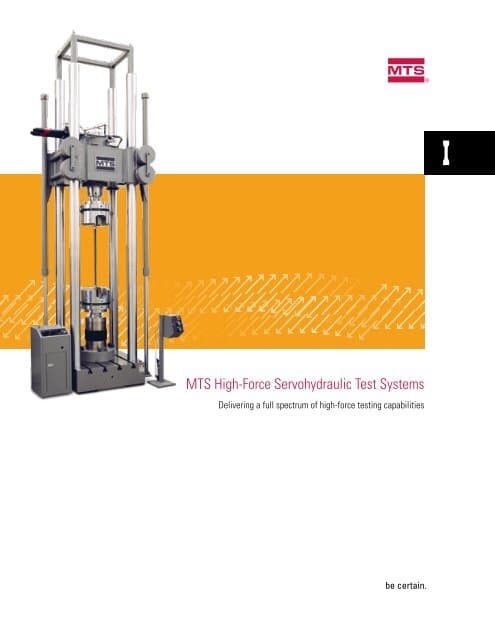
MTS Landmark Servohydraulic Test System
The MTS Landmark servohydraulic system is a market-leading solution for high-force, high-duty fatigue testing where accurate control of complex waveforms and large-specimen capability are essential. It stands out for its robust hydraulics and broad test envelope that outperforms electrodynamic and resonance machines on maximum load and multi-axis integration, though this comes with higher capital and ongoing maintenance costs. For organizations needing heavy-load endurance testing or integration into larger test cells, the Landmark’s technical depth and configurability justify its position despite higher operating overhead.
ZwickRoell Vibrophore 500
The ZwickRoell Vibrophore 500 is designed for high-throughput, high-cycle fatigue testing with automation features and consistent specimen handling that reduce per-sample labor and cost. Its strength is efficient production-scale endurance testing—delivering excellent cycle rates and throughput compared with univeral electrodynamic systems—while it may be less suitable than MTS or Instron for very large or non-standard specimens. Financially, the Vibrophore’s automation-driven throughput makes it attractive for labs focused on many identical fatigue tests where fixture simplicity and speed drive down cost per cycle.
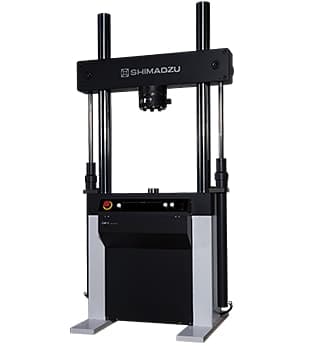
Shimadzu Servopulser EHF Series
Shimadzu’s Servopulser EHF Series targets energy-efficient, compact high-frequency fatigue testing with tight control over cyclic parameters, making it a solid choice for academic and small industrial labs. The series competes well on price and footprint compared with larger Instron and MTS platforms, offering excellent value for research-scale HCF testing while generally providing lower maximum force capacity than the Landmark servohydraulic systems. For labs that prioritize precision, low energy consumption, and lower acquisition cost over extreme load capability, the EHF Series is a compelling option.
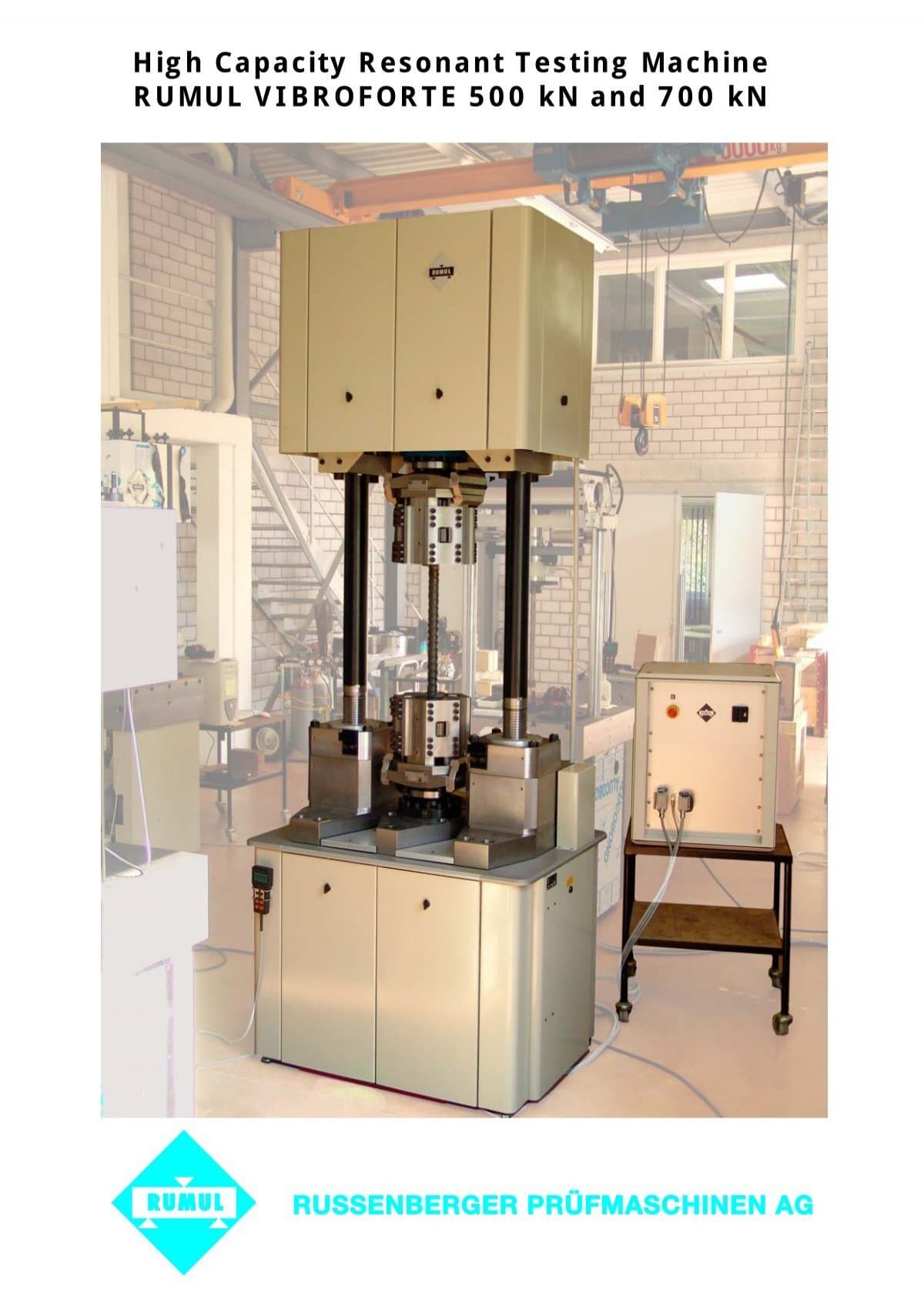
RUMUL Mikrotron Resonance Testing Machine
The RUMUL Mikrotron resonance testing machine specializes in extremely high-cycle fatigue testing by exploiting specimen resonance to achieve very high cycle rates with minimal energy input and short test times. This makes it exceptionally cost-effective for standardized specimen geometries and high-volume endurance testing compared with non-resonant electrodynamic or hydraulic systems, though it is inherently constrained to geometries and boundary conditions that can be tuned to resonance. For automotive and materials labs aiming to reach gigacycle regimes economically, the Mikrotron’s low operating cost and throughput advantages secure its market-leader niche.
What the Research Shows
Peer reviewed studies and industry reports consistently show that appropriate high-frequency testing methods accelerate fatigue data collection while maintaining correlation with real-world S-N behavior when specimens and test conditions are properly controlled. Research highlights the trade offs between resonance efficiency and the need for modal tuning, and the benefits of closed-loop control and high-resolution monitoring to reduce scatter and improve lifetime predictions.
Resonance testing can produce millions to billions of cycles with low energy input, but requires careful specimen design and modal analysis to avoid unintended stress states.
Electromechanical systems provide precise displacement and load control across a wider range of specimen geometries and frequencies, producing reliable S-N curves for many materials.
Servohydraulic platforms offer high force capacity and waveform versatility, which is important for testing large components, joints and complex assemblies.
High-speed data acquisition and acoustic or strain-based crack detection reduce false positives and improve correlation with laboratory and field failures, according to recent fatigue methodology papers.
Standardized protocols from ASTM and ISO remain essential: matching test frequency, temperature, and loading mode to service conditions yields the most useful life predictions.
Frequently Asked Questions
Which system should I choose for high-cycle axial fatigue?
Choose the Instron ElectroPuls E10000 if you need reliable, repeatable high-cycle results for wide-bandwidth, high-frequency endurance testing, since it uses an electrodynamic linear motor for high-frequency, high-cycle axial fatigue testing (rating 4.6).
What exact feature helps Vibrophore 500 hit high-cycle testing?
The ZwickRoell Vibrophore 500 uses a resonance-based vibrophore design optimized for very high-cycle testing at specimen natural frequencies, plus automatic frequency tracking to maintain resonance conditions (rating 4.5).
How do prices compare between these high-cycle fatigue systems?
The provided data doesn’t list any prices for Instron ElectroPuls E10000, MTS Landmark Servohydraulic Test System, or ZwickRoell Vibrophore 500, so I can’t compare Canada pricing or value from this source (ratings: 4.5, 4.7, 4.5).
Does MTS Landmark suit large specimens and high-force testing?
Yes—the MTS Landmark Servohydraulic Test System is designed for high-force, high-duty fatigue testing with robust servohydraulic actuation delivering high force and stroke for large specimens and interfaces (rating 4.7).
Conclusion
In the Canadian context, high cycle fatigue test systems are central to product validation across lightweight automotive parts, aerospace components, wind turbine blades and emerging battery and additive manufacturing workflows. The five systems highlighted here — Instron ElectroPuls E10000, MTS Landmark Servohydraulic Test System, ZwickRoell Vibrophore 500, Shimadzu Servopulser EHF Series, and RUMUL Mikrotron Resonance Testing Machine — represent the leading approaches: electrodynamic precision, servohydraulic versatility, resonance specialization, high-frequency servopulser capability, and dedicated resonance throughput respectively. For many university labs and industrial test houses seeking a balanced mix of frequency range, control and support in Canada, the Instron ElectroPuls E10000 will often be the best choice, though your ideal pick depends on specimen type and test objectives. I hope you found what you were looking for; you can refine or expand your search using the site search to compare specifications, local vendors and service options.