

Top 5 Thermal Mechanical Testers in Canada for 2026
Published on Saturday, January 24, 2026
Thermal mechanical testers include dynamic mechanical analyzers (DMA), thermomechanical analyzers (TMA) and dilatometers used to characterize viscoelasticity, thermal expansion and glass transition behavior. In Canada these instruments are essential across research universities, polymer and composite manufacturers, battery and electronics labs, and aerospace suppliers. Buyers increasingly look for wide temperature ranges, rapid thermal cycling, high sensitivity, robust software for combined thermal-mechanical property mapping, and reliable local support. Canadian preferences emphasize measurement accuracy, repeatability, compliance with ASTM and ISO standards, aftersales calibration and service, automation for higher throughput, and bilingual technical documentation where available.
Top Picks Summary
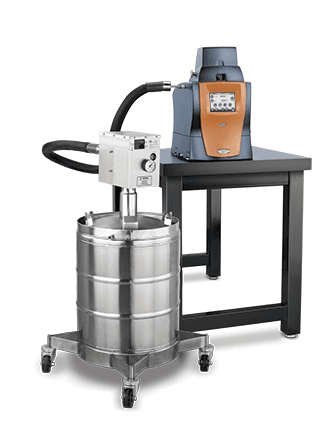
TA Instruments DMA 850
The TA Instruments DMA 850 is a best-in-class dynamic mechanical analyzer known for its wide frequency and temperature ranges, high sensitivity and robust automation that deliver accurate viscoelastic property measurement for R&D and advanced materials testing. Compared with the Netzsch DMA 242 E Artemis it offers more modular fixture options and enterprise software integration, and while it commands a premium price its throughput and reduced operator time lower the effective cost per test.
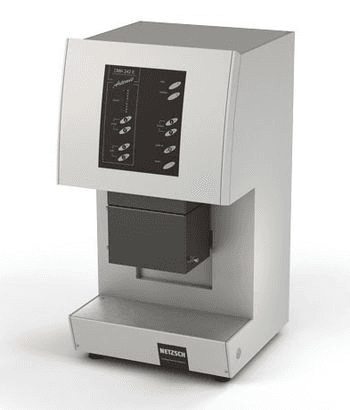
Netzsch DMA 242 E Artemis
The Netzsch DMA 242 E Artemis balances laboratory-grade DMA performance with a compact, user-friendly design and a competitive price, making it a market-leading choice for quality assurance and routine material characterization. It undercuts higher-cost offerings like the TA DMA 850 on upfront investment while providing dependable compliance, flexible clamp systems and intuitive software that reduce training time and operational expenses.
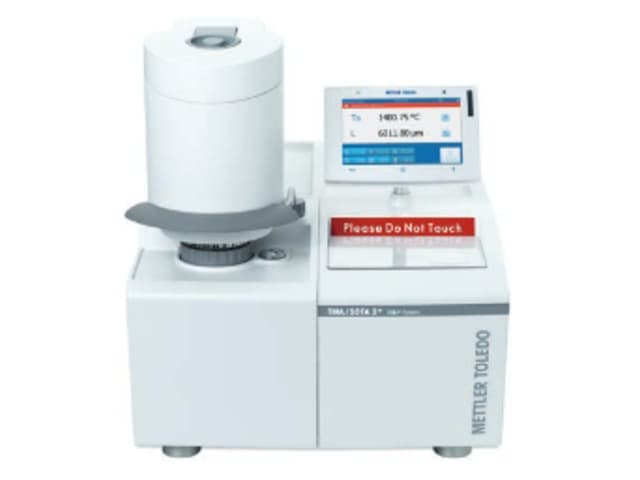
Mettler Toledo TMA/SDTA 2+
The Mettler Toledo TMA/SDTA 2+ combines precision thermomechanical analysis (TMA) with SDTA capability to simultaneously capture dimensional changes and heat flow, offering unique multi-modal data for transition and expansion studies. This dual-mode approach complements the DMA systems in the list by delivering cost-efficient, high-resolution thermal expansion and softening data—particularly attractive where both mechanical and thermal signatures must be correlated without buying separate instruments.
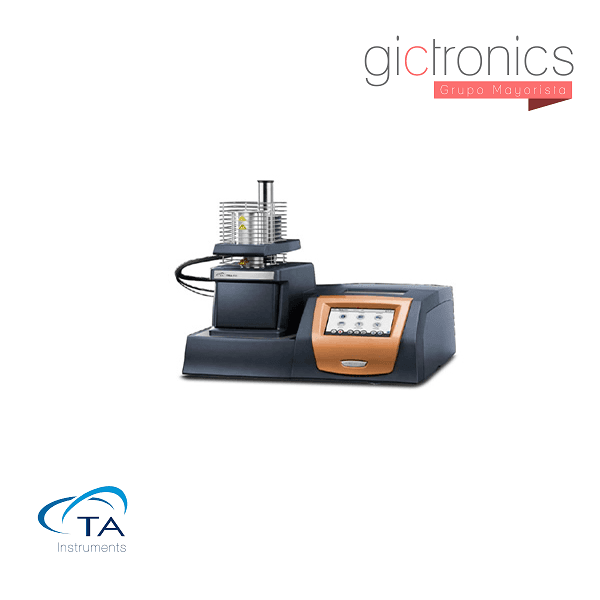
TA Instruments TMA 450
The TA Instruments TMA 450 is a high-resolution thermomechanical analyzer optimized for expansion, glass transition and softening point measurements with a push-rod design and a wide temperature range. It stands out against the Mettler TMA/SDTA 2+ for users focused strictly on dimensional analysis due to its configurable probes and proven precision, and typically represents a mid-range capital investment with low consumable costs.
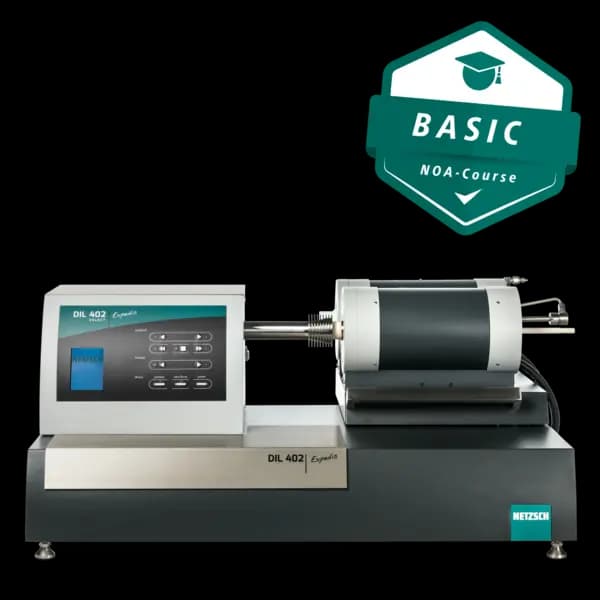
Netzsch DIL 402 Expedis Select
The Netzsch DIL 402 Expedis Select is a high-precision dilatometer engineered for absolute length-change measurements and excellent long-term stability at elevated temperatures, making it the reference instrument for thermal expansion and sintering studies. Compared with TMA instruments like the TA TMA 450 and the Mettler TMA/SDTA 2+, the DIL 402 offers superior absolute accuracy and furnace homogeneity—an investment often justified by lower re-test rates and tighter process control in production environments.
Scientific basis and practical benefits
A strong body of scientific literature and standardized test methods supports the use of DMA, TMA and dilatometry for material characterization. These methods provide repeatable, quantitative measures that link thermal events to mechanical behavior and dimensional change. For beginners, the core benefits are straightforward: DMA reveals viscoelastic properties and transitions such as glass transition, TMA measures dimensional shifts and softening under temperature and load, and dilatometers quantify thermal expansion and sintering shrinkage. Modern integrated software and automated routines reduce operator error and accelerate data interpretation, enabling predictive material models used in design and quality control.
Dynamic mechanical analysis correlates storage and loss moduli with service performance and identifies glass transition temperatures used in polymer selection and formulation.
Thermomechanical analysis and dilatometry accurately measure coefficient of thermal expansion and dimensional stability, critical for electronics, composites and ceramic processing.
Combined thermal-mechanical mapping improves predictive modeling for lifetime and failure analysis, a benefit validated in peer reviewed studies on composites and battery electrodes.
Automated sample handling, advanced control systems and repeatable thermal cycling improve throughput and inter-lab reproducibility versus manual methods.
Standards such as ASTM D4065 for DMA and ASTM E831 for thermal expansion guide method setup and support cross-lab comparability.
Frequently Asked Questions
Which tester should I buy for viscoelastic R&D?
Get the TA Instruments DMA 850 for viscoelastic property measurement in R&D, since it’s built for wide frequency and temperature ranges plus high-sensitivity force and displacement with multiple clamp options; it’s rated 4.6.
What exact feature does the Mettler Toledo TMA/SDTA 2+ include?
The Mettler Toledo TMA/SDTA 2+ includes simultaneous TMA and SDTA functionality, capturing dimensional changes and heat flow together, with high-precision vertical resolution and low-noise displacement detection; rating is 4.4.
How does Netzsch DMA 242 E Artemis value compare?
The Netzsch DMA 242 E Artemis is positioned as a competitive-price DMA that undercuts higher-cost offerings like the TA DMA, while offering multi-frequency and multi-mode DMA experiments and stable temperature control; rating is 4.5.
Is the TA Instruments DMA 850 good for automated testing workflows?
Yes—the TA Instruments DMA 850 is designed with robust automation for hands-off sample handling, alongside wide frequency and temperature coverage and multiple clamp options; it’s rated 4.6.
Conclusion
In Canada the top thermal mechanical testers for 2026 balance precision, temperature range, software capability and local support. The five featured models are TA Instruments DMA 850, Netzsch DMA 242 E Artemis, Mettler Toledo TMA/SDTA 2+, TA Instruments TMA 450, and Netzsch DIL 402 Expedis Select. For many research and advanced polymer labs the TA Instruments DMA 850 stands out as the best overall choice thanks to its combination of sensitivity, temperature range and integrated analysis software, though the Netzsch DMA 242 E Artemis offers high sensitivity for niche needs, the Mettler Toledo TMA/SDTA 2+ excels for combined TMA and calorimetry workflows, the TA Instruments TMA 450 is a reliable TMA solution, and the Netzsch DIL 402 Expedis Select is top ranked for high-resolution dilatometry. I hope you found what you were looking for; you can refine or expand your search using the site search to match instrument specifications, service options and Canadian distributor availability.