

Top 5 Eddy Current Nondestructive Inspection Systems in Canada — 2026
Published on Saturday, January 24, 2026
Eddy current nondestructive inspection systems are specialized instruments used to detect surface and near-surface defects, perform conductivity mapping, and measure coating thickness with high precision. In Canada, these systems are widely used across automotive, aerospace, energy, and industrial manufacturing sectors where speed, repeatability, and noncontact testing are critical. Modern platforms combine multi-frequency excitations and array probe architectures to improve depth resolution and spatial coverage, while multi-channel instrumentation and integrated digital reporting streamline high-throughput quality control workflows. Canadian buyers favor systems that deliver repeatable defect detection, clear digital records for traceability, and flexible probe libraries for different materials and geometries. Cost of ownership, local technical support, and compliance with international NDT standards also strongly influence purchasing decisions in the Canadian market.
Top Picks Summary
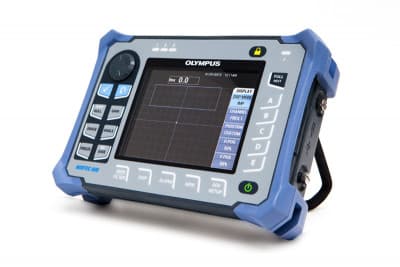
Olympus NORTEC 600
The Olympus Nortec 600 is recognized for its balanced combination of portability, multi-frequency eddy-current capability, and intuitive workflow, making it a go-to choice for field inspections and rotational equipment testing. It holds its position by offering broad application coverage and strong global service support at a competitive total cost of ownership, while generally providing a more user-friendly, cost-effective alternative to the higher-resolution but more expensive array systems like the Eddyfi Lyft and the highly modular Zetec units.
$20,000 – $35,000
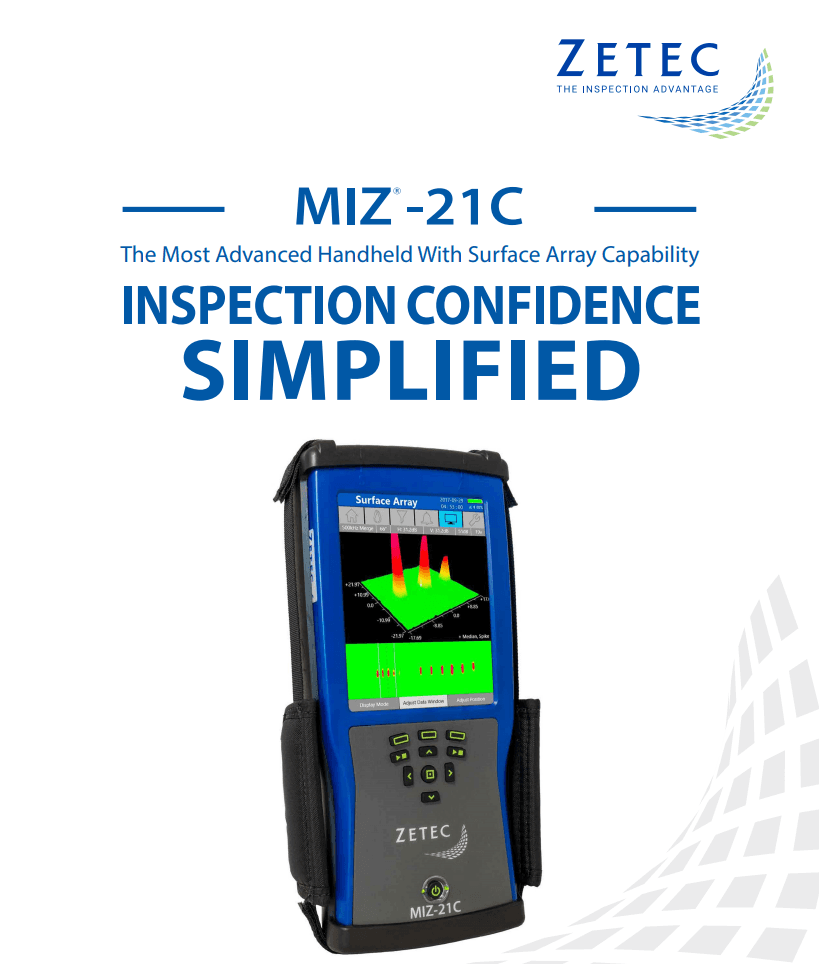
Zetec MIZ-21C
The Zetec MIZ-21C is a modular, high-channel-count eddy-current platform favored for its configurability and high dynamic range, which suits demanding aerospace and power-generation inspections. It stands out as a market leader for complex, multi-channel applications because it delivers advanced signal conditioning and system scalability, trading a higher upfront price for long-term technical flexibility compared with simpler, lower-cost instruments such as the Olympus Nortec 600 or IBG Eddyliner S.
Eddyfi Lyft
The Eddyfi Lyft is a specialist high-resolution eddy-current array instrument designed for detailed flaw imaging and rapid area screening, excelling where fine spatial resolution and sophisticated reconstruction are required. It earns its best-in-class reputation by delivering superior imaging and advanced post-processing tools that outperform traditional single-coil and basic multi-frequency units in defect characterization, albeit at a premium price that reflects its technical advantages over more economical systems like Rohmann or IBG.

$40,000 – $70,000
Rohmann Elotest PL600
The Rohmann Elotest PL600 is a precision eddy-current instrument tailored for laboratory and quality-assurance roles, valued for its stable measurements, conductivity and coating assessment features, and straightforward calibration routines. It maintains a strong market niche by offering reliable metrology and competitive pricing for bench-top and production QA tasks, making it a more economical choice for controlled environments compared with field-oriented, higher-cost array platforms such as the Eddyfi Lyft.

$12,000 – $20,000
IBG Eddyliner S
The IBG Eddyliner S is engineered for fast, production-line eddy-current inspections and surface crack detection, emphasizing compactness, ease of integration, and low per-unit cost. It secures its position as a practical market option by delivering rapid throughput and straightforward automation interfaces suited to manufacturing environments, offering a lower-cost, simpler alternative to the more feature-rich Zetec and Eddyfi systems for routine screening tasks.

$8,000 – $15,000
Research and evidence supporting eddy current NDT
Scientific and industry research supports the advantages of eddy current testing for surface and near-surface inspection, conductivity measurements, and coating assessment. Studies and technical reports emphasize how multi-frequency methods, array probes, and advanced signal processing improve sensitivity, reduce false calls, and enable faster inspections. Research in Canada and internationally has focused on improving probe design, multi-channel electronics, and digital analytics to meet industrial throughput and traceability requirements.
Sensitivity to surface and near-surface flaws: Peer-reviewed studies demonstrate that eddy current testing reliably detects cracks, pits, and other discontinuities on conductive surfaces without part preparation.
Conductivity and material characterization: Research shows eddy current techniques provide accurate conductivity maps for detecting heat treatment variations, material degradation, and alloy differences.
Multi-frequency and array probes: Technical papers indicate multi-frequency excitation improves depth discrimination while array probes expand coverage and throughput, reducing inspection time for large or complex parts.
Digital signal processing and automation: Studies find that modern digital instrumentation and machine learning-assisted analysis reduce operator variability and improve repeatability of defect calls.
Standards and industry adoption: Industry guidance and standards from international organizations and sector-specific bodies inform calibration, performance verification, and reporting practices used by Canadian laboratories and manufacturers.
Frequently Asked Questions
Which eddy current system should I pick for field work?
For field inspections and rotational equipment testing, choose the Olympus Nortec 600 with its multi-frequency eddy-current processing, rugged portable design, large color touchscreen, and extended battery life; it’s rated 4.6.
What does Eddyfi Lyft do with eddy-current arrays?
The Eddyfi Lyft is a purpose-built eddy-current array instrument for high-throughput tubing and heat-exchanger inspections, delivering real-time imaging plus advanced analysis for high-resolution flaw visualization; it’s rated 4.7.
Is the Zetec MIZ-21C worth the cost for audits?
I can’t compare value or price because the provided data doesn’t include any Canadian prices for the Zetec MIZ-21C; it’s rated 4.3 and includes modular configurable channels, data logging, and PC software support.
What’s different about the Olympus Nortec 600 vs Zetec MIZ-21C?
Olympus Nortec 600 emphasizes multi-frequency eddy-current processing with high dynamic range plus a rugged portable design; Zetec MIZ-21C emphasizes modular configurable channels with integrated data logging and PC software support—both have ratings of 4.3 and 4.5 respectively.
Conclusion
In Canada the best eddy current systems balance sensitivity, speed, and digital workflow integration for automotive and industrial quality control. The five leading options for 2026 covered here are Olympus Nortec 600, Zetec MIZ-21C, Eddyfi Lyft, Rohmann Elotest PL600, and IBG Eddyliner S. Each platform brings strengths: Olympus Nortec 600 for proven versatility, Zetec MIZ-21C for robust multi-channel capability, Rohmann Elotest PL600 and IBG Eddyliner S for focused conductivity and coating applications, and Eddyfi Lyft for cutting-edge throughput and advanced digital reporting. For buyers prioritizing high throughput, multi-channel instrumentation, and modern digital reporting, Eddyfi Lyft is the top choice among these options. We hope you found the comparison useful; you can refine or expand your search using the site search to match specific probe types, channel counts, or support options.