

Canada's Top 5 Radiographic and CT Nondestructive Imaging Systems for 2026
Published on Saturday, January 24, 2026
Digital radiography and computed tomography nondestructive imaging systems deliver 2D and 3D internal imaging for dimensional analysis, defect characterization, and reverse engineering. Modern solutions emphasize low dose, high resolution detectors, micro CT options for small-scale features, and rapid reconstruction software that supports both laboratory metrology and high-throughput production inspection workflows. In Canada, buyers prioritize image quality, throughput, software interoperability with CAD and inspection systems, strong local service and support, regulatory compliance, and total cost of ownership. Growing demand from aerospace, additive manufacturing, energy, medical device, and automotive sectors has pushed vendors to add automation, cloud-enabled data management, and AI-driven analysis while offering flexible purchasing, leasing, and contract inspection options to match regional needs in Ontario, Quebec, Alberta, and British Columbia.
Top Picks Summary
YXLON FF35 CT
The YXLON FF35 CT is positioned as a high-throughput industrial CT workhorse that balances speed and image quality for production-level nondestructive inspection, making it well suited for aerospace and automotive inline or nearline applications. Compared with the other systems on this list, it delivers a competitive total cost of ownership through streamlined workflows and robust hardware, offering stronger throughput for medium-to-large batches while trading off the extreme micro-resolution or metrology-grade certification that some niche systems prioritize.

$600,000 – $1,200,000
Nikon XT H 225
The Nikon XT H 225 is known for versatile micro- and industrial CT capability with a focus on fine detail resolution and flexible source/detector options for electronics, additive manufacturing, and materials R&D. Relative to the other products, it emphasizes superior small-feature detectability and adaptable configurations that can be more cost-effective for labs needing both high-resolution and general-purpose CT, though it may not match the large-part throughput or metrology certification of some market-leading cabinet systems.
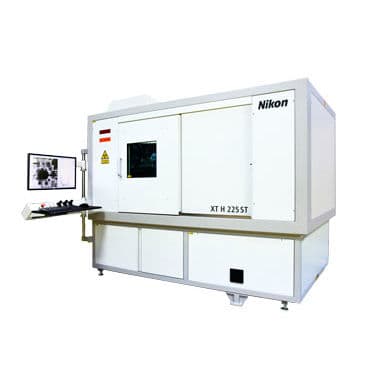
$450,000 – $950,000
Zeiss Metrotom 1500
The Zeiss Metrotom 1500 is a metrology-focused CT system that combines traceable dimensional inspection with CT imaging, delivering the highest accuracy and certified measurement workflows for precision engineering and quality assurance. Compared to more throughput-oriented or high-energy systems in this list, Zeiss stands out for its calibrated metrological performance and software that integrates with CMM workflows, offering a premium-priced solution justified where measurement uncertainty and traceability are critical.
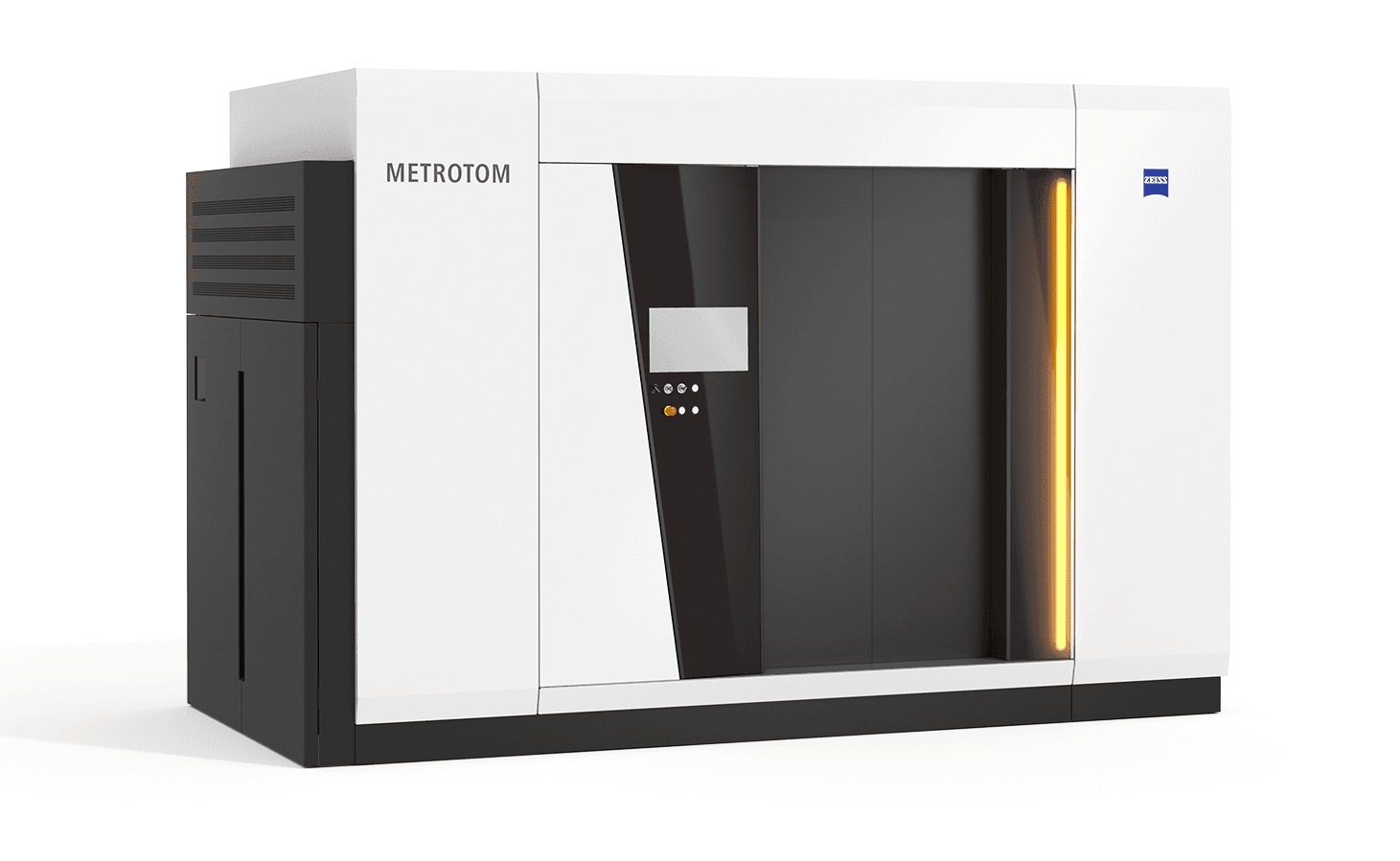
$800,000 – $1,800,000
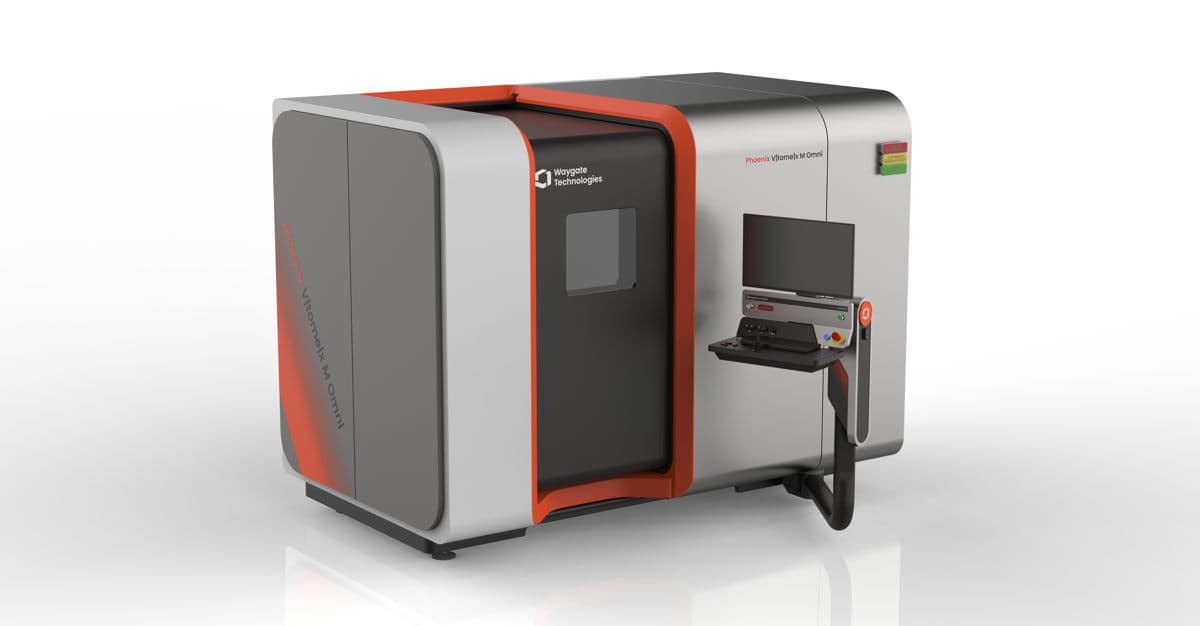
Waygate Technologies phoenix v|tome|x m
The Waygate Technologies phoenix v|tome|x m is a market-leading modular CT platform renowned for its automation, large-volume imaging options, and broad industry adoption in aerospace and automotive production inspection. It differentiates itself from competitors through scalable configurations, proprietary reconstruction and analysis software, and strong aftermarket service, which command a premium but reduce inspection cycle times and overall risk for high-volume or safety-critical inspection programs.
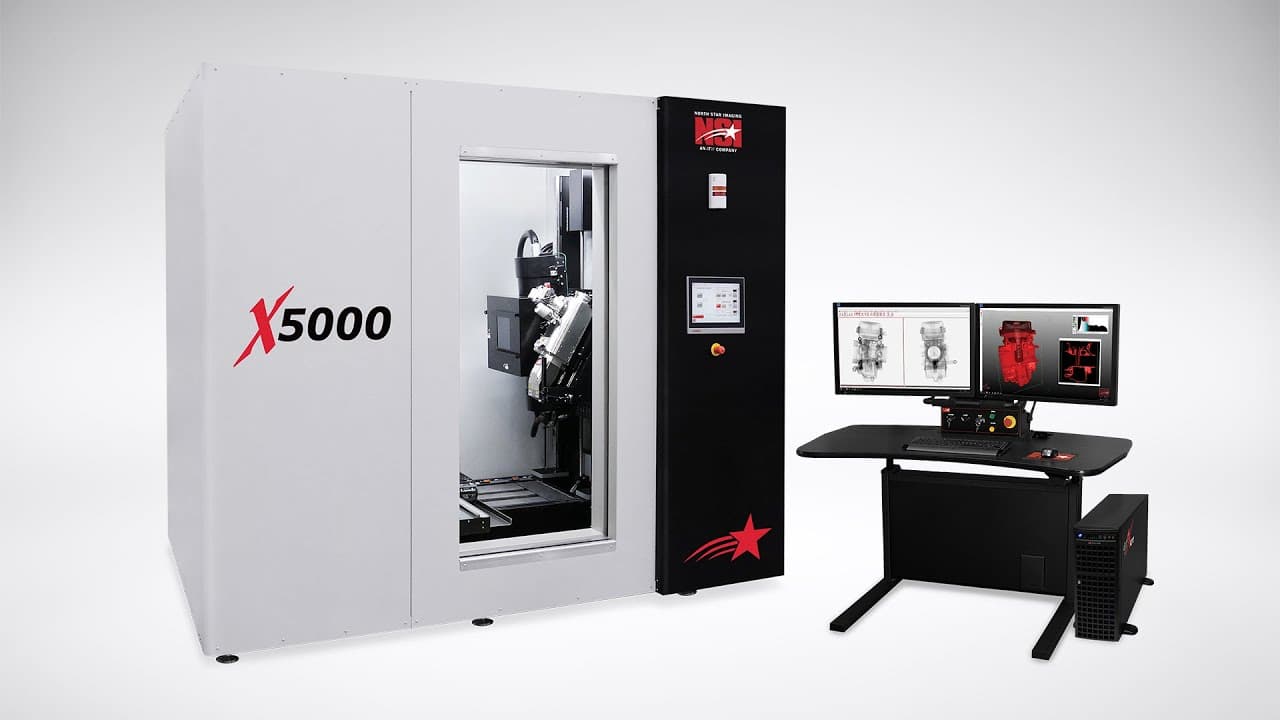
North Star Imaging X5000
The North Star Imaging X5000 targets large-scale and high-energy nondestructive CT applications with integrated, high-power X-ray sources that enable inspection of thick metal castings and assembled structures not feasible on lower-energy systems. In contrast to the others, it offers a financially attractive path for heavy-industry users by combining high penetration capability with competitive capital and operating costs, trading off some of the fine-feature microresolution and metrology certification that smaller-focus systems provide.
What Research and Industry Studies Say
Peer-reviewed studies and industry evaluations consistently show that modern digital radiography and computed tomography improve defect detectability and dimensional accuracy while enabling lower radiation dose through advanced detector technology and reconstruction algorithms. Evidence from metrology labs and industrial case studies also highlights the value of micro-CT for porosity analysis, internal feature characterization, and reverse engineering of complex parts.
Micro-CT can achieve micrometer-scale resolution for small components and powder-based additive parts, enabling porosity and internal geometry analysis.
Iterative and model-based reconstruction methods reduce noise and preserve detail, allowing lower X-ray dose without sacrificing diagnostic value.
Flat-panel and direct conversion detectors increase throughput and dynamic range compared with film, improving production inspection cycle times.
Computed tomography enables true 3D dimensional metrology with subvoxel accuracy when systems are calibrated and coupled with proper metrology software.
Industry studies in aerospace and additive manufacturing show CT detects internal defects that are invisible to surface inspection and conventional radiography.
Automated defect recognition and machine learning reduce operator variability and speed pass/fail decisions in production environments.
Interoperability with CAD and inspection software supports reverse engineering workflows and automated dimensional reporting for quality control.
Frequently Asked Questions
Which CT system should I buy for production inspection?
Choose the YXLON FF35 CT for aerospace and automotive inline or nearline nondestructive inspection, since it’s positioned as a high-throughput industrial CT workhorse balancing speed and image quality; it has an average rating of 4.6.
Does the Nikon XT H 225 support high-power penetration?
Yes—the Nikon XT H 225 includes an up to 225 kV high-power tube, enabling reliable inspection of medium-density components; it’s rated 4.7 on average.
How does the Zeiss Metrotom 1500 price compare for value?
The provided data doesn’t list any prices for Zeiss Metrotom 1500 (or the other systems), so a price/value comparison isn’t possible; its average rating is 4.6.
Is the Zeiss Metrotom 1500 better for traceable metrology work?
Yes—the Zeiss Metrotom 1500 is engineered for traceable dimensional metrology with calibrated voxel sizes and certified workflows, plus integration with ZEISS metrology software for CAD comparison and automated reporting; it’s rated 4.6.
Conclusion
In Canada, radiographic and CT nondestructive imaging systems are essential across regulated industries and advanced manufacturing. The top options for 2026 each bring strengths: the YXLON FF35 CT for focused micro CT capability, the Nikon XT H 225 for versatile high-energy inspection, the Zeiss Metrotom 1500 for precision metrology and integration with optical metrology workflows, the Waygate Technologies phoenix v|tome|x m for balanced high-resolution throughput and advanced reconstruction software, and the North Star Imaging X5000 for flexible, industrial CT deployments. For most mixed laboratory and production needs in Canada, the Waygate Technologies phoenix v|tome|x m stands out as the best overall choice thanks to its combination of resolution, throughput, and software ecosystem. I hope you found what you were looking for; you can refine or expand your search using the site search or filters to compare specifications, service options, and local support across provinces.