

Top 5 Laboratory Fume Hoods and Enclosures in Canada for 2026
Published on Saturday, January 24, 2026
Laboratory fume hoods and enclosures are essential devices and enclosed workstations designed to contain and exhaust hazardous fumes, vapors, and particulates. The category covers ducted and ductless hoods, biosafety cabinets, and customizable enclosures tailored for chemical and biological safety. In Canada, buyers prioritize safety certification, proven containment performance, energy efficiency, and reliable local service and maintenance. Academic institutions, clinical and research labs, and industrial R&D teams look for solutions that meet recognized standards, minimize operator exposure, reduce building HVAC load, and offer flexible configurations for evolving workflows. Popular preferences also reflect growing interest in sustainable designs, low-power recirculating systems where ducting is impractical, and modular enclosures that support rapid reconfiguration and hybrid workstations.
Top Picks Summary
Labconco Protector Premier Laboratory Hood
The Labconco Protector Premier is a widely adopted ducted chemical safety fume hood for industrial labs thanks to its VAV-compatible airflow design, robust construction and extensive North American service network that reduces downtime. Compared with more feature-heavy competitors like Esco or premium European options such as Waldner, the Protector Premier delivers a cost-effective balance of containment performance and predictable lifecycle costs, making it attractive where capital efficiency and reliable maintenance are priorities.
Show More Ducted Chemical Safety Fume Hoods For Industrial Labs
Erlab Captair Smart 714
The Erlab Captair Smart 714 earns a best-in-class position for industrial ductless recirculating safety hoods thanks to its integrated sensor-driven monitoring, automated filter life tracking, and high-efficiency sorbent media that reduce operator risk and unplanned downtime. Compared with the other models in this list it offers superior digital diagnostics and predictable lifecycle costs that can justify a higher upfront price by lowering maintenance and replacement expenses over time, making it ideal for labs that prioritize safety automation and long-term TCO control.
Show More Ductless Recirculating Safety Hoods For Industrial Labs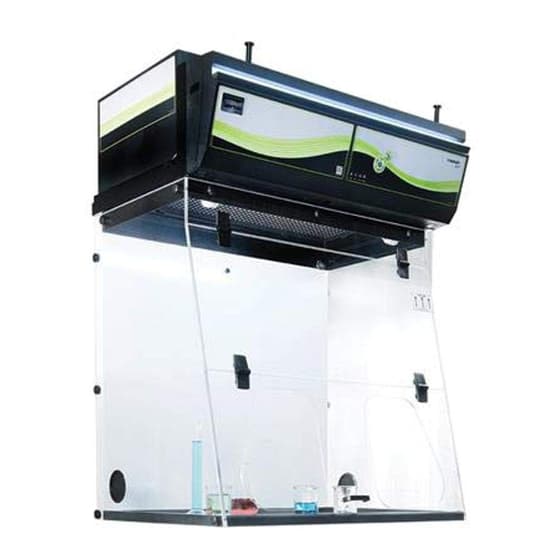
Thermo Scientific 1300 Series Class II Type A2 Biological Safety Cabinet
The Thermo Scientific 1300 Series is positioned as a market-leading solution for industrial laboratory containment thanks to robust HEPA filtration, comprehensive ergonomic features, and an extensive global service network that reduces downtime and total cost of ownership. Compared with the other cabinets on this list, its broad compliance certifications and legacy support make it a reliable choice for large-scale industrial deployments where predictable lifecycle costs and regulatory documentation matter, albeit typically at a premium price point.
Show More Biosafety Cabinets For Industrial Laboratory Containment
The LABstar Glovebox Workstation earns its best-in-class position by combining laboratory-grade inert atmosphere control with automated purification and modular benchtop ergonomics, delivering sub-ppm oxygen and moisture performance that industrial labs demand. Compared with the other units in this list, the LABstar trades a higher initial investment for tighter process control and lower long-term gas consumption through advanced recirculation and monitoring, making it the preferred choice where highest purity and reproducible results are critical.
Show More Glove Box Containment Enclosures For Industrial Labs
Hemco UniFlow Downdraft Table
The Hemco UniFlow Downdraft Table is a versatile, value-oriented benchtop downdraft solution well suited to general-purpose industrial labs and education settings, offering configurable sizes and straightforward installation. It competes strongly on price and adaptability against premium units like Fumex and Labconco, providing many labs a lower-cost path to compliant downdraft capture while sacrificing some of the specialized filtration or heavy-duty airflow features found in leaders on this list.
Show More Walk In Containment Enclosures For Industrial Laboratory Safety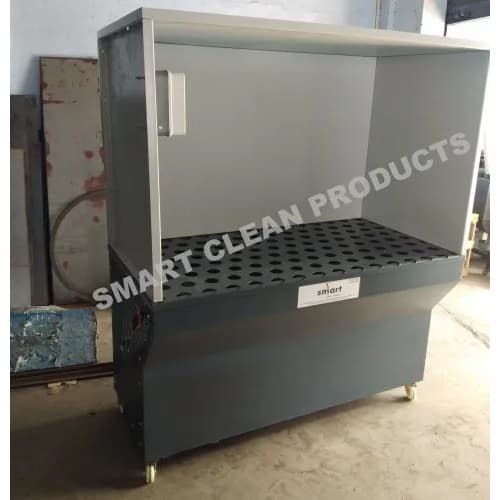
How Fume Hoods and Enclosures Protect People and Facilities
Scientific and industry guidance shows that properly selected and tested fume hoods and enclosures significantly reduce airborne exposures and contamination risk. Performance depends on hood type, airflow design, correct installation, routine certification, and user behavior. The following beginner-friendly points summarize the main evidence and practical takeaways.
Containment testing matters: Standardized tests such as ASHRAE 110 for chemical fume hoods and NSF/ANSI 49 for biosafety cabinets evaluate face velocity, tracer gas containment, and cross-contamination. Passing these tests indicates reliable performance under test conditions.
Filtration performance: HEPA filters commonly used in biosafety cabinets and ductless hoods capture at least 99.97 percent of particles 0.3 microns in diameter, which is critical for biological aerosols and fine particulates.
Airflow and sash position: Research and guidelines show that consistent face velocity and correct sash positioning are essential to maintain containment. Operator training and visible indicators reduce the risk of compromised protection.
Maintenance and certification: Regular professional certification and filter replacement are linked to sustained performance. Studies and industry experience emphasize that even high-spec hoods fail to protect when neglected.
Energy and sustainability: Newer designs and variable air volume (VAV) systems reduce building energy use compared with constant-volume systems, while offering maintained containment when balanced and certified.
Frequently Asked Questions
Which fume hood suits industrial chemical labs best?
Choose the Labconco Protector Premier Laboratory Hood for industrial chemical labs; it’s a ducted chemical safety fume hood with VAV-compatible airflow design and integrated airflow monitors for energy savings, rated 4.6.
What airflow control spec does Labconco Protector Premier use?
The Labconco Protector Premier Laboratory Hood supports VAV control with integrated airflow monitors and automatic sash response, designed to help with safety and energy savings; rating 4.6.
How does MBraun LABstar glovebox value compare price-wise?
The provided product data doesn’t include any prices for the MBraun LABstar Glovebox Workstation, so I can’t compare Canada value by cost; it’s rated 4.8 with sub-ppm oxygen and moisture control.
Does Baker SterilGARD e3 have HEPA filtration features?
Yes—Baker SterilGARD e3 Class II Type A2 Biological Safety Cabinet uses HEPA-filtered downflow and exhaust with advanced control systems for a stable sterile work environment; rating 4.7.
Conclusion
Whether you need a ducted hood for a chemistry lab, a certified biosafety cabinet for microbiology, or a modular enclosure for specialist workflows, the Canadian market in 2026 offers proven, energy-conscious options with strong local support. We hope this overview helped you find the right category and the top seven options. Use the site search to refine by certification, size, or price, or expand the search to see more models and local dealers.