

Top 5 Fixed Multi-Gas Detectors for Industrial and Automotive Laboratories in Canada — 2026
Published on Saturday, January 24, 2026
Fixed multi-gas detectors designed for industrial and automotive laboratory environments simultaneously monitor combinations of combustible gases, toxic gases and oxygen using modular sensor arrays, centralized monitoring and smart diagnostics. In Canada these systems are increasingly valued for their ability to meet provincial and national safety standards, integrate with SCADA and building management systems, and support wireless and Ethernet networks for scalable site-wide protection. Laboratory operators and safety managers prefer solutions that offer accurate, fast detection; robust sensor diagnostics and remote calibration; low total cost of ownership through predictive maintenance; and adaptable sensor banks that can add hydrogen, VOC or specialty sensors as automotive testing shifts toward electric and hydrogen technologies. Search-friendly attributes include clear product specifications, compliance notes (CSA and Health Canada guidance), and straightforward documentation for installers and maintenance teams.
Top Picks Summary
Honeywell Analytics Touchpoint Plus
The Touchpoint Plus is positioned as a top choice for industrial and automotive laboratories because it combines a user-friendly touchscreen controller with broad protocol and network integration, lowering system integration and commissioning costs. Compared with other entries, it delivers strong scalability and centralized visibility at a competitive total cost of ownership versus higher-cost, certification-focused units like the Dräger Polytron while offering more deterministic wired-network features than purely wireless solutions such as the Radius BZ1.

MSA Safety Ultima X5000
The Ultima X5000 is recognized for balanced performance and long-life electrochemical and catalytic sensors that reduce lifecycle costs for routine lab monitoring in industrial and automotive settings. It stands out against premium, high-certification rivals like the Polytron by offering robust accuracy and lower acquisition and maintenance expenses, while providing a proven, field-serviceable platform that integrates readily with facility safety systems.
Dräger Polytron 8000
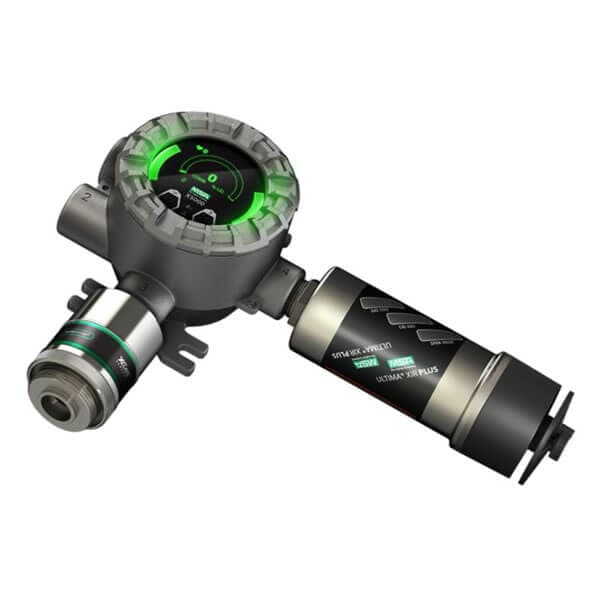
The Polytron 8000 is the premium, safety-certified option favored where SIL-rated reliability, hazardous-area robustness, and the highest accuracy are required in automotive and industrial laboratory environments. Compared to other products in this list it commands a higher upfront price but justifies that cost with advanced sensor diagnostics, certified performance for safety-critical applications, and reduced risk exposure for regulated test environments.

Industrial Scientific Radius BZ1
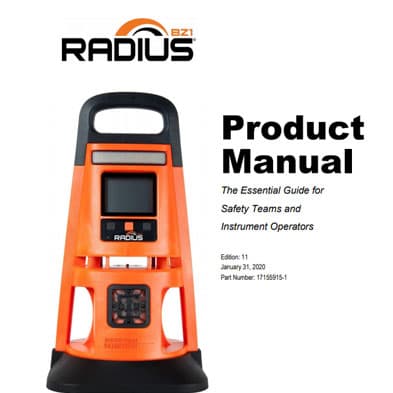
The Radius BZ1 excels for laboratories that need rapid, low-infrastructure deployment thanks to its wireless mesh and cloud-enabled architecture, cutting installation and cabling costs for multi-point monitoring across test bays and engine rooms. Versus traditional wired detectors like the Polytron or Touchpoint Plus, the Radius reduces capital and retrofit costs and accelerates coverage expansion while still delivering enterprise-grade alarms and data integration.
BW Technologies by Honeywell IntelliDoX
The IntelliDoX system is best-in-class for operational efficiency, offering automated bump-test, calibration and asset-management workflows that substantially lower routine maintenance labor and documentation overhead in busy industrial or automotive labs. While it complements fixed detectors from other manufacturers, its dock-based automation provides a clear financial advantage in reduced downtime and compliance effort when managing large fleets of detectors.

Research and evidence supporting fixed multi-gas detection
Scientific studies, standards bodies and industry white papers converge on the same core benefits of modern fixed multi-gas detectors: faster hazard detection, fewer false alarms through signal processing and sensor fusion, and reduced downtime thanks to remote diagnostics and predictive maintenance. Health and safety organizations emphasize continuous monitoring in confined or complex lab spaces where gas hazards can develop quickly. For automotive laboratories, recent research highlights the need for hydrogen-capable sensors and tools that detect a wider range of VOCs and combustion byproducts produced during vehicle testing and EV charging scenarios.
Improved incident response: Continuous, networked detectors provide earlier warning and centralized alarms so staff can respond faster than with periodic manual checks.
False alarm reduction: Sensor algorithms and cross-checking between sensor types lower nuisance alarms and help prioritize true events.
Predictive maintenance: Remote diagnostics and trend data enable proactive sensor calibration and replacement, reducing unexpected downtime and maintenance costs.
Sensor type guidance: Electrochemical sensors are commonly used for toxic gases like CO and NO2; catalytic bead and infrared sensors cover combustible gases and LEL; and optical or MEMS sensors are increasingly used for hydrogen and certain VOCs.
Standards and guidance: Compliance with recognized standards and following guidance from Health Canada, CSA Group, and published industry studies supports safer installations and regulatory acceptance.
Frequently Asked Questions
Which detector should I pick for automotive labs?
For automotive and industrial laboratory setups, Honeywell Analytics Touchpoint Plus is a strong choice because it combines a touchscreen operator interface with standard outputs (4–20 mA, relays, Modbus/Modbus TCP) to support easier integration and expansion; it’s rated 4.6.
What sensor and output options does Dräger Polytron 8000 have?
Dräger Polytron 8000 is an explosion-protected transmitter with interchangeable gas sensors and precise outputs including 4–20 mA plus HART/Modbus options, along with on-board diagnostics for sensor health; it’s rated 4.6.
How does MSA Ultima X5000 price compare to Honeywell Touchpoint Plus?
The provided data lists no prices for MSA Safety Ultima X5000 or Honeywell Analytics Touchpoint Plus, so I can’t compare value by cost; both models’ exact average ratings are 4.6 and 4.6, respectively.
Is Honeywell Touchpoint Plus scalable for multiple fixed gas inputs?
Yes—Honeywell Analytics Touchpoint Plus supports multiple fixed gas inputs with standard integration outputs (4–20 mA, relays, Modbus/Modbus TCP) and is designed for continuous multi-gas monitoring with scalable system expansion; warranty duration isn’t provided in the data.
Conclusion
In the Canadian context, fixed multi-gas detectors are essential for industrial and automotive laboratories that need continuous, accurate monitoring and scalable network integration. The top options reviewed here—Honeywell Analytics Touchpoint Plus, MSA Safety Ultima X5000, Dräger Polytron 8000, Industrial Scientific Radius BZ1, and BW Technologies by Honeywell IntelliDoX—cover a range of priorities from centralized control and modular sensor arrays to wireless mesh deployment and automated calibration. For most lab environments balancing reliability, diagnostics, and broad sensor support, the Honeywell Analytics Touchpoint Plus stands out as the best overall choice on this list. We hope you found what you were looking for; use the site search to refine by sensor type, network capability, or budget to expand or narrow your options.