

Top 7 Performance-Treated Lab Coats in Canada for 2026
Performance treated lab coats are laboratory garments finished with functional treatments such as flame resistance, antimicrobial coatings, durable water repellency, and electrostatic dissipative properties. In Canada these lab coats are increasingly popular with research institutions, clinical laboratories, industrial testing facilities, and advanced manufacturing shops because they extend protection against common workplace hazards while preserving breathability, mobility, and simple care. Buyers favor treated lab coats that balance verified safety performance with comfort, easy laundering, sustainable treatment chemistry, and compliance with recognized test methods and workplace requirements. In 2026 Canadian customers are also prioritizing PFAS-free repellents, visible certifications, and supplier transparency, which influence purchasing decisions alongside fit, pocketing, and durability.
Inception's AI took the time to understand this market in Canada · · How we pickWe may earn a commission on purchases. It never affects our rankings.
Top Picks Summary
Workrite's FR/CP lab coat differentiates itself by combining flame resistance with chemical splash protection, reducing the need to buy separate specialty garments and lowering total procurement for multi-hazard labs. Technically it competes with DuPont's premium comfort and Bulwark's durability by offering broader hazard coverage at a value-driven price point suited for facilities managing both thermal and limited chemical risks.
Show More Flame and Heat Protective Laboratory Coats
Mobb's antimicrobial lab coat earns a best-in-class position for combining a contemporary, tailored fit with a durable antimicrobial fabric finish that balances protection and professional appearance for laboratory settings. It delivers strong value — more fashion-forward than Landau and often less costly than Barco — while providing a performance-oriented alternative to budget-focused options like Cherokee and the more barrier-oriented Meta.
Show More Antimicrobial Laboratory Coats
We may earn a commission on purchases. It never affects our rankings.
$35.00CAD
Dickies Snap Front Lab Coat is the budget-oriented, high-turnover choice that offers DWR-treated fabrics and a snap closure for fast don/doff and easy laundering. It lacks the certified FR/chemical splash capabilities of Bulwark and Workrite but provides the most cost-effective solution for routine wet-splash control and frequent replacement cycles where regulatory FR is not required.
Show More Durable Water Repellent Laboratory Coats
Estimated$50 – $110
DuPont Tyvek 400 lab coats deliver breathable, spunbonded polyethylene protection that is highly effective for chemical splash containment and particulate control while remaining lightweight and low-cost. Financially and practically, Tyvek coats are a strong choice for large-volume, single-use scenarios because they are cheaper per unit and more comfortable than heavier laminated coats, though they do not match laminated garments for resistance to aggressive solvents or prolonged contact. Compared with premium laminated products like Ansell AlphaTec, Tyvek favors disposability, comfort and affordability over the highest solvent-barrier performance.
Show More Chemical Splash and Solvent Resistant Laboratory Coats
We may earn a commission on purchases. It never affects our rankings.
$255.32CAD
Carhartt Flame-Resistant Traditional Twill Coverall
Carhartt's flame-resistant twill coverall brings rugged, workwear-grade protection to lab settings where heavy-duty resistance to oils, fuels and mechanical wear matters; its dense twill weave and proven durability make it well suited for field labs and maintenance-heavy tasks. While bulkier and often pricier than streamlined lab coats from Bulwark or Pioneer, Carhartt delivers superior abrasion life and longer service intervals, which can be financially advantageous where replacement costs and downtime are significant.
Show More Oil and Fuel Resistant Laboratory Coats
Desco's Statshield Smock is a long-standing market leader for ESD lab garments, prized for predictable compliance with industry ESD standards and a broad distribution network that keeps unit costs competitive for large teams. Compared with premium coats like SCS and StaticTech it generally has a lower upfront price and excellent availability, though it trades off some of the advanced conductive yarn engineering and extended wash-life those higher-end coats provide.
Show More Electrostatic Dissipative Laboratory Coats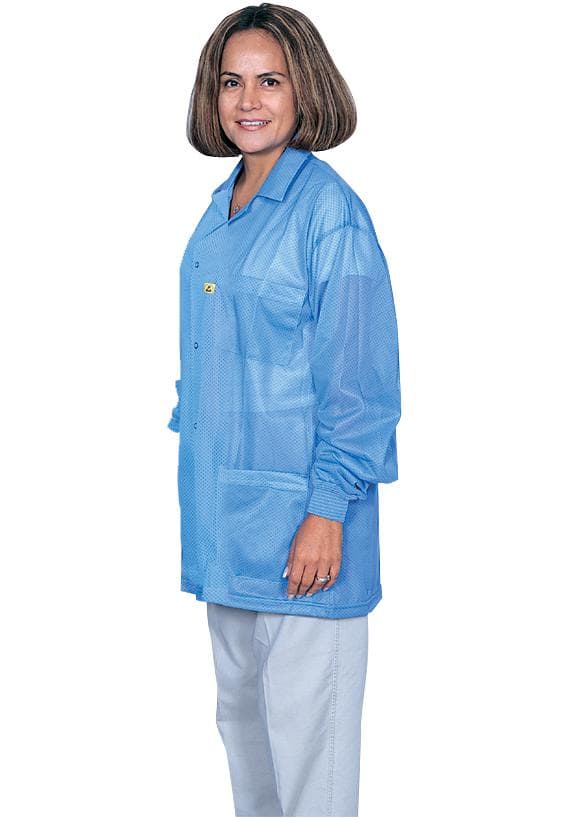
Estimated$60 – $110
The Red Kap KT30 Durable Lab Coat is positioned as a value-focused, heavy-duty option that balances abrasion resistance with an affordable price, making it ideal for labs needing frequent garment replacement. It uses reinforced seams and durable twill designed to resist snags and minor punctures, offering better cost-per-wear than premium brands like Carhartt while lacking the specialized flame resistance of Bulwark. For facilities on tight budgets that still require enhanced durability, the KT30 delivers practical protection without the regulatory compliance premium.
Show More Abrasion and Puncture Resistant Laboratory Coats
We may earn a commission on purchases. It never affects our rankings.
$46.48CAD
What research and standards say about performance finishes
Scientific studies and industry test methods support the protective and functional benefits of performance finishes when they are applied and certified correctly. Laboratory and field evaluations typically measure reductions in microbial contamination, rating for flame resistance, repellency to liquids, and retention of performance after repeated laundering. While treatments can significantly reduce specific risks, they should be used as part of a layered protection strategy and according to workplace safety guidance.
Antimicrobial finishes: Laboratory tests (for example methods aligned with ISO or AATCC protocols) show that antimicrobial treatments can lower surface microbial counts and reduce odor between launderings. These finishes are not a substitute for cleaning protocols, but they can reduce contamination risk during wear.
Flame resistance: Flame-resistant finishes and inherently FR fibers are evaluated by established test methods (commonly ASTM, ISO, or industry standards). Properly certified FR garments provide predictable thermal protection and reduce ignition and burn propagation in many lab and industrial scenarios.
Durable water repellency (DWR): Water-repellent coatings are assessed by spray and contact angle tests. Recent research and market trends emphasize fluorine-free DWR chemistries to avoid environmental persistence associated with some PFAS-based finishes while still delivering practical liquid beading and stain resistance.
Durability and laundering: Performance finishes vary in wash-fastness. Test protocols simulate repeated laundering to ensure finishes retain efficacy through typical maintenance cycles. Choosing products with documented post-laundry performance reduces replacement frequency and total cost of ownership.
Safety context: Peer-reviewed and industry literature emphasize that treated garments are one element of workplace controls. Engineering controls, safe procedures, and appropriate PPE layering remain essential for comprehensive risk management.
Frequently Asked Questions
Which lab coat should I buy for flame resistance?
Choose the Bulwark Nomex IIIA Flame-Resistant Lab Coat if you need inherently flame‑resistant Nomex IIIA fabric for reliable thermal protection; it has an average rating of 4.6 and is built for repeated wear and laundering.
What specific treatment does the Dickies snap front coat use?
The Dickies Snap Front Lab Coat uses a DWR-treated, durable water-resistant finish for routine lab spills, and it features a snap-front closure for quick don/doff; it has an average rating of 4.4.
Is Landau antimicrobial coat worth the lower price?
Yes for basic antimicrobial protection: the Landau Antimicrobial Lab Coat costs $40.04 and uses a poly/cotton blend with an antimicrobial finish plus reinforced seams and practical pockets; it’s rated 4.4.
Does Bulwark Nomex IIIA include arc and flash fire resistance?
Yes—the Bulwark Nomex IIIA Flame-Resistant Lab Coat is designed for lab environments with focus on arc and flash fire resistance; it uses inherently flame‑resistant Nomex IIIA fabric and is rated 4.6.
Conclusion
Performance-treated lab coats offer a practical way for Canadian labs and industrial teams to raise everyday protection without sacrificing comfort or convenience. We hope this guide helped you narrow your choices for 2026. If you did not find exactly what you need, use the search to refine by feature, certification, or material, or expand your search to compare related protective garments.