

Best Cryogenic Sectioning Systems in Canada 2026: Top 5 Cryostats for Precision Sectioning
Cryogenic sectioning systems freeze samples to low temperatures before sectioning to preserve microstructure and prevent smearing in polymers, composites, and soft metals. Popular for failure analysis and delicate material handling where low deformation is critical, these cryostats are essential in materials science, battery research, aerospace, medical device inspection, and industrial quality control. In Canada, demand for cryogenic sectioning reflects growing activity in battery materials, additive manufacturing, and composite failure analysis. Canadian buyers prioritize reliability, local service and warranty coverage, precise temperature control, ease of use, and compatibility with imaging workflows. Vendors that offer robust customer support and fast parts supply in Canada tend to be favored by university labs, testing houses, and industrial R and D groups.
Inception's AI took the time to understand this market in Canada · · How we pickWe may earn a commission on purchases. It never affects our rankings.
Top Picks Summary
Leica CM3050 S Cryostat
The Leica CM3050 S Cryostat is positioned as a best-in-class cryogenic sectioning system for routine histology and research labs thanks to its durable build, user-friendly controls, and consistent temperature stability that reduce rework and waste. Compared with higher-automation rivals like the Thermo CryoStar NX70, the CM3050 S delivers a lower total cost of ownership through simplified serviceability and long-lived mechanical reliability, while outperforming budget alternatives on precision and sample preservation.

Estimated$55,000 – $75,000
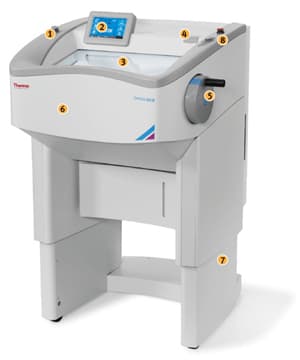
Thermo Scientific CryoStar NX70
The CryoStar NX70 is a market-leading cryostat focused on automation, operator ergonomics, and throughput, making it attractive for high-volume clinical and research settings where time and repeatability are premium. Versus more manual-focused instruments such as the Leica CM3050 S or lower-cost Bright models, the NX70's advanced control systems and workflow features justify a higher upfront investment by shortening run times and reducing operator variability, improving long-term productivity.
Estimated$50,000 – $70,000
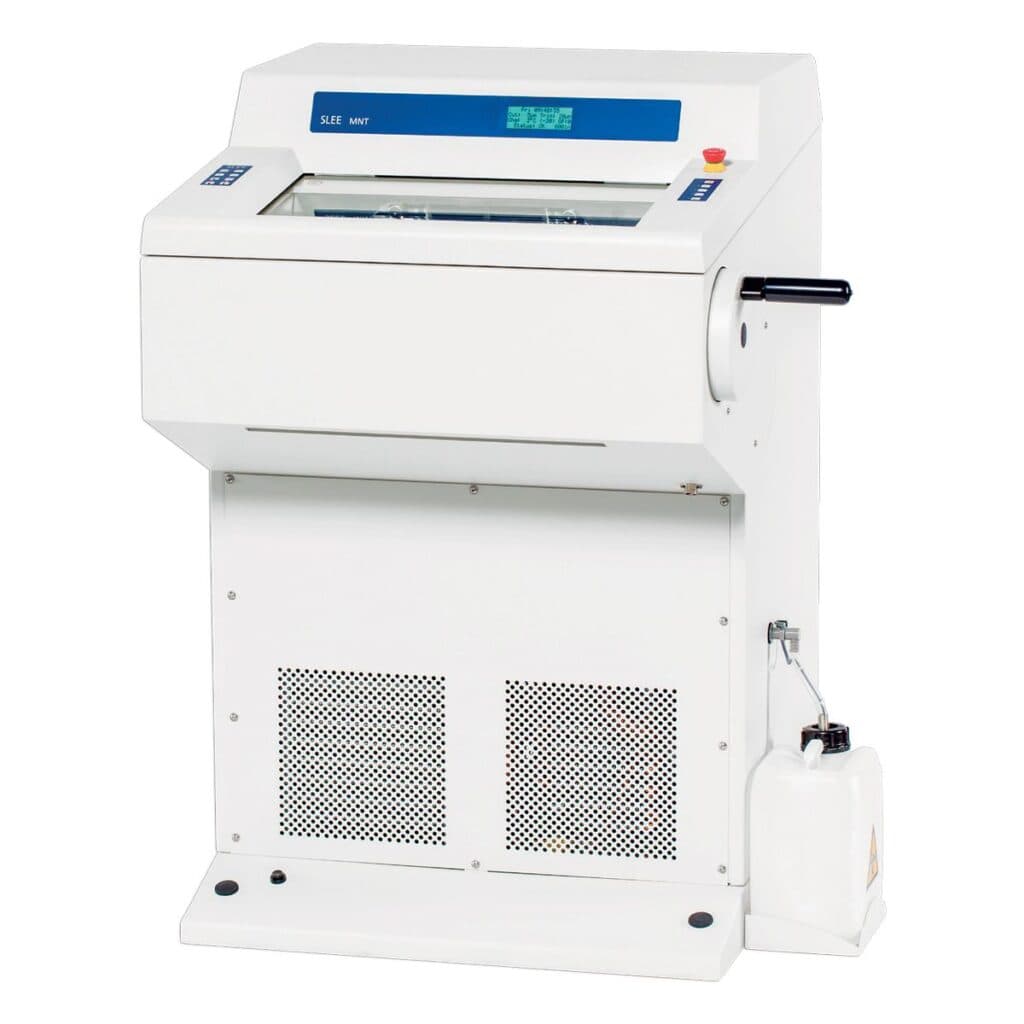
SLEE MNT Cryostat
The SLEE MNT Cryostat combines precise temperature control and low-vibration mechanics typical of German engineering, delivering high-quality sections at a competitive price point for specialized labs. It sits between premium automated systems and entry-level machines: technically superior to many budget models for cut consistency, but offering a more attractive capital cost and easier maintenance than some market-leading, feature-rich competitors.
Estimated$45,000 – $65,000
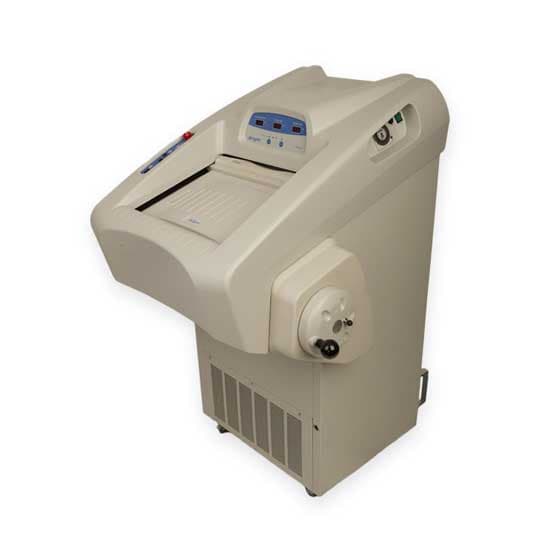
Bright OTF5000 Cryostat
The Bright OTF5000 Cryostat is a cost-conscious choice that provides the core cryogenic sectioning capabilities required by small clinical or teaching labs, with a compact footprint and straightforward controls that minimize training time. While it lacks the advanced automation and high-throughput features of Thermo or Leica flagship units, its lower purchase price and modest operating costs make it an economical option where budget constraints outweigh the need for premium performance.
Estimated$35,000 – $55,000
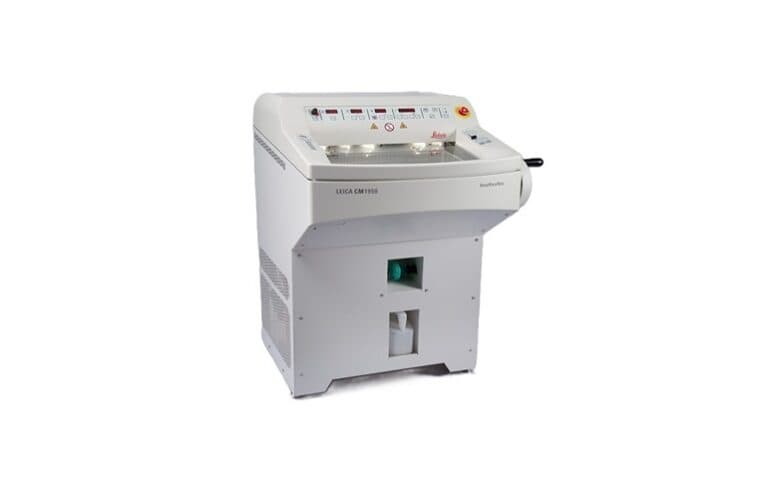
Leica CM1950 Cryostat
The Leica CM1950 Cryostat is tailored for labs that prioritize precision and workflow efficiency, offering enhanced ergonomics and optional automation that increase sample throughput without sacrificing section quality. Compared to the more basic CM3050 S, the CM1950 delivers incremental technical advantages—faster cycle times and advanced user interfaces—that can deliver better financial returns in high-volume settings, although at a higher acquisition cost than entry-level brands like Bright.
Estimated$65,000 – $90,000
Why Cryogenic Sectioning Works: Research and Practical Evidence
Cryogenic sectioning reduces plastic deformation and smear artifacts by stiffening soft or ductile materials at low temperatures, enabling thin, artifact-free slices for microscopy and analysis. Peer-reviewed research and microscopy practice guides show consistent improvements in morphological preservation and edge fidelity for polymers, composites, biological samples, and many soft metals when sections are prepared under controlled cryogenic conditions. For beginners, the key idea is that lowering temperature increases material stiffness and reduces ductile tearing and smearing that happen at room temperature.
Reduced deformation: Studies and lab reports show cryo-sectioning significantly lowers smear and pull-out compared with room-temperature sectioning for polymers and soft alloys.
Improved microstructure preservation: Freezing preserves phase boundaries, fiber-matrix interfaces, and delicate coatings for clearer imaging by optical and electron microscopy.
Temperature control matters: Consistent section quality requires precise setpoints and stable cooling; many modern cryostats offer digital control down to -50 to -196 degrees C depending on method.
Compatibility with imaging: Cryo-prepared sections provide better contrast and fewer preparation artifacts for SEM, TEM, and high-resolution optical microscopy.
Throughput and reproducibility: Automated specimen advance and digital controls improve repeatability in failure analysis or routine QA labs.
Safety and handling: Proper cryogenic technique and training reduce risks associated with low-temperature consumables like liquid nitrogen or cooled gas systems.
Frequently Asked Questions
Which cryostat should I choose for routine histology work?
Choose the Leica CM3050 S Cryostat for routine histology and research labs because it offers robust temperature control for stable -50°C to ambient operation and an intuitive touchscreen with programmable protocols, rated 4.6.
Does the Thermo Scientific CryoStar NX70 cut to microns?
Yes—the Thermo Scientific CryoStar NX70 has a precision microtome drive with fine section control down to single-micron increments, and it’s rated 4.5.
What price difference do I get with SLEE MNT Cryostat?
The data provided doesn’t list a price for the SLEE MNT Cryostat, but it does say it has a modular chamber for accessory swaps and a compact footprint, rated 4.4.
Is the Leica CM3050 S Cryostat good for high throughput?
Yes—the Leica CM3050 S Cryostat supports high-throughput clinical workflows with a large specimen table and an advanced anti-roll plate, and it’s rated 4.6.
Conclusion
In Canada the top cryogenic sectioning options for 2026 bring a range of choices for different budgets and lab needs. The Leica CM3050 S Cryostat is a strong, reliable performer for routine lab work. The Thermo Scientific CryoStar NX70 is notable for modern automation and workflow integration. The SLEE MNT Cryostat offers robust build quality and service-friendly design. The Bright OTF5000 Cryostat is a cost-effective choice for laboratories balancing price and features. The Leica CM1950 Cryostat stands out as the best overall choice for labs that need advanced digital control, high throughput, and broad application flexibility. We hope you found the guidance you were looking for; use the search to refine by price, temperature range, or supplier network to expand or narrow your options in Canada.