

Canada's Top 5 Precision Microtomes for Materials — 2026
Precision microtomes for materials are specialized instruments engineered for ultra-thin sectioning of metals, ceramics, and composites for microscopy and microanalysis. In Canada, demand is driven by university research labs, industrial R&D in aerospace, automotive and mining, and quality control facilities requiring repeatable, submicron-thickness sections that enable reliable SEM, TEM and microprobe results. Current market trends emphasize motorized control for consistent automated cuts, interchangeable blades for broad material compatibility and cost efficiency, and submicron thickness repeatability to support high-resolution imaging and accurate quantitative analysis. Canadian buyers also prioritize serviceability, local distributor support, calibration and documentation to meet regulatory and traceability requirements.
Inception's AI took the time to understand this market in Canada · · How we pickWe may earn a commission on purchases. It never affects our rankings.
Top Picks Summary
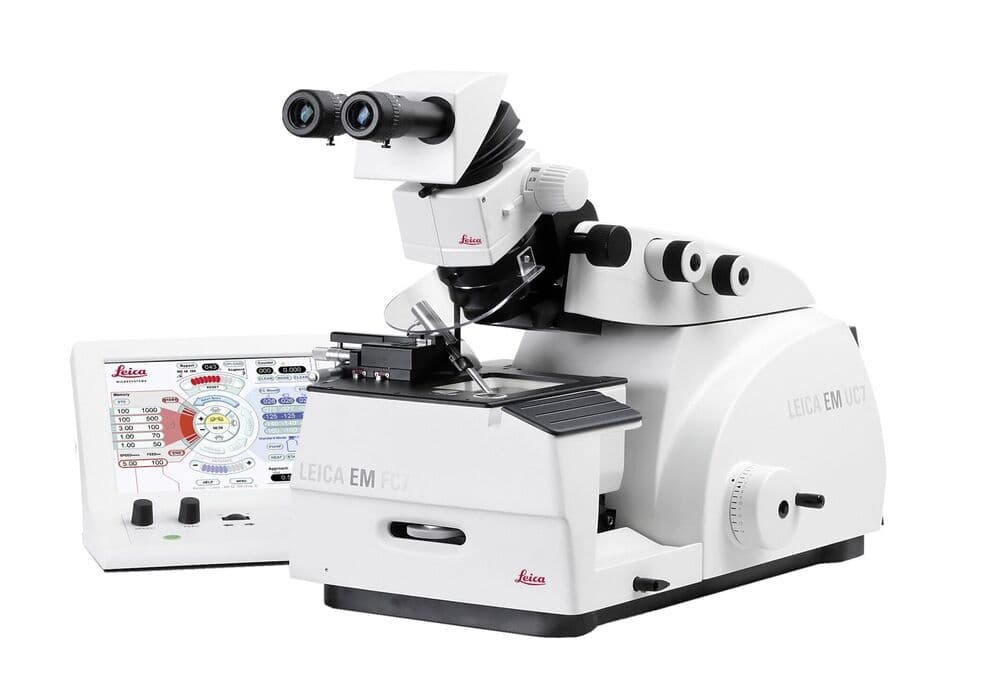
Leica EM UC7 Ultramicrotome
The Leica EM UC7 Ultramicrotome is presented as the best-in-class choice for the Precision Microtomes for Materials use case because it delivers nanometer-scale sectioning accuracy, motorized repeatability and advanced vibration control that produce consistently superior ultrathin sections for TEM and high-resolution analysis. Compared with the other instruments on this list it trades a higher upfront cost for unmatched automation, stability and integrated controls, making it the top selection when ultimate thin-section quality and operator productivity justify the investment. For labs that need the finest structural preservation and the tightest tolerances, the EM UC7 outperforms saws and abrasive cutters that are better suited to thicker or harder sample preparation tasks.
RMC PowerTome PT-XL Ultramicrotome
The RMC PowerTome PT-XL Ultramicrotome is a market-leading, robust ultramicrotome that balances high-precision sectioning with long-term mechanical reliability, making it a strong choice for routine materials labs in the Precision Microtomes for Materials context. It is generally more cost-effective and modular than the Leica EM UC7 while still delivering excellent thin-section quality, so laboratories prioritizing uptime, easier maintenance and lower total cost of ownership often choose the PT-XL. Compared with cutting-focused systems on this list, the PT-XL provides the finer section thicknesses required for electron microscopy even if it lacks some of Leica’s highest-end automation features.

Estimated$60,000 – $95,000
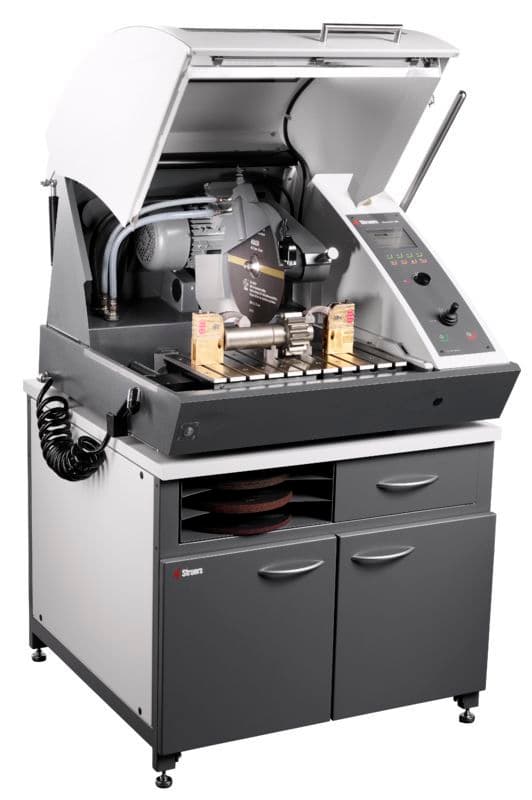
Struers Accutom-100
The Struers Accutom-100 is a precision abrasive cutting and trimming system tailored to materials preparation where precise, low-deformation cuts and high throughput are required in the Precision Microtomes for Materials workflow. Unlike ultramicrotomes, the Accutom-100 is optimized for larger, harder samples and removes bulk material efficiently with excellent surface finish, reducing downstream grinding and polishing time and often lowering per-sample preparation costs for metallography and failure analysis. Financially and technically it sits between high-end microtomes and linear saws, delivering strong productivity gains for labs that need accurate sectioning of tough specimens rather than ultrathin sections for TEM.
Estimated$20,000 – $40,000
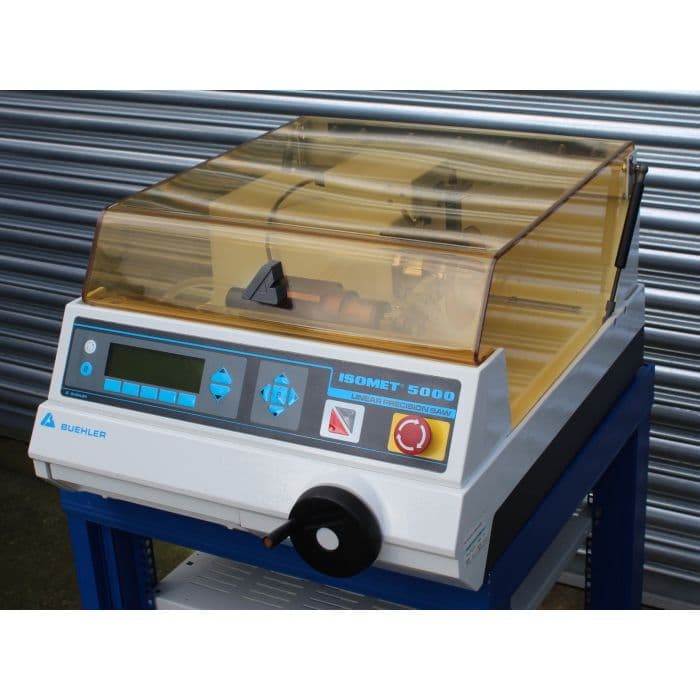
Buehler IsoMet 5000 Linear Precision Saw
The Buehler IsoMet 5000 Linear Precision Saw is a high-throughput linear saw engineered to minimize deformation while cutting hard or heterogeneous materials, making it a practical backbone tool in the Precision Microtomes for Materials toolkit for producing reproducible slices and fast prep of thick sections. Its linear drive and blade technology give it a technical advantage for rapid, low-damage sectioning of dense samples compared with rotary or abrasive systems, and it is typically more cost-efficient than buying an ultramicrotome when true ultrathin sectioning is not required. When paired with finer cutting or polishing equipment, the IsoMet 5000 provides excellent throughput and predictable operating costs for production or QA environments.
Allied High Tech TechCut 5
The Allied High Tech TechCut 5 is a low-speed diamond saw that fills a niche in the Precision Microtomes for Materials workflow by offering gentle, precise cutting for brittle or delicate materials at a comparatively modest price. It is technically advantaged for fragile samples where heat or mechanical stress must be minimized, and it is often a lower-cost alternative to the heavier-duty Buehler IsoMet or Struers cutters for labs on tighter budgets. While it cannot produce the ultrathin sections of the Leica or RMC ultramicrotomes, the TechCut 5 is an economical, easy-to-operate option for pre-sectioning and for materials that require minimal subsurface damage.

Estimated$8,000 – $18,000
What research says and why it matters
Peer-reviewed work in materials science and microscopy emphasizes that reproducible, ultra-thin sections reduce artefacts, improve signal-to-noise in imaging, and lower beam damage during electron microscopy. Automated motorized stages and precise thickness control yield better repeatability across batches, which improves comparability of measurements in multi-site studies and industrial quality control. Interchangeable and purpose-specific blades or cutters reduce cross-contamination and extend instrument uptime, which is important for labs processing diverse materials.
Submicron thickness improves TEM and SEM imaging by reducing multiple scattering and enabling clearer internal structure observation.
Motorized, programmable control increases reproducibility and throughput, reducing operator-to-operator variability documented in microscopy methods papers.
Interchangeable blades and blade holders reduce sample damage and contamination, helping maintain measurement integrity for microanalysis techniques like EDS and WDS.
Precision sectioning lowers the risk of introducing mechanical deformation, which improves accuracy in grain-size, phase-distribution and interface studies.
Validated workflows and routine calibration are recommended by standards bodies and improve cross-lab consistency for regulated industries.
Frequently Asked Questions
Which microtome should my lab choose for serial TEM?
Choose the Leica EM UC7 Ultramicrotome: it’s designed for stable ultramicrotomy with motorized, low-vibration repeatability and programmable stroke for serial sectioning, rated 4.6.
What spec matters most on the RMC PowerTome PT-XL?
The RMC PowerTome PT-XL Ultramicrotome uses a robust, high-torque drive optimized for consistent, vibration-minimized sectioning, with extensive motorization and programmable sequences, rated 4.5.
How does the Struers Accutom-100 price compare for throughput?
The Struers Accutom-100 is rated 4.4 and is a programmable abrasive cutting and trimming system for ceramics, composites and brittle materials, with integrated coolant management to minimize thermal damage and repeatable cut-to-cut accuracy.
Does the Leica EM UC7 support cryo or tilt accessories?
Yes—the Leica EM UC7 Ultramicrotome supports a wide range of accessories including cryo and tilt attachments for specialized materials workflows; rating is 4.6.
Conclusion
In summary, precision microtomes and related cutting systems make ultra-thin sectioning of metals, ceramics and composites practical and repeatable for Canadian research and industry. The five standout options covered here are the Leica EM UC7 Ultramicrotome, RMC PowerTome PT-XL Ultramicrotome, Struers Accutom-100, Buehler IsoMet 5000 Linear Precision Saw, and Allied High Tech TechCut 5. For most labs focused on ultra-thin TEM and high-resolution microanalysis, the Leica EM UC7 Ultramicrotome is the best overall choice for submicron repeatability and advanced motorized control, while the other systems excel for heavy-duty cutting, value or specific material workflows. I hope you found what you were looking for — you can refine or expand your search using the site search to compare specifications, dealers and service options across Canada.