

Laboratory Digestion Systems in Canada 2026: Top 5 Microwave and Thermal Units for Trace Analysis
Published on Saturday, January 24, 2026
Microwave and thermal laboratory digestion systems are essential for aggressive matrix breakdown prior to elemental and chemical analysis of automotive and industrial samples. In Canada, demand for high-performance digestion solutions is driven by stronger regulatory scrutiny, expanded testing for electric vehicle batteries and critical minerals, and growing needs for rapid, contamination free workflows for trace-level ICP-MS and ICP-OES analysis. Modern systems emphasize closed vessel safety to contain aggressive reagents and volatile analytes, rapid cycle times to increase throughput, and workflow designs that minimize cross contamination for reliable low-level detection. Canadian laboratories and service providers prioritize equipment with proven safety features, local support and service, energy efficiency, and easy integration with laboratory information management systems and automation to meet both environmental and industrial clients’ needs.
Top Picks Summary
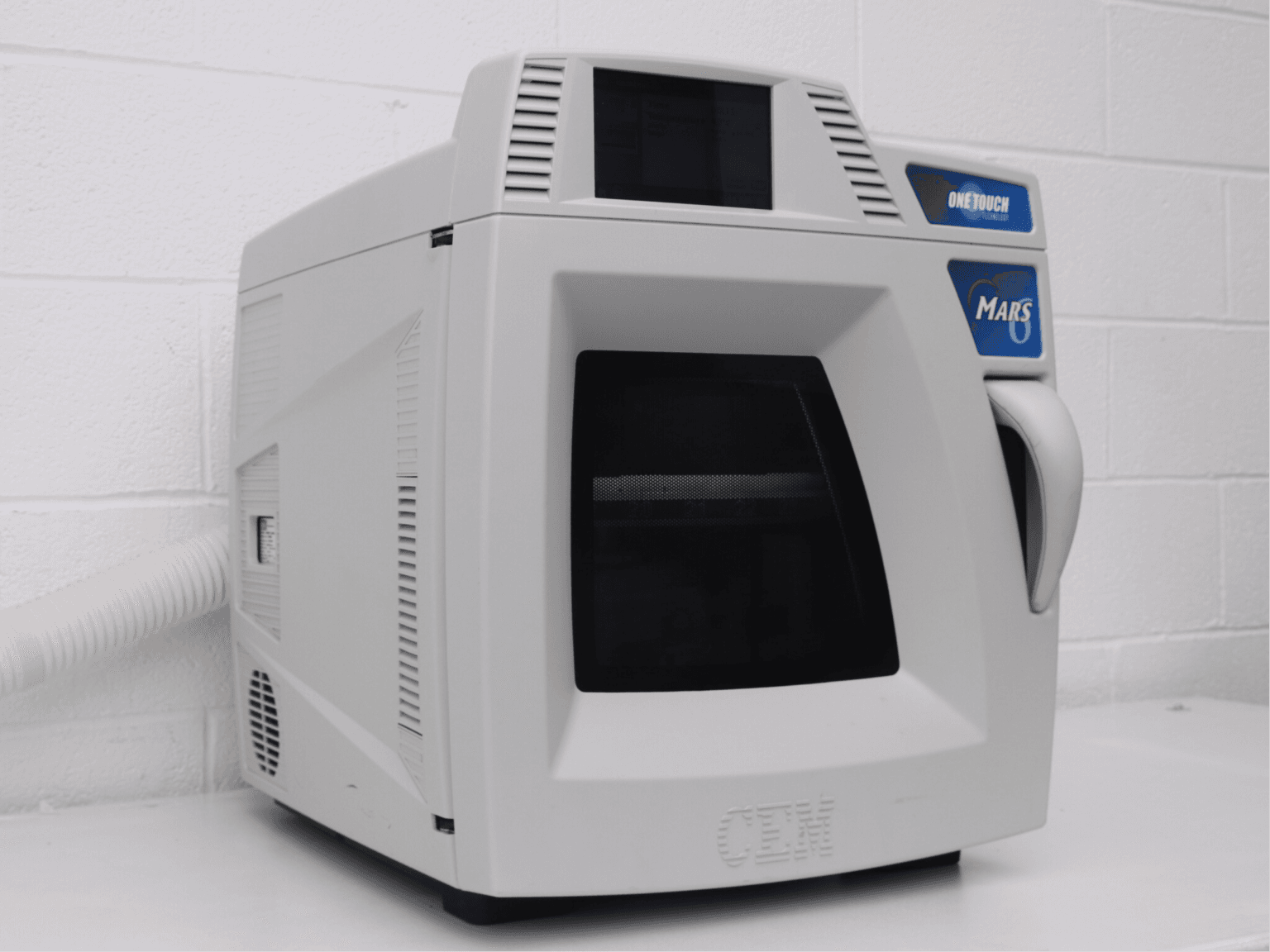
CEM MARS 6
CEM's MARS 6 is widely regarded as best-in-class for routine and high-throughput laboratory digestion because of its intuitive software, reproducible temperature and pressure control, and flexible rotor options that lower per-sample consumable costs. Compared with the higher-pressure Anton Paar Multiwave 7000 and Berghof speedwave XPERT it emphasizes faster cycle times and a lower total cost of ownership, while remaining more user-friendly than some systems like Milestone Ethos UP and Analytik Jena TOPwave.
Anton Paar Multiwave 7000
Anton Paar Multiwave 7000 positions as a market leader for demanding, high-pressure applications thanks to robust vessel materials and precise multi-mode microwave delivery that enable digestion of the most difficult matrices. Compared to the CEM MARS 6 and Milestone Ethos UP it offers greater flexibility for extreme protocols, and its modular design can justify a higher upfront investment by reducing downtime and expanding method coverage.

$90,000 – $140,000
Milestone Ethos UP
Milestone Ethos UP is notable for balancing throughput and workflow automation, offering accessory options that make it easy for labs to scale from manual to fully automated microwave digestion. It typically sits between the CEM and Anton Paar offerings by delivering strong performance for routine environmental and trace-metal analyses while keeping consumable and maintenance costs moderate compared with some higher-end, high-pressure systems.

$80,000 – $130,000
Analytik Jena TOPwave
Analytik Jena TOPwave distinguishes itself with a compact footprint and straightforward operation, making it attractive for labs that prioritize space and simplified maintenance while still needing reliable closed-vessel digestion for common sample types. Versus speed-focused options like the CEM MARS 6 and the extreme-capability systems from Anton Paar and Berghof, the TOPwave is often chosen by facilities seeking dependable results with lower capital expenditure and shorter operator training time.
![[DW]USED 8日保証 analytik Jena TOPwave CX100 マイクロ波試料分解装置 50Hz 単相200V 電源コード ...](https://cdn.inceptionaiapp.com/products/analytik-jena/analytik-jena-topwave.webp)
$50,000 – $90,000
Berghof speedwave XPERT
Berghof speedwave XPERT is a market leader for aggressive, high-throughput digestion tasks, prized for rugged construction and advanced pressure/temperature control that handle the most challenging matrices. It competes closely with Anton Paar for extreme applications and is typically selected by labs willing to accept a higher initial investment and consumable cost in exchange for expanded method capability and throughput.

$100,000 – $160,000
Why microwave and thermal digestion work: evidence and best practices
The benefits of microwave and controlled thermal digestion are supported by validated methods and peer reviewed studies that document faster, more complete digestion and improved recoveries for metals and other analytes in difficult matrices. Closed vessel microwave digestion is widely accepted for trace analysis because it limits volatilization and external contamination while achieving higher temperatures and pressures than open methods. Many accredited laboratories follow validated methods such as EPA Method 3052 for microwave assisted acid digestion and comparable validated protocols when developing workflows for soil, sediment, battery, and industrial samples. Adoption of automated and pressure-controlled systems also reduces operator exposure to hazardous reagents and improves reproducibility across large sample batches.
EPA Method 3052 and similar validated protocols confirm microwave assisted acid digestion is effective for many difficult matrices and supports accurate trace metal analysis.
Peer reviewed comparisons show microwave and pressure controlled thermal digestion often deliver higher recoveries and shorter cycle times than conventional hotplate or open vessel digestion.
Closed vessel systems reduce loss of volatile elements and lower cross contamination risk, improving detection limits for ICP-MS and ICP-OES.
Automation and programmatic control reduce operator variability and accelerate throughput for high volume testing in automotive and industrial labs.
Using validated methods and ISO/IEC 17025 accredited practices helps ensure data quality and regulatory acceptance in Canadian and international testing programs.
Frequently Asked Questions
Which digester should I choose for routine high throughput?
CEM MARS 6 suits routine, high-throughput labs best because it has intuitive software, reproducible microwave temperature and pressure control, and flexible rotor options for low- to high-throughput workflows (rating 4.6).
What exact capability does Anton Paar Multiwave 7000 provide?
Anton Paar Multiwave 7000 is built for very high sample throughput with heavy-duty rotor configurations, plus robust pressure vessels and controlled multi-mode microwave energy for demanding matrices; it’s rated 4.5.
How does CEM MARS 6 value compare to other options?
The provided data doesn’t list any prices for CEM MARS 6, Anton Paar Multiwave 7000, or Milestone Ethos UP, so I can’t compare value by cost; I can only confirm CEM MARS 6 rating 4.6 and its flexible rotor options.
Is Milestone Ethos UP better for scaling automation?
Milestone Ethos UP is a good fit when you want workflow automation scaling because it has a modular design with accessory options to move from manual to fully automated microwave digestion; it’s rated 4.4.
Conclusion
In Canada the leading laboratory digestion choices strike a balance of safety, throughput and contamination control. The CEM MARS 6, Anton Paar Multiwave 7000, Milestone Ethos UP, Analytik Jena TOPwave, and Berghof speedwave XPERT all deliver industry grade performance for challenging automotive and industrial matrices. For most Canadian labs the CEM MARS 6 is the best overall choice because it combines flexible capacity, well known method support and wide service coverage. If you need higher throughput, consider the Anton Paar Multiwave 7000 or Berghof speedwave XPERT; for flexible programmatic automation the Milestone Ethos UP and Analytik Jena TOPwave are strong options. I hope you found what you were looking for. You can refine or expand your search using the site search to compare specifications, local support, and pricing.