

Top 5 Industrial Goods-to-Person Stations for ASRS in Canada: 2026 Guide
Industrial goods-to-person stations for Automated Storage and Retrieval Systems (ASRS) bring items directly to operators to maximize picking ergonomics and efficiency. These workstations are central to modern Canadian distribution centers, fulfillment hubs, and manufacturing lines because they reduce travel time, lower error rates, and improve throughput while optimizing floor space. Current trends for 2026 emphasize multi-order batching, tight integration with warehouse management systems, voice and light-directed picking, augmented reality assistance for complex picks, and collaborative robots that handle repetitive pick-and-place tasks. Canadian buyers often prioritize durability for cold-chain and harsh environments, local service and parts availability, energy efficiency, and flexible systems that scale across seasonal peaks. The result is a category focused on operator safety, faster order cycles, and measurable total cost of ownership improvements.
Inception's AI took the time to understand this market in Canada · · How we pickWe may earn a commission on purchases. It never affects our rankings.
Top Picks Summary
Dematic Pouch System GTP Workstation
Dematic's Pouch System GTP Workstation uses pouch-based goods-to-person presentation to deliver individual items directly to an operator, producing predictable high throughput and low error rates for small, fast-moving SKUs. Compared with the robotic, shuttle and cube-based stations in this list, the pouch approach reduces material handling complexity and integration time and can lower short-term operating labor costs, although it generally trades off some volumetric storage density versus shuttle or cube architectures.

Estimated$50,000 – $150,000
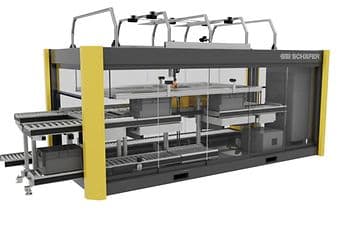
SSI SCHAEFER Pick-it-Easy Robot
SSI SCHAEFER's Pick-it-Easy Robot is a vision-guided robotic goods-to-person station optimized for mixed, irregular and fragile SKUs, delivering high adaptability through advanced vision, gripper tooling and software. Versus fixed-format pouch or cube systems, it offers superior flexibility and lower long-term labor expense for variable assortments, though its advanced robotics and perception can mean higher initial capital outlay compared with simpler workstation concepts.
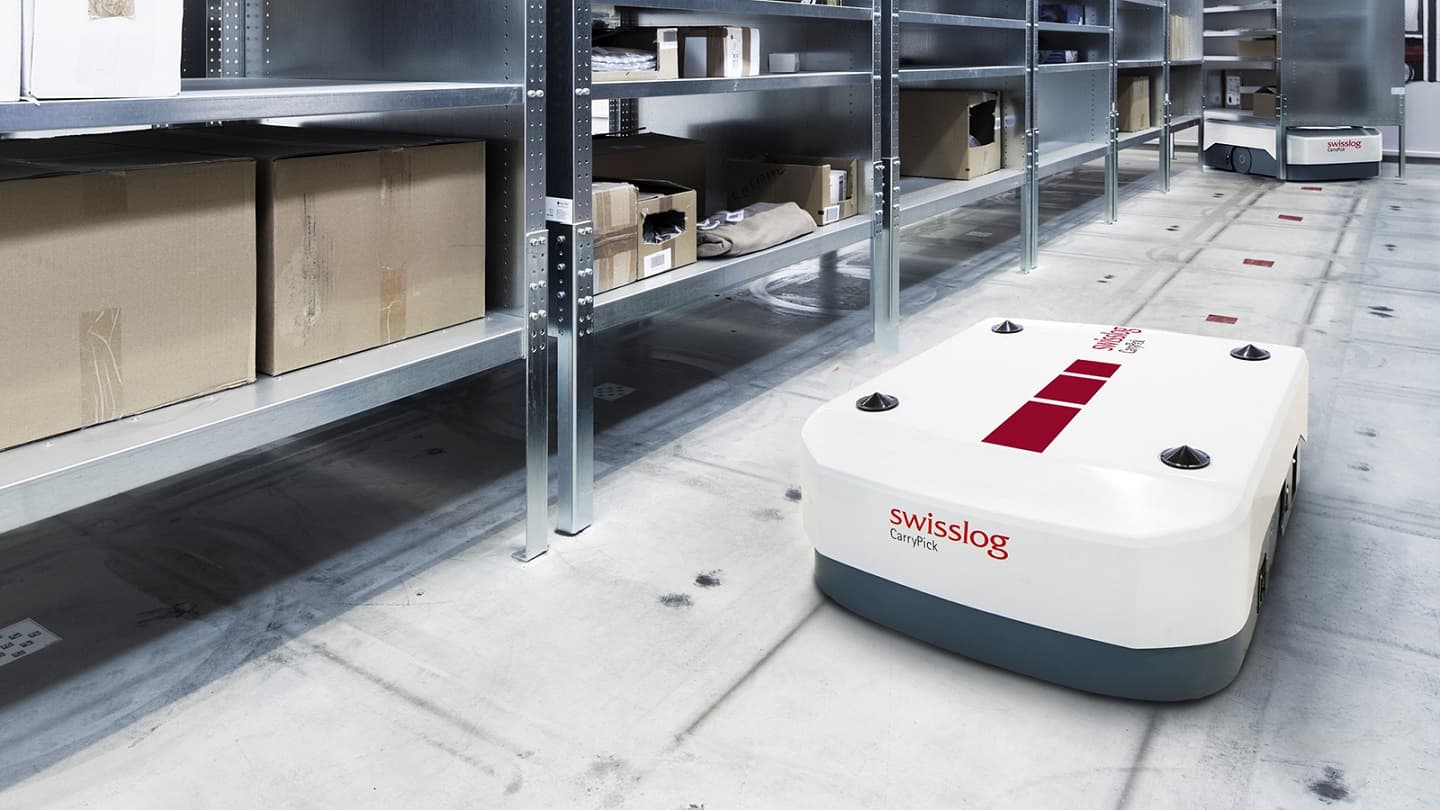
Swisslog CarryPick Goods-to-Person Station
Swisslog's CarryPick Goods-to-Person Station focuses on ergonomic, collaborative picking with automated tote presentation and tight WMS/WCS integration to balance throughput and operator comfort in medium-to-high volume ASRS environments. Compared to the ultra-dense AutoStore FusionPort and KNAPP shuttle solutions, CarryPick typically achieves faster deployment and lower customization cost while offering a competitive total cost of ownership for operations prioritizing flexibility and ergonomics over absolute storage density.
Estimated$60,000 – $200,000
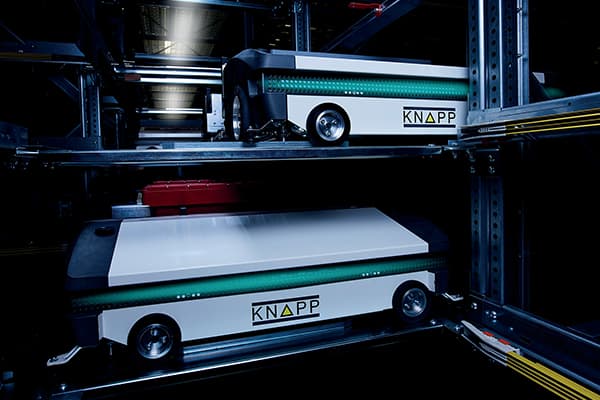
KNAPP OSR Shuttle Evo Workstation
KNAPP's OSR Shuttle Evo Workstation is built around a high-density shuttle infrastructure and supplies configurable workstations tailored for rapid batch and single-item fulfillment, making it a best-in-class option for throughput-intensive ASRS sites. Relative to pouch, robotic and cube workstations, the OSR Shuttle Evo delivers substantial scalability and slotting flexibility with proven throughput gains, though the shuttle ecosystem typically requires higher upfront capital and careful site planning.
Estimated$80,000 – $300,000
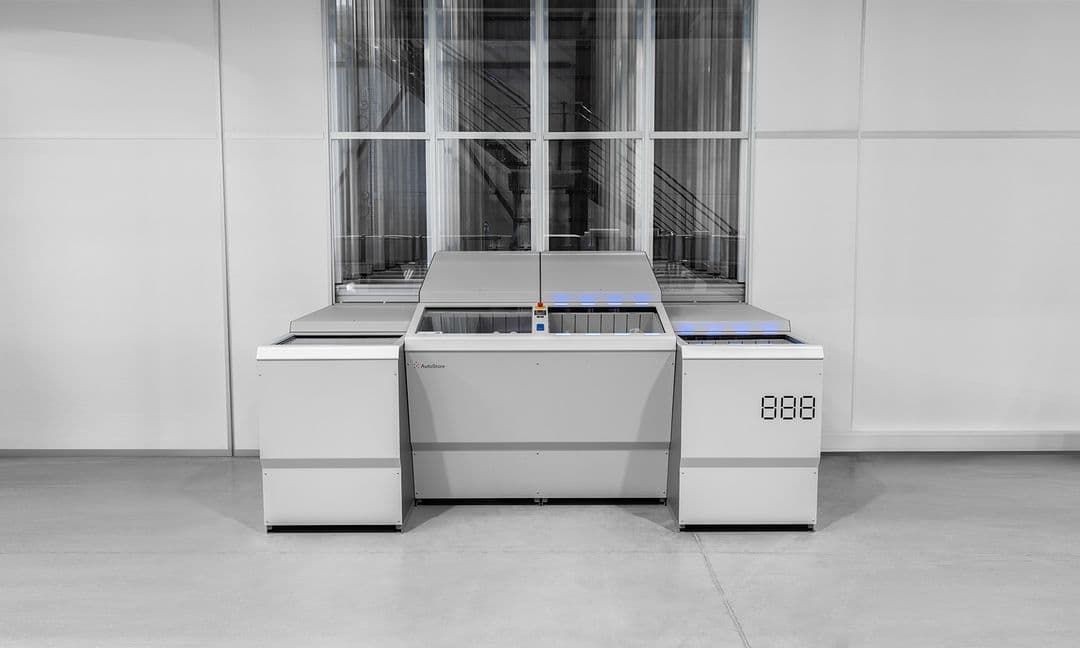
AutoStore FusionPort Workstation
AutoStore's FusionPort Workstation is the integrated goods-to-person interface for the AutoStore cube, offering exceptional volumetric density and very fast pick presentation from a compact footprint. Its tight integration into the AutoStore ecosystem yields one of the lowest cost-per-bin and fastest ROI on a per-square-meter basis compared with shuttle, pouch and standalone robotic stations, albeit best suited to operations willing to commit to the cube architecture rather than a more modular, stand-alone approach.
Estimated$70,000 – $220,000
Research and evidence: Why goods-to-person stations deliver value
Multiple industry studies and ergonomic reviews support the adoption of goods-to-person stations in high-volume and high-mix environments. Research shows that bringing inventory to the picker reduces non-value-added walking and search time, which directly increases picks per hour and decreases physical strain. Case studies across logistics and manufacturing document improvements in accuracy, reductions in labor variability, and faster training times when stations are combined with guided picking methods such as pick-to-light, voice, or AR overlays. Economic analyses and vendor benchmark reports also demonstrate favorable return on investment when systems are matched to throughput and SKU characteristics.
Reduced travel time: Studies and operational benchmarks show substantial decreases in picker walking time, often translating to measurable throughput gains.
Improved accuracy: Guided picking technologies used at goods-to-person stations commonly lower mispick rates and returns.
Better ergonomics: Ergonomic assessments report reduced bending and reaching, lowering risk of musculoskeletal injury for repeat pickers.
Scalability and TCO: Industry ROI models indicate that systems with modular goods-to-person workstations can lower labor costs per pick and provide predictable scaling for seasonal demand.
Technology synergy: Combining goods-to-person stations with voice, light, AR, or cobots increases effectiveness and reduces onboarding time for new operators.
Frequently Asked Questions
Which workstation fits small fast-moving SKUs best?
Choose Dematic Pouch System GTP Workstation, since its pouch-based picking consolidates multiple order lines into individual pouches for goods-to-person flow and has an average rating of 4.5.
What capability does SSI SCHAEFER Pick-it-Easy Robot have?
SSI SCHAEFER Pick-it-Easy Robot uses a flexible multi-robot picking cell with 3D vision for mixed-SKU automated order fulfillment and is rated 4.6 on average.
How does price compare for Swisslog CarryPick station?
No price information is provided for Swisslog CarryPick Goods-to-Person Station in the data, so a value comparison can’t be made; it is rated 4.55.
Do these stations integrate with WMS/ASRS systems?
Yes: Dematic Pouch System GTP Workstation is designed for high-density ASRS integration with Dematic controllers and WMS connectivity, SSI SCHAEFER Pick-it-Easy Robot integrates with SSI SCHAEFER WMS/ASRS, and Swisslog CarryPick ties into Swisslog SynQ.
Conclusion
In Canada, goods-to-person ASRS stations are a proven way to raise accuracy, speed, and operator well-being across cold storage, retail fulfillment, and industrial supply chains. The five leading options profiled here each target different priorities: Dematic Pouch System GTP Workstation for dense, secure handling; SSI SCHAEFER Pick-it-Easy Robot for robotic-assisted picking; Swisslog CarryPick Goods-to-Person Station for ergonomic, mixed-pick flexibility; KNAPP OSR Shuttle Evo Workstation for scalable throughput and modular growth; and AutoStore FusionPort Workstation for ultra-dense, automated storage integration. For a balance of scalability, performance, and Canadian service support in 2026, the KNAPP OSR Shuttle Evo Workstation stands out as the best overall choice for many high-throughput facilities. I hope you found what you were looking for; you can refine or expand your search using the site search to focus on features, throughput, or service options.