

Canada's Top 5 Robotic Case Handling Workcells for 2026
Robotic case handling workcells are automated systems for case erecting, case packing, palletizing, and depalletizing that use articulated robots, gantries, or cobots with end-of-arm tooling. In Canada these workcells are favored across food and beverage, consumer packaged goods, e-commerce, cold chain, and pharmaceutical operations because they deliver consistent throughput, flexible pallet patterning, integrated safety, and reliable integration with upstream and downstream conveyors. Buyers in the Canadian market prioritize modular designs that fit constrained plant layouts, equipment certified to local safety and electrical standards, low total cost of ownership, and suppliers with proven support networks and spare parts availability. The result is a preference for solutions that balance high throughput and pattern flexibility with easy changeovers, energy efficiency, and minimal operator training time.
Inception's AI took the time to understand this market in Canada · · How we pickWe may earn a commission on purchases. It never affects our rankings.
Top Picks Summary
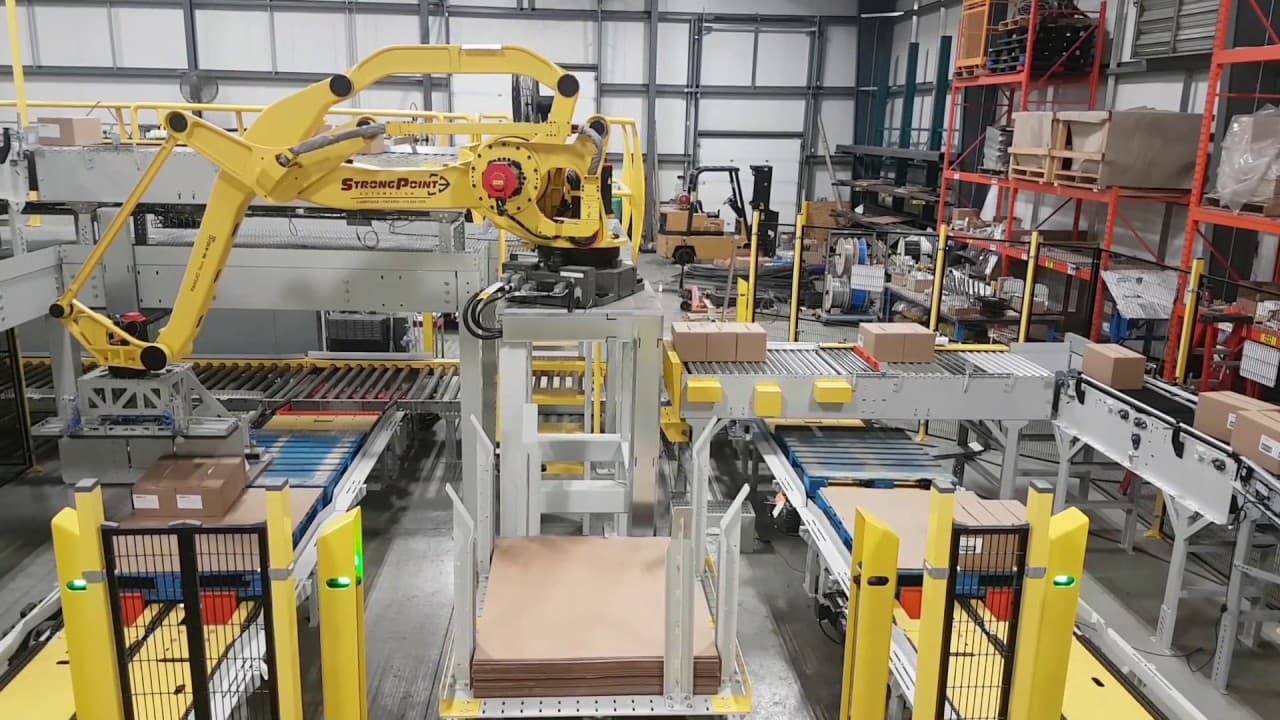
FANUC M-410iC Palletizing Robot System
The FANUC M-410iC Palletizing Robot System is best-in-class for high-throughput, heavy-case handling thanks to its industrial-grade speed, reach and payload capabilities, which reduce cycle times and floor space per pallet. Compared with cobot and lighter-payload alternatives in this list it delivers a lower cost-per-case in high-volume lines and a proven uptime advantage versus turnkey case packers that require more bespoke integration. Its technical robustness and long service life make it a preferred capital investment when maximizing throughput and minimizing downtime are primary financial objectives.
Estimated$150,000 – $350,000
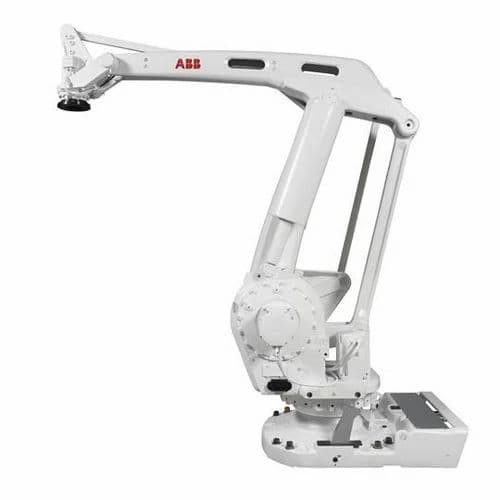
ABB IRB 660 Palletizing Cell
The ABB IRB 660 Palletizing Cell holds a market-leading position for compact, flexible palletizing cells that balance speed, precision and advanced software integration. Relative to the heavier FANUC and KUKA systems it often offers a smaller footprint and energy-efficient operation, while its cell-level controls and vision options can reduce integration time compared with full turnkey packer vendors. For operations that need a strong mix of adaptability and service-backed automation, ABB provides a competitive lifecycle cost and easier scalability across mixed-SKU lines.
Estimated$180,000 – $380,000
KUKA KR QUANTEC PA Palletizing Workcell
The KUKA KR QUANTEC PA Palletizing Workcell is distinguished by its powerful motion control and modularity, making it particularly effective where reach and precise layer formation are critical. Compared with ABB and FANUC it is often chosen for its flexible end-of-arm tooling options and native compatibility with KUKA controllers, which can lower integration engineering hours for OEM-style implementations. Financially, its modular design lets manufacturers stage automation investments and upgrade payload or tooling independently, improving CAPEX agility on evolving lines.

Estimated$160,000 – $340,000
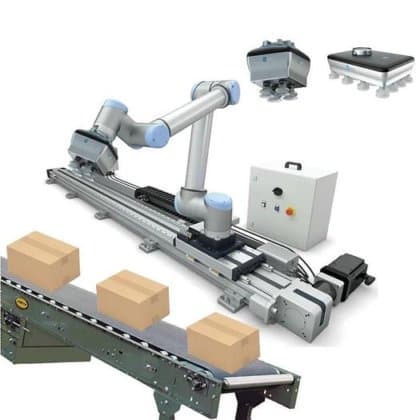
Universal Robots UR20 Palletizing Solution
The Universal Robots UR20 Palletizing Solution is positioned as the cost-effective, fast-to-deploy option for lighter-case handling and frequent SKU changeovers, leveraging intuitive programming and safe collaborative operation. Versus traditional industrial palletizers from FANUC, ABB and KUKA it offers much lower upfront capital and quicker ROI for small-to-medium throughput applications, though with lower payload and raw speed. Its financial advantage is in minimal integration and training costs, enabling smaller processors to automate case handling without large automation teams.
Estimated$80,000 – $180,000
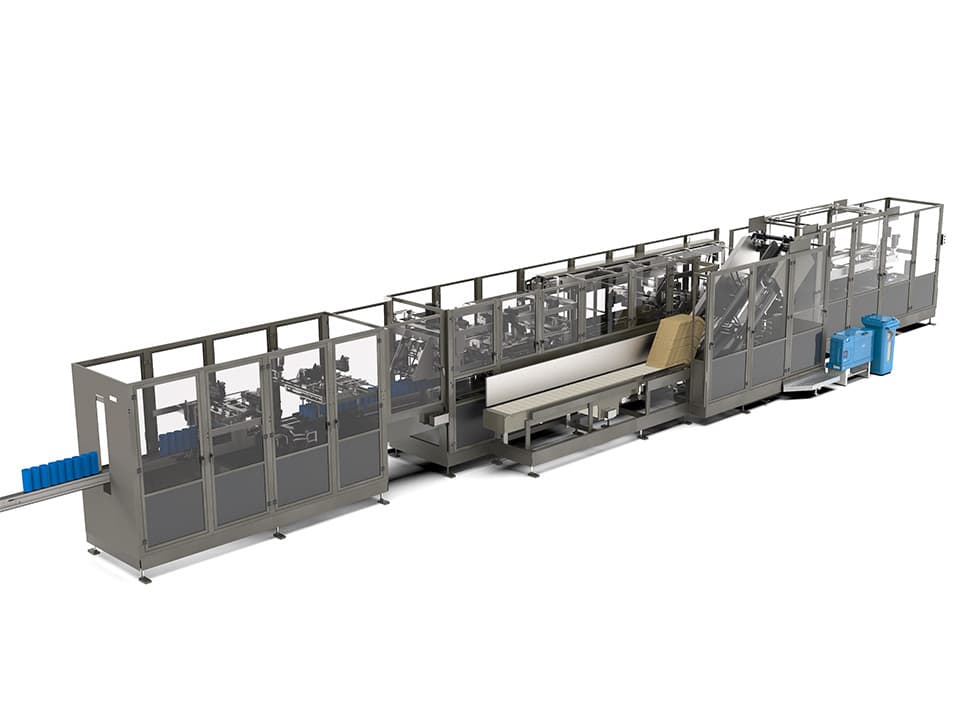
Brenton RPM Robotic Case Packer
The Brenton RPM Robotic Case Packer is a market leader for turnkey case packing because it combines robotics, case erecting and sealing into an integrated workcell tailored to packaging lines, reducing single-vendor integration risk. Compared with robot-robotic-only vendors on this list it offers deeper line-level functionality out of the box, which can lower total installation and validation costs for food, beverage and CPG lines. For customers prioritizing out-of-the-box packaging features and minimized supplier coordination, Brenton often delivers faster production-ready deployments and predictable lifecycle service costs.
Estimated$220,000 – $480,000
Why Robotic Case Handling Works: Evidence and Practical Benefits
Research and industry reports highlight measurable benefits from automated case handling systems, including higher throughput, fewer workplace injuries, and faster payback compared with manual operations. Studies and industry analyses from organizations such as the International Federation of Robotics, ergonomics research groups, and automation consultancies document how well-engineered workcells improve consistency, reduce damage, and support compliance with safety standards. Below are clear, beginner-friendly takeaways from that body of research.
Throughput improvements: Automated palletizing and case packing frequently increase line throughput by 20 to 100 percent depending on baseline manual performance and cell configuration.
Ergonomics and safety: Automation reduces repetitive lifting and awkward postures, lowering incidence of musculoskeletal injuries and related lost-time claims according to occupational health research.
Return on investment: Typical payback periods for properly scoped case handling workcells range from 12 to 36 months when labour, damage reduction, and throughput gains are included in the calculation.
Flexibility and changeover: Modern end-of-arm tooling and software patterning allow quick reconfiguration for multiple SKUs and pallet patterns, reducing downtime for changeovers.
Standards and compliance: Systems designed to meet ISO 10218, ISO 13849, and regional electrical and safety standards help simplify commissioning and local approvals in Canada.
Frequently Asked Questions
Which palletizing workcell should I pick for heavy cases?
Choose the FANUC M-410iC Palletizing Robot System if you need heavy-case handling with high-throughput palletizing in continuous production, since it’s designed for heavy-duty speed, reach, and payload performance; average rating 4.7.
What specific capability does the ABB IRB 660 Cell provide?
The ABB IRB 660 Palletizing Cell is engineered for rapid cycle times and high payloads to maximize palletizing throughput, with cell-level integration options like vision, conveyors, and layer patterning; average rating 4.6.
How does the KUKA KR QUANTEC PA compare on price and value?
No prices were provided for the KUKA KR QUANTEC PA Palletizing Workcell, so I can’t compare value by cost; it’s rated 4.5 and uses a modular architecture for fast changeovers and mixed-SKU handling.
Is the KUKA KR QUANTEC PA better for mixed-SKU changeovers?
Yes, the KUKA KR QUANTEC PA Palletizing Workcell is designed with a modular palletizing architecture for fast changeovers and mixed-SKU handling; average rating 4.5.
Conclusion
This page presents five leading solutions for robotic case handling in Canada: FANUC M-410iC Palletizing Robot System, ABB IRB 660 Palletizing Cell, KUKA KR QUANTEC PA Palletizing Workcell, Universal Robots UR20 Palletizing Solution, and Brenton RPM Robotic Case Packer. Each option targets different priorities: the ABB IRB 660 and KUKA KR QUANTEC PA emphasize heavy duty throughput and pattern flexibility; the Universal Robots UR20 offers cobot-level programming simplicity for lighter palletizing; the Brenton RPM is focused on compact, high-speed case packing and integration; and the FANUC M-410iC Palletizing Robot System stands out as the best overall choice on this page for high-throughput, industrial-grade palletizing combined with a broad service and parts network in Canada. We hope you found the information you were looking for. You can refine or expand your search using the site search to narrow by throughput, footprint, or industry application.