

Best Robotic Picking and Packing Workcells in Canada — 2026
Robotic picking and packing workcells combine machine vision, adaptive grippers, conveyors, and packing machines into integrated systems that automate piece-picking, singulation, and order consolidation. In Canada, demand for these solutions is driven by e-commerce growth, seasonal labor fluctuations, and the need to improve accuracy while containing operating costs. Canadian buyers typically value reliability, ease of integration with existing warehouse management systems, local support and service, bilingual documentation, energy efficiency, and scalable solutions that work across mixed-SKU environments. Emerging trends such as AI-driven grasp planning, mixed-SKU handling, and human-robot collaboration make these workcells especially appealing to distribution centers, third-party logistics providers, and manufacturers seeking faster throughput and lower error rates.
Inception's AI took the time to understand this market in Canada · · How we pickWe may earn a commission on purchases. It never affects our rankings.
Top Picks Summary
Universal Robots UR10e Cobot Workcell
The UR10e Cobot Workcell from Universal Robots is a best-in-class choice for collaborative picking and packing workcells thanks to its intuitive programming, broad accessory ecosystem, and low integration cost that accelerates ROI for small-to-medium operations. Compared with heavier industrial cells in this list it offers faster deployment and lower capital expense, trading absolute peak throughput for flexibility and safe human-robot collaboration.

Estimated$60,000 – $140,000
FANUC CRX-10iA Collaborative Robot Cell
FANUC's CRX-10iA Collaborative Robot Cell blends industrial-grade reliability with collaborative safety features, delivering deterministic motion and higher continuous-duty performance that reduces downtime-related costs in medium-volume packing. Versus the UR10e it provides stronger motion control and reach for conveyorized cells, while not matching the ABB FlexPicker's specialized throughput for ultra-high-speed pick-and-place applications.
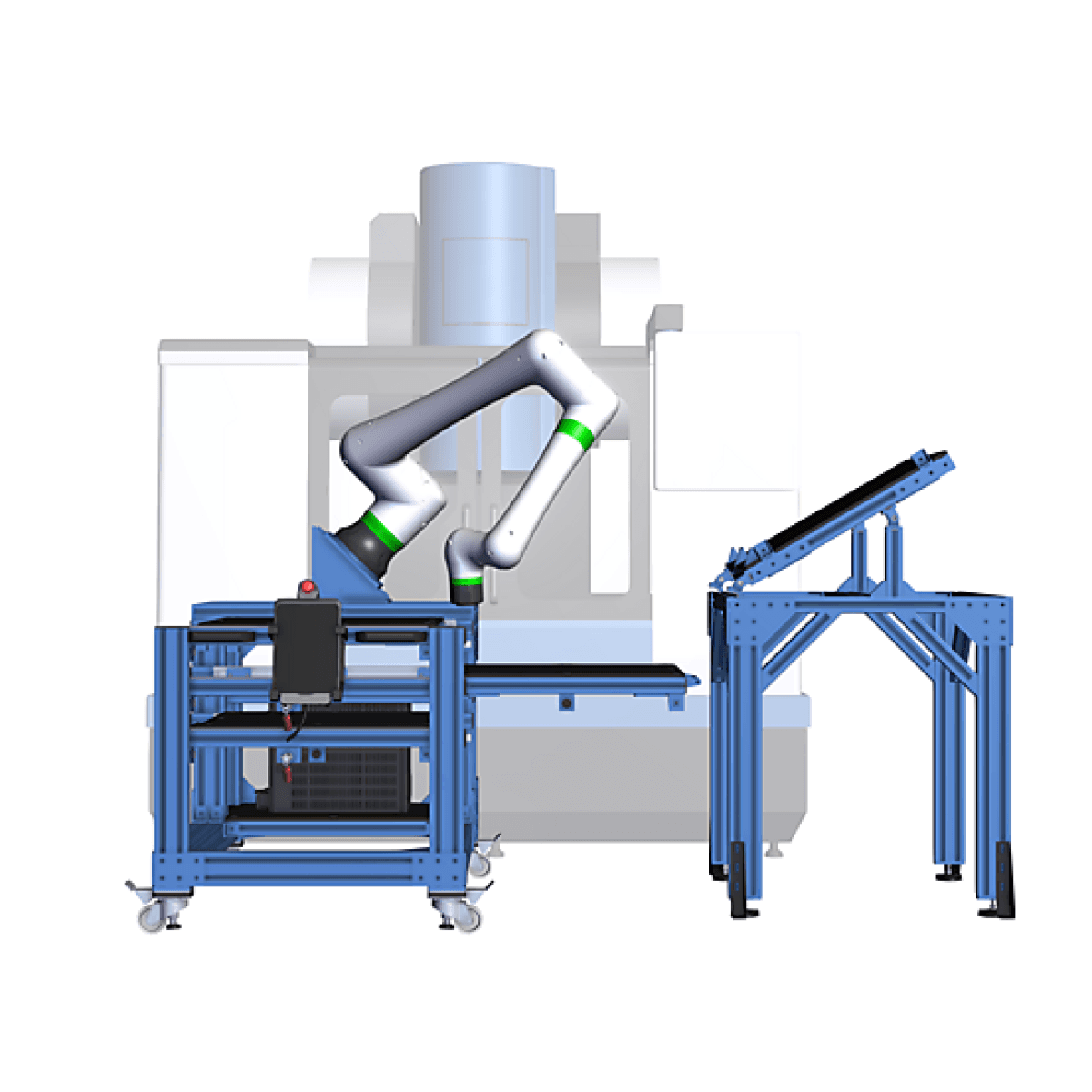
Estimated$90,000 – $180,000
ABB FlexPicker IRB 360
The ABB FlexPicker IRB 360 is the market leader for ultra-high-speed, lightweight picking and packing lines, offering delta-robot kinematics optimized for maximum cycles per minute and minimal per-unit labor cost. Its specialized design outperforms articulated cobots on sheer throughput—making it the most cost-effective choice for high-volume packaging—even though it is less adaptable to varied part geometries than articulated or collaborative cells from KUKA or Universal Robots.
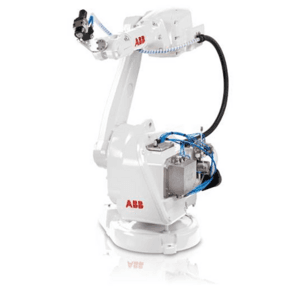
Estimated$120,000 – $300,000
Yaskawa Motoman HC20 Workcell
The Yaskawa Motoman HC20 Workcell provides a compelling middle ground with collaborative-rated safety and a higher payload envelope, enabling handling of heavier or awkward packages without full industrial guarding. Financially, it can eliminate the need for multiple smaller robots or expensive safety infrastructure compared with pure industrial arms, offering more payload capability than UR/FANUC collaborative models while accepting some tradeoff in peak cycle speed versus ABB's delta unit.
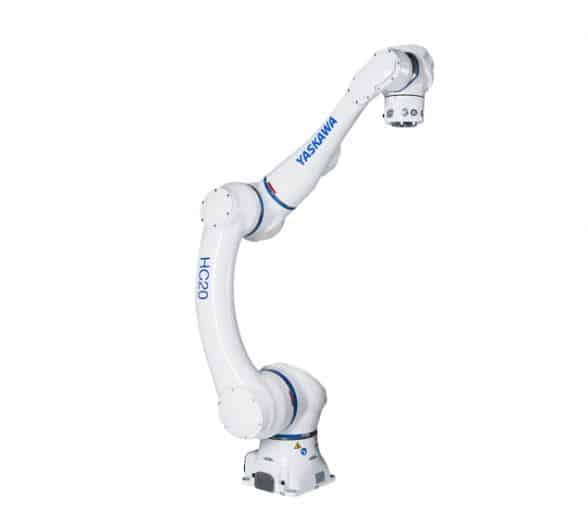
Estimated$95,000 – $200,000
KUKA KR CYBERTECH Picking Cell
The KUKA KR CYBERTECH Picking Cell is tailored for precision, configurability, and integration into complex, high-mix packing workcells, combining fast articulated motion with advanced programming and simulation tooling for enterprise deployments. It typically delivers the best long-term total cost of ownership for complex pick-and-pack applications compared with delta-focused systems or plug-and-play cobots, though its initial system cost and engineering effort are generally higher.

Estimated$110,000 – $250,000
What research and industry reports say
A number of industry reports and academic studies support the benefits of automated picking and packing workcells for warehouses and distribution centers. Research shows that combining machine vision, adaptive grippers, and AI-driven planning improves pick accuracy, reduces cycle times, and lowers manual handling injuries. Studies also highlight the value of collaborative robots and flexible end-of-arm tooling for handling mixed-SKU orders and for redeploying automation to multiple tasks as demand changes. For Canadian operations, evidence points to faster return on investment when systems are matched to workload patterns and supported by local integrators.
Improved throughput and accuracy: Multiple industry analyses report measurable gains in throughput and reduced error rates when vision-guided robotics replace manual piece picking.
Reduced labor risk and cost: Research linking automation with lower repetitive strain injuries and more efficient labor allocation is consistent across logistics studies.
AI-driven grasp planning: Academic work and vendor benchmarks show that machine learning for grasp planning increases successful picks on irregular or deformable items.
Mixed-SKU flexibility: Studies and field trials demonstrate that adaptive grippers and modular tooling enable handling of varied product assortments without lengthy retooling.
Human-robot collaboration: Evidence indicates that collaborative cells reduce downtime and improve operator productivity when safety-rated cobots and intuitive programming interfaces are used.
Frequently Asked Questions
Which workcell is best for small-to-medium packing?
Choose the Universal Robots UR10e Cobot Workcell for collaborative picking and packing in small-to-medium operations, since it offers intuitive programming, the URCaps plug-and-play ecosystem, and a 4.6 average rating.
What payload and reach does the UR10e provide?
The Universal Robots UR10e Cobot Workcell lists a 10 kg payload with approximately 1300 mm reach, designed for varied picking tasks, with a 4.6 average rating.
How much does the ABB FlexPicker IRB 360 cost?
Price isn’t provided for the ABB FlexPicker IRB 360 in the available details, but it has a 4.7 average rating and is a delta-style robot built for very high cycle rates.
Is the FANUC CRX-10iA cell safe for shared spaces?
Yes—FANUC CRX-10iA Collaborative Robot Cell supports certified collaborative modes for human-shared workspaces, and it’s commonly supplied as a complete cell including safety systems, with a 4.5 average rating.
Conclusion
These top workcells offer practical options for Canadian operations in 2026. The Universal Robots UR10e Cobot Workcell stands out for ease of integration and collaborative flexibility, making it the best overall choice for mixed-SKU and midsize facilities. The FANUC CRX-10iA Collaborative Robot Cell delivers rugged collaborative performance for repetitive pick tasks. The ABB FlexPicker IRB 360 excels at high-speed singulation and sorting. The Yaskawa Motoman HC20 Workcell is a strong option where safe human-robot collaboration and payload balance matter. The KUKA KR CYBERTECH Picking Cell is built for precise, high-volume pick-and-place applications. We hope you found what you were looking for; use the search to refine or expand your results by application, throughput, budget, or integration requirements.